
Poverty: Who Is Talking About It?; Pro-Life Argument Deserves Hearing In Mercury Ruling (OPINION); Rick Warren: 'Flat Out Wrong' That Muslims, Christians View God The Same; Who's Really To Blame For Apple's Chinese Labor Problems?; Timothy Dolan To Rush Limbaugh: 'Do It Civilly'; Foreign Policy: The Wild Card In 2012 Campaign; Beyond The Free Market; The Pastor And The President: A Tale Of Faith.
In a speech to the American Israeli Public Affairs Committee’s annual policy conference in Washington, D.C. on Sunday, President Obama urged Israeli leaders to refrain from "loose talk of war" related to escalating tensions with Iran. Quoting his predecessor President Theodore Roosevelt, Obama said when it comes to the Iran situation, both the United States and Israel would do well to, "Speak softly... and carry a big stick."
Obama meets with Israeli Prime Minister Binyamin Netanyahu today at the White House. Netanyahu, who is scheduled to speak to the AIPAC conference this evening, issued a short statement repsonding to Obama's speech Sunday, saying in part, "I appreciated the fact that he said that Israel must be able to defend itself, by itself, against any threat."

We’ve seen a lot of stressful news this weekend, so to add a little levity to your week, we’re bringing you the best Light Bulb Jokes from this week’s Prairie Home Companion-plus a few choice additions from the Sojourners blog team. We all need a good laugh.
Ready?
O God, you are the unsearchable abyss of peace, the ineffable sea of love, and the fountain of blessings. Water us with plenteous streams from the riches of your grace; and from the most sweet springs of your kindness, make us children of quietness and heirs of peace.
From the Syrian Liturgy of St Clement of Alexandria
"But his servants approached and said to him, ‘Father, if the prophet had commanded you to do something difficult, would you not have done it? How much more, when all he said to you was, “Wash, and be clean”?’ So he went down and immersed himself seven times in the Jordan, according to the word of the man of God; his flesh was restored like the flesh of a young boy, and he was clean." - 2 Kings 5:13-14
"Dependence on God may be what is lacking in a society where consumerism and accumulation have become the root diseases of a world in which everything is not enough and nothing satisfies." - Joan Chittister from The Rule of Benedict: Insights for the Ages
Here I am, urging people to deconstruct their preconceptions about God, and this guy finds Jesus in a tortilla.
Russ, my father-in-law, lives outside of Espanola, New Mexico. He can tell you from years of living there that the area is jumping with religious mysticism. One of the most famous sites in the state is the church at Chimayo, where people visit to touch the holy dirt and be healed. There are photos of people who claim to have been restored all over the place, along with crutches and canes left behind.
I’m not one to affirm or challenge that what people experience there is real. But I did find it interesting that the priests who serve the church simply bring in new dirt to fill the hole when they get low. Perhaps they bless it; I have no idea. But it’s interesting to me the power we inhere to certain items, acts or places. Is God more or less there than somewhere else? Is there something about the experience that opens us up to the already-present God? Is it an example of the uncharted power of the human mind?
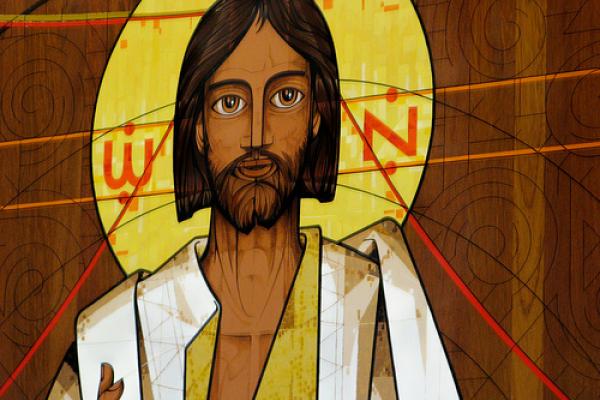
As a person who (loosely) identifies with the evangelical tradition, allow me to make a clear, unambiguous, declaration: GOD IS PRO-PEACE!
You may be thinking, “Just how exactly does a guy who claims to believe in the inspiration of Scripture arrive at the conclusion that God is pro-peace? Has this guy even read the Bible? Maybe he’s one of those amnesia-type Christians, the ones who read through the Bible every year as part of their daily devotions, and every time they get to the slavery and genocide passages, their mind goes ______________.
Maybe it wasn't those exact words, but whatever you were thinking, believe me, I get it!
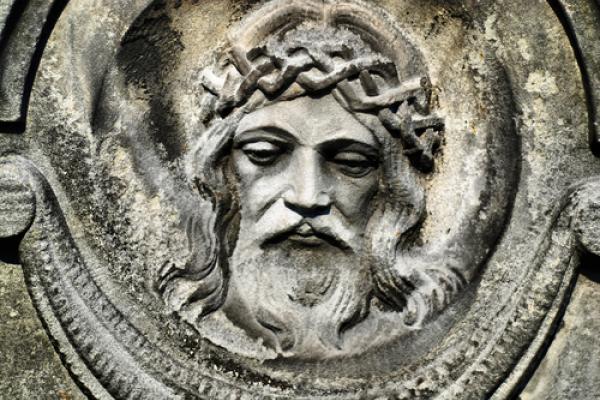
There was a movement back in the 1960s that many of us only have read about, while others vividly remember. Philosophers and theologians explored what was labeled the “Death of God” movement. Interest in the subject has re-emerged particularly as of late because William Hamilton, one of the more prominent voices in the Death of God movement, diedlast week at age 87.
The movement inspired TIME Magazine’s now-famous cover (seen here) in 1966, raising the question in the public forum: Is God Dead? The cover has since been listed by the Los Angeles Times as one of the “Ten Covers that Shook the World.”
Hamilton’s faith was shaken during his teenage years when three of his friends were making a homemade pipe bomb. The project went wrong and detonated, killing two of the three boys.
The two killed were Christians. The lone survivor, an atheist.
Hamilton’s crisis of faith centered around a theological concept known as theodicy, which explores the question: why do bad things happen to good people? More specifically, why does misfortune seem to befall the faithful, while those lacking faith enjoy what seems to be a providential hall pass?
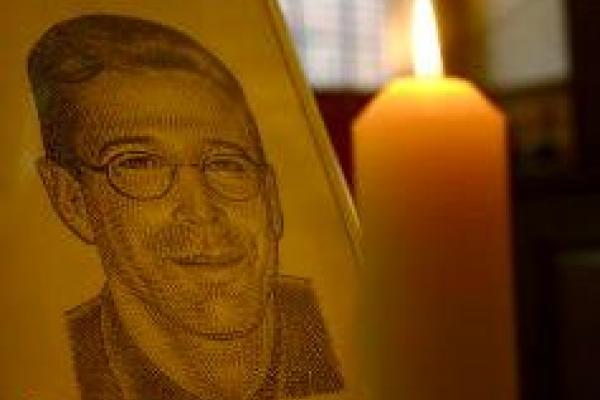
A simmering interreligious controversy resurfaced recently with the news that the Church of Jesus Christ of Latter-day Saints had posthumously ``baptized'' a number of deceased Jews, including Daniel Pearl, Anne Frank, the parents of Nazi hunter Simon Wiesenthal, and evidently an unknown number of others.
The case of Mr. Pearl is particularly revealing, and holds important questions for Americans' ongoing experiment in religious pluralism.
Pearl, while on assignment for The Wall Street Journal, was beheaded in 2002 by a radical Pakistani group connected to al-Qaida. Moments before his death, he declared: ``My father is Jewish, my mother is Jewish, I am Jewish. My family follows Judaism.''