
In a spin on the immigration debate, USA Today explores the murkiness of in vitro fertilization abroad. Americans who give birth outside the states via in vitro are required to prove at least one biological parent is a U.S. citizen.
The problem? In many in vitro cases, neither the sperm or the egg come from the parent.
"I was humiliated and horrified," Ellie Lavi, an American citizen who gave birth in Tel Aviv, told USA Today. "We're talking about the children I gave birth to. Of course they're my children."

Tens of thousands of Coptic Christians mourned the death of Pope Shenouda III in a funeral mass at St. Mark’s Cathedral in Cairo. Thousands more, unable to get inside, crowded the streets outside the Cathedral. The rite was movingly chanted by bearded, black-robed priests and monks as mourners joined in and wept.
Following the mass, The Pope’s body was flown to Wadi al-Natroun, a fourth-century monastery in the northwest Nile Delta for internment.
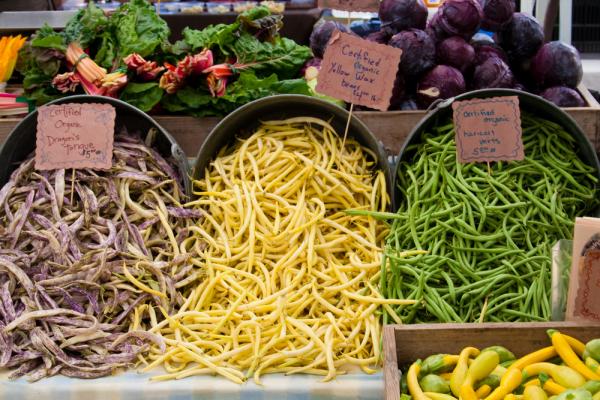
I love great food. Last night, I made fresh linguini with organic whole wheat flour and local, free-range eggs, and topped them with from-scratch meatballs made with organic beef, fresh parsley from my garden, fresh Parmesan--you get the idea. And in a few days, I’ll be celebrating a special occasion at one of the finest restaurants in the Northeast, where the produce is local and seasonal and sustainable and where the experience of eating is a little like visiting a museum of fine arts where you get to taste all the masterpieces. And yesterday, I planted the first spring vegetables in my garden. I’m a member of Slow Food USA, for cryin’ out loud.
I’m just waiting for the James Beard foundation to give me a badge for being such a morally superior eater.
Except I’m not. Because while the way I eat is motivated by certain ethical considerations (including but not limited to concern for the health of the environment and that of animals), I’m aware that my way of eating is an almost miraculous privilege. I can eat this way because I happen to live in a place where I can buy eggs from a neighbor and grow vegetables in my backyard. I don’t have much money, but I have the luxury of time to grow my own vegetables, to cook from scratch, and enough wiggle room in the budget to buy 25 pounds of organic flour in bulk (which makes it cheaper) without running out of money before the end of the month.
In a stunning new book, The American Way of Eating,Tracie McMillan goes undercover in farm fields, in the Wal-Mart produce department, and at Applebee’s to explore common assumptions that food-movement types make about the way many Americans eat: that many of us are overweight and unhealthy because we just don’t “care” enough about the quality of our food--with people who are poor “caring” the least. Throughout the book, which chronicles her numerous conversations with low-wage co-workers, McMillan fiercely defends her conviction that everyone--everyone--wants to eat well.



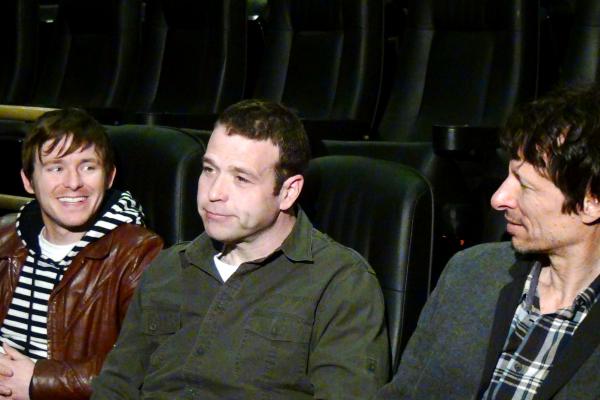
 Editor's Note: Earlier this week, our intrepid blogger/reporter/resident-God-Nerd Christian Piatt sat down with the makers of the highly-anticipated film Blue Like Jazz — Donald Miller, director Steve Taylor and Marshall Allman, the actor who portrays protagonist "Don" in the screen adaptation of Miller's best-selling memoir — to talk about faith, film and ... fate.
Blue Like Jazz premiered at the SXSW Festival in Texas earlier this month and opens nationwide April 13. Piatt caught up with the filmmakers in a Colorado Springs theater where they were hosting a sneak-peek screening and persuaded the gents to unpack the story of the-little-film-that-could and the Spirit that buoyed them along the way.
The wide-ranging interview covers everything from John Coltrane's "A Love Supreme" and what Miller calls "dangerous theological ideas" to the astounding grace of God and peanut butter cups. Fascinating and funny, the conversation with the hearts and minds behind Blue Like Jazz is a humdinger.
Watch the interview in its entirety and read Piatt's reflections on the film and his conversation with its makers inside the blog ...

"What do think will happen" a longtime Episcopalian asked me in Charlotte, N.C., "now that Archbishop ... er ... "
"Rowan Williams," I said.
" ... yes, Rowan Williams, has decided to retire?"
The question took me aback. I rarely hear Episcopalians talking about the Archbishop of Canterbury, the London-based head of the worldwide Anglican Communion, which includes the Episcopal Church as its U.S. branch.
Many Episcopalians pray for the 61-year-old prelate every Sunday, but as Canterbury has gotten more conservative and more solicitous of arch-conservative Anglican bishops from the Third World, Anglicans in developed nations choose to walk their own progressive path.
"There are people who struggle with not being understood; God is not one of them."
~ Donald Miller to Christian Piatt
in 'Blue Like Jazz' - The Sojourners Interview
coming Wednesday on God's Politics
++++++++++++++++++++++++++++++++++++
Earlier this week, our intrepid blogger/reporter/resident-God-Nerd Christian Piatt sat down with the makers of the highly-anticipated film Blue Like Jazz — Donald Miller, director Steve Taylor and Marshall Allman, the actor who portrays protagonist "Don" in the screen adaptation of Miller's best-selling memoir — to talk about faith, film and ... fate. The far-ranging interview covers everything from John Coltrane's "A Love Supreme" and what Miller calls "dangerous theological ideas" to the astounding grace of God and peanut butter cups. Fascinating and funny, the conversation with the hearts and minds behind Blue Like Jazz is a humdinger you won't want to miss.
But because we like you a whole lot , we've prepared a wee taste of what's to come ... inside the blog.

This morning, Congressman Paul Ryan (R- WI), chairman of the House Budget Committee, released a proposal for an FY 2013 budget. Similar to last year, the plan places an undue burden of deficit reduction on low-income people. Effective anti-poverty programs are targeted for cuts while a tax plan that could significantly reduce tax burdens for top income earners.
According to analysis from Bread for the World:
This FY 2013 budget proposal would have a devastating impact on programs like the Special Supplemental Nutrition Program for Women, Infants, and Children (WIC), the Supplemental Nutrition Assistance Program (SNAP, formerly food stamps), low-income tax credits, and would make international food aid and poverty-focused foreign assistance vulnerable to cuts that would undermine our national security.
The proposed budget would cut SNAP by turning it into a block grant program. This would prevent the program from responding when there is an increase in need. Once the money from the block grant is spent, there cannot be an increase in funds. Currently, SNAP automatically increases with need.
The Spring Equinox ushers in World Storytelling Day. Listen to Portlandia stars discuss some of their most cherrished music. OK Go experiments with a new online dating service. Arcade Fire delivers guest lecture at University of Texas at Austin. Pictures of sharks, crazy sool ice-cream shops, and more...