Yesterday, a diverse group of faith leaders in Alabama released a television ad targeting Alabama's HB 56 -- the worst anti-immigrant law in the country.
The 30-second ad features Rev. Steve Jones, senior pastor at Southside Baptist Church in Birmingham.
''We believe in reaching out and ministering to our community. Yet under Alabama's immigration law, we could be prosecuted for following God's call to be good Samaritans,” Jones says in the ad.
Watch:

A Church of England vicar has been sentenced to 4 1/2 years in prison for conducting hundreds of bogus weddings and illegally pocketing more than 30,000 pounds ($48,000) in fees.
The Rev. Brian Shipsides was convicted and sentenced Tuesday (April 3) for carrying out a "meticulously planned and orchestrated" immigration fraud over a 2 1/2 period at All Saints Church in east London.
Authorities said the vicar conducted the fake marriages of non-Europeans, mostly Nigerians, to European partners to try to obtain immigration rights to stay in Britain.

More than 1,800 people have signed a petition asking Senate Minority Leader Mitch McConnell to "reconsider" his appointment of Zuhdi Jasser, a prominent critic of U.S. Muslims, to the U.S. Commission on International Religious Freedom
“How can an individual who supports the curbing of Muslim civil and religious liberties at home be trusted as a ‘commissioner’ to review and analyze violations of religious freedoms abroad?” the petition writers ask in their appeal.
Jasser, a physician in Phoenix, Ariz., and president of the American Islamic Forum for Democracy, has angered many Muslim Americans for his work with groups they say demonize Muslims, and for supporting policies that they say infringe on their civil liberties.
As if conventionally powered drones weren’t bad enough, a report has it that scientists are developing nuclear-powered drones that could stay in the air for months without refueling. In addition to the fact that this would make drones more efficient killing machines, it also increases the dangers from crashes. Drones are especially prone to crashing, and with a nuclear reactor, a crash would be “in effect turning the drone into a so-called dirty bomb.
The project has apparently been put on hold, with a research summary concluding that "none of the results will be used in the near-term or mid-term future," due to political constraints. But with the increasing reliance on drones by the military, I suspect it won’t be long before it’s resumed.
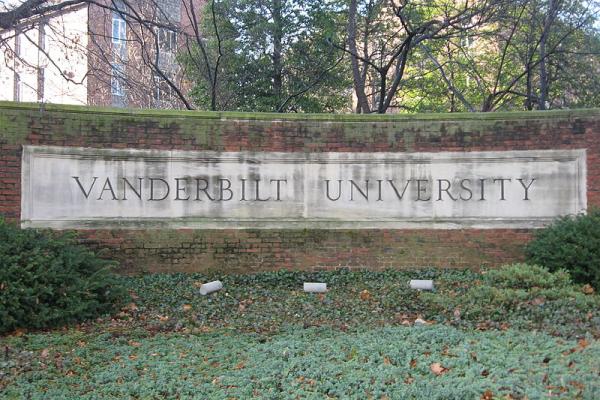
One of the largest student religious groups at Vanderbilt University is leaving campus in a dispute over the school's non-discrimination policy that bars student groups from requiring their leaders to hold specific beliefs.
Leaders of Vanderbilt Catholic, which has 500 members, says the rule make no sense. P.J. Jedlovec, the group's president, says the group's meetings are open to all students, but only people who share the group's beliefs can be leaders.
"If we were open to having non-Catholics lead the organization, we wouldn't be Catholic anymore," Jedlovec said.

The nation’s Catholic bishops say the Obama administration’s proposed revisions to a mandate that requires insurers to provide birth control coverage are still unacceptable and even “radically flawed" -- signaling a long drawn-out election-year fight between the White House and the Catholic hierarchy.
The bishops also say that they will continue to try to overturn the contraception regulations in Congress and the courts even as the bishops carry on negotiations with the White House.
The critical judgments on the government proposals, which were published by the U.S. Department for Health and Human Services on March 16, are contained in an internal, two-page March 29 memo from the U.S. Conference of Catholic Bishops. The memo’s contents were first reported Tuesday (April 3) by Catholic News Service.

We had our fourth annual Passover Seder at Milagro last night. I know, you’re thinking, “what are a bunch of goyim doing celebrating a Jewish tradition?” Given that the central act of our worship service every week – communion – was first introduced by Jesus at his last Seder, we figure if it’s good enough for Jesus, it works for us too.
For the most part, it was a party. But there’s a point at which the leader reads off the ten plagues described in Exodus, none of which is pleasant. For each plague, you dip your finger in a cup of wine and mark the edge of your plate with a crimson dot as a reminder throughout the meal of the suffering experienced by those in captivity.
It’s not exactly a crowd-pleaser, but it’s a valuable symbol, placing in context the joy, food and fellowship that dominate the rest of the evening. Go ahead and enjoy, toast and eat well, but don’t forget.
It got me thinking about what the plagues of our day would be if I were to list them. No, I don’t ascribe to the belief that God sends such horrific episodes upon us as punishment, but I do believe that our free will affords us enough rope to hang ourselves at times, so to speak. Our current plagues are more existential, but the byproducts are often painfully tangible.

The music of Manchester, England is, for me, the soundtrack of my college years. The Smiths. Joy Division. Oasis. James. The Happy Mondays.
It was the music I danced to in Chicago nightclubs, the songs of seeming disillusionment that I walked around campus listening to (on cassettes and "cassingles" -- remember those?) on my Sony Walkman.
I love that music that put a spring in my step and gave voice to my youthful ennui. But I had never thought of it as particularly spiritual music...that is until earlier this week when my charming British colleague, Jack Palmer, brought to my attention The Manchester Passion, an hourlong 2006 BBC special broadcast of a massive public reinactment of Christ's passion and crucifixion staged in a public square in Manchester set to the music of that enigmatic northern city in England.
The Manchester Passion took the music and lyrics of The Smiths and their Manchunian contemporaries and used them -- brilliantly and powerfully -- to retell in a thoroughly modern milieu the greatest story ever told.

This is not another book that simply critiques religion. In Religion For Atheists: A Non-believer's Guide to the Uses of Religion, Alain de Botton, a noted author on a wide range of themes – from architecture to the works of Proust – examines those engaging and helpful aspects of religion (particularly focusing on Christianity, Judaism and Buddhism) that might, as he puts it, “fruitfully be applied to the problems of secular society.”
Anyone who might be offended by a work that from the outset (indeed on its very first page) asserts that “of course no religions are true in any God-given sense”, is encouraged to steer clear of this book by the author himself.
It is a book that seems to swing between revulsion of religion and the “religious colonization” that atheists are charged to reverse and a recognition that all is not well in the secular world, and that these ills may be somewhat righted by looking toward religion – let me clarify – toward those aspects of religious traditions that de Botton believes are relevant to the world today: community, kindness, education and art, for example.
The very first subject to be tackled is that of community – something that Sojourners knows a little something about (check out Nicole Higgins’ recent review of Wanderlust for some insights) – and what strikes me as interesting is that de Botton’s hypothesis on the loss of community mirrors a phrase often spoken by Sojourners CEO Jim Wallis:
Did we lose our sense of community when we began to privatize our faith?
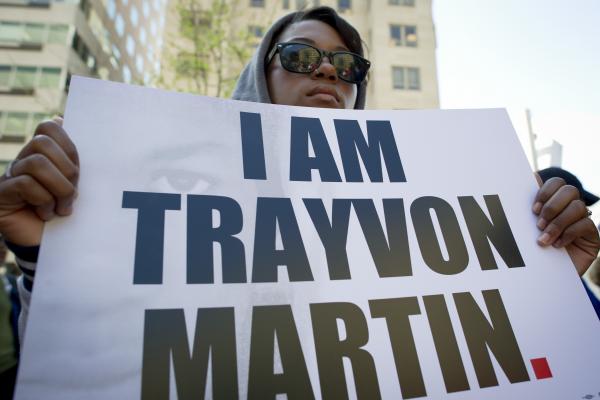
Today I search my soul along with many Americans who are discussing the Trayvon Martin tragedy. These conversations can range from news blogs clamoring for justice to benign disputes about the facts of the case by office water coolers. One of the more challenging conversation threads recently came in the form of a status update on Facebook. My colleague, Efrem Smith, lamented:
"Shouldn't the young black males who are victims of black on black crime get the same attention as Trayvon Martin? I say yes."
I believe Efrem's statement could have us conversing for months to come should we be bold enough to lovingly engage.