
CHARLOTTE, N.C. -- Another voice from the past is telling the stories of the Holocaust.
Violins that outlived the owners who played them in the death camps and Jewish ghettos are being brought back to life by Amnon Weinstein in his shop in Tel Aviv. As Yom Hashoah (Holocaust Remembrance) gatherings occur around the world in April, 18 violins tracked down and repaired by Weinstein will be unveiled in Charlotte, N.C.
A dozen public concerts, worship services and other programs throughout the month are expected to attract thousands who are drawn to the music, and the history behind each instrument -- the first time the violins will be shared with the public in North and South America.
Weinstein hopes he can bring the violins to other communities, in a bid to recall the 6 million Jews and 5 million others who perished at Hitler's hand.
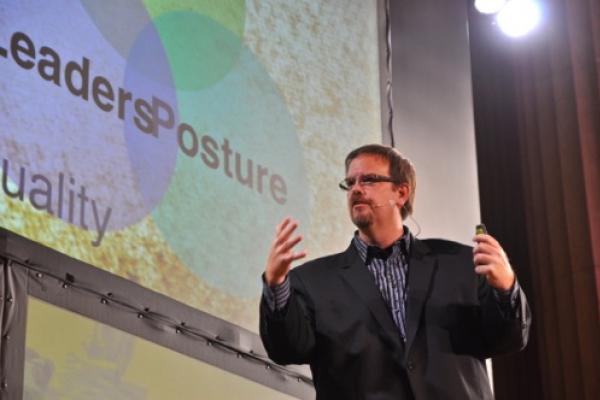
Share the gospel at all times, and when necessary use words.
The phrase is usually attributed to St. Francis of Assisi and is often invoked by the timid Christian, the too-cool hipster Christian, and basically every Christian ever who is afraid of evangelism.
Ed Stetzer—president of LifeWay Research, speaking from the Q conference on Tuesday—said there are two problems with that statement: it’s not true, and Assisi never said it.
“We don’t want to separate those two because biblically we can’t, and statistically we don’t,” Stetzer said.
How different would the state of our political system—and the tenor of the election season—be if voters and politicians on both sides decided to speak civilly?
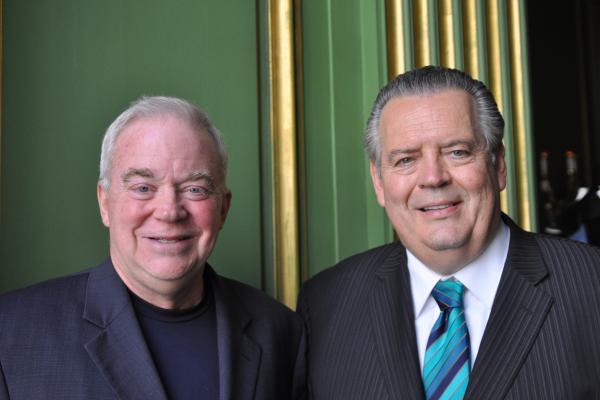
Sojourners CEO Jim Wallis and the Southern Baptist Convention’s Richard Land spoke at the Q conference Tuesday on the topic “What Can We Agree On?”
The intention is to acknowledge difference but—as Christians—focus on the areas of agreement based on our biblical understanding.
Most of the first punditry around Rick Santorum suspending his quest for the Republican presidential nomination focuses on his drop in the Pennsylvania opinion polls and his difficulty in fundraising. Those were no doubt part of the decision. But there’s a deeper reason more important than political considerations.
As has been frequently reported, Sen. Santorum and his wife Karen’s youngest child Bella, was born with a rare and usually fatal chromosomal condition known as Trisomy 18. Bella, 3-years old, has been hospitalized twice already this year with pneumonia, most recently this past weekend. Santorum took two days from campaigning to be with her.
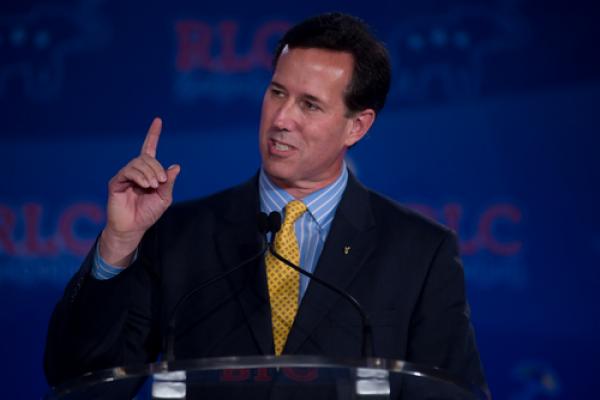
Rick Santorum, candidate for the Republican Presidential nomination, has ended his run for the GOP presidential nomination, he announced at a news conference from a hotel in Gettysburg, Pa., today (Tuesday).
Despite winning primary contests in 11 states, failure to win any of the three primaries last week in Wisconsin, Maryland and the District of Columbia heaped pressure on Santorum’s campaign.
Sen. Santorum, accompanied at the podium by his wife and several other family members, explained to journalists gathered at today’s press conference that the recent hospitalization of his young daughter Bella, who has a rare genetic disorder, had impacted his decision to end his campaign.

The teachings of the church are seen as devalued. This doesn’t have so much to do with the inherent importance or validity of what is being said, but rather it’s a reflection of the value of information overall. It’s really a matter of supply and demand. Abraham Lincoln probably wouldn’t have walked so far to get a book from the only area library, after all, if he had Wikipedia and Google Books at his fingertips. Most anything being said, taught or preached about in a church on Sunday can be found somewhere else, wherever and whenever we want it. Why wait?
The institutions have outlasted their original purpose. Most of our churches were built when populations were static. People didn’t divorce, change jobs and move around like they do now. This mobility, combined with the diversification of networking opportunities, online and through other means, puts bricks-and-mortar institutions in an awkward spot of hoping people find them where they are. And much of the outreach efforts of church is still an attempt to get people “in the doors.” But the fact is that most young adults don’t particularly care.

Food Stamps Helped Reduce Poverty Rate, Study Finds – Heroic vs. Homegrown Entrepreneurs? – Obama Candidate Sketches Vision For World Bank – Religion and Politics Are Inseparable: Get Over It (OPINION) – Birthrate For U.S. Teens Is Lowest In History – Success In A Land Known For Disasters – Anti-Poverty Group ONE Pushes For G8 Food Deal – Mali Coup Leader Rejects Possible Ecowas Intervention – Now This Is Interesting: A Climate Prediction From 1981 – WaPo/ABC Poll: U.S. Public Opposes Military Action Against Iran; Supports Diplomacy And Sanctions – Two Suspects Confess In Oklahoma Shootings, Police Say.
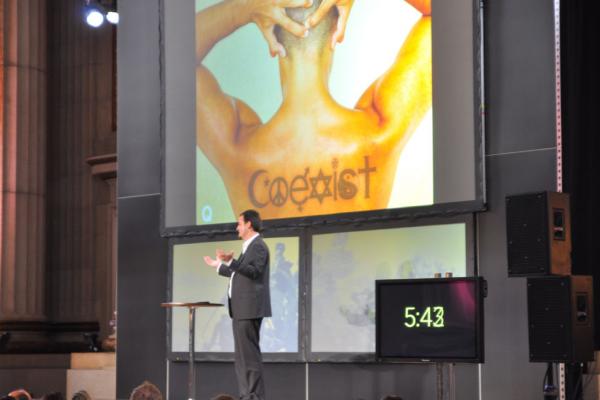
The annual Q conference has begun. In it’s 5th year, the conference has come to Washington, D.C. and brought together about 700 thought, spiritual and cultural Christian leaders.
Modeled after the “TED Talks,” the conference gives opportunity to a wide variety of speakers short segments, between 3, 9 and 18 minutes, to express ideas that can—or should be—shaping Christianity and the broader culture.
Gabe Lyons thinks Christian culture warriors are on the wrong path.
His sixth annual Q Conference, which opens today in Washington, D.C., is an attempt to do things differently. With 700 participants gathered in a stately downtown auditorium, Lyons will play host to a distinct kind of Christian conference, one that seeks a respectful, constructive conversation on a host of issues confronting the nation.
Q, which stands for “question,” will allow 30 different culture leaders — from New York Times columnist David Brooks to Florida megachurch pastor Joel Hunter — to present their ideas for the common good during a two-and-a-half day confab.
“We feel we have a role to play in renewing the culture and holding back the effects of sin,” said Lyons, founder of Q, a nonprofit organization based in New York City. “We’re not to do it in an antagonistic way. We hope to do it in a hopeful way that gives witness to the rest of the world in how things ought to be.”

In a video address Tuesday, President Obama told hundreds of young evangelical Christian leaders gathered at the Q Conference in Washington, D.C., that they had a partner in the White House in their humanitarian and social justice efforts.