Merciful God, even though I walk through the valley of the shadow of death, your perfect love is casting out fear. Even when I’m caught in the middle of the storms of this life, please let me know you are near. Lord, you never let go of me. You never let go. Amen. Adapted from "You Never Let Go" / Matt Redman
"No longer shall they teach one another, or say to each other, ‘Know the Lord’, for they shall all know me, from the least of them to the greatest, says the Lord; for I will forgive their iniquity, and remember their sin no more." - Jeremiah 31:34
"If the evil doings of men move you to indignation and overwhelming distress, even to a desire for vengeance on the evildoers, shun above all thing that feeling. Go at once and seek suffering for yourself, as though you were yourself guilty of that wrong. Accept that suffering and bear it and your heart will find comfort, and you will understand that you too are guilty, for you might have been a light to the evildoers and were not a light to them." - Fyodor Dostoyevsky from The Brothers Karamazov
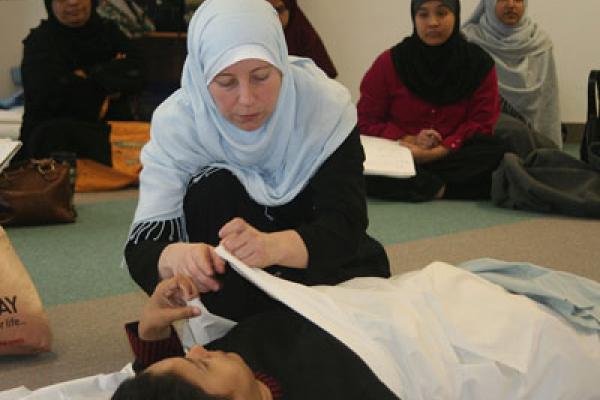
Muslim communities in Kansas City, Columbia and Jefferson City maintain small funeral facilities, often inside mosques, for washing bodies of the deceased. But until now, many Muslims buried their loved ones in Muslim sections of Christian cemeteries, relying largely on non-Muslims to guide them through the process of death.
As the Muslim population of the U.S. has grown -- the number of mosques grew 74 percent in the last 10 years, according to a 2011 survey -- so has the need for Muslim-specific services like funeral homes and cemeteries.
Jay Hardy, the owner of Jay B. Smith Funeral Homes in Maplewood, Mo., and Fenton, Mo., said that in the 1970s, he handled one or two Muslim burials a year. Today that number is up to three or four each week, he said.
U.S. Catholic bishops have used the Obama administration’s contraception mandate as Exhibit A in their high-stakes defense of "religious freedom." But it’s not just the bishops who are fuming, and it’s not only over contraception.
Like-minded religionists of several denominations – including Southern Baptist leader Richard Land and Baltimore Archbishop William Lori -- gathered in Washington Thursday (May 24) to organize a response to what they see as the sorry state of religious freedom in America today.
“We must all be willing to stand up and tell the government ‘no,’” said Land, who heads the Southern Baptist Convention's Ethics & Religious Liberty Commission. “Secularists don’t like people of faith because the ultimate authority for us is not the state. The ultimate authority is God.”

As I've read and listened to Christian reaction in the wake of Obama's interview stating his personal opinion on same-sex marriage, I've been discouraged with the nature and tenor of the conversation itself. Specifically, I'm troubled by the way many Christians choose to take definitive and certain stances about complex issues, and the rhetoric they use to state and defend these positions, rhetoric that tends to divide rather than unite and close discussion rather than open it.
I'm interested in exploring what it is about the Christian religion, and perhaps more specifically, evangelicalism that results in such an approach.
I fully understand the attractions of certainty. From my study of C. S. Lewis I know that his popularity among evangelical Christians in the 1940s and 1950s was largely due to his style of certitude. Lewis was writing in a time where scientific discoveries and religious liberalism were challenging the assertions of orthodox Christianity. In a period of doubt and questioning, Lewis seemed to have a way of cutting through complex arguments and reaching a simple solution that was convincing to his readers.
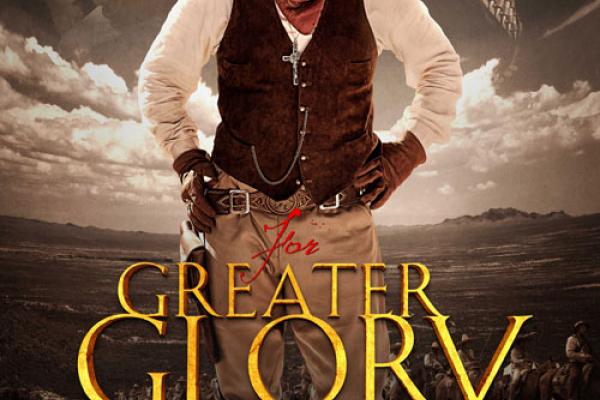
The film shows a burning crucifix, gun-toting priests and the torture of a young boy. And the Roman Catholic hierarchy is loving it.
The film, “For Greater Glory,” hits theaters on June 1 and tells a little known chapter of Mexican history -- the Cristero War of 1926 to 1929, which pitted an army of devout Catholic rebels (led in the movie by Andy Garcia) against the government of Mexican President Plutarco Calles (played by Ruben Blades).
For Catholics enraged by the Obama administration’s proposed contraception mandate, the film about the Mexican church's fight in 1920s is a heartening and timely cinematic boost in the American church's battle to preserve "religious freedom" in 2012.
Library of Congress to induct 25 formative sounds into archives -- 20 pictures of funny money -- remake of The Great Gatsby -- stream the new album from Sigur Rós -- and a one minute clip that took six months to make. See these and more in today's Links of Awesomeness...
According to reports from the Candle Association, 90 percent of candles are purchased by women.
In an effort to tip the scales, the Yankee Candle Company recently unveiled a few scents to woo men, in a line of products they're calling "Man Candles." This product for "men only" features four classic scents that a man will appreciate, including "2x4," "Riding Mower," "First Down," and "Man Town."
Just in time for Father's Day, you can enjoy the smell of freshly mowed grass or the excitement of game day.
Read more about the National Candle Association here, and Yankee Candle's "Man Candles" here.
Or, if you're seeking a slightly more exotic scent, Jimmy Fallon has some candles of his own to suggest.
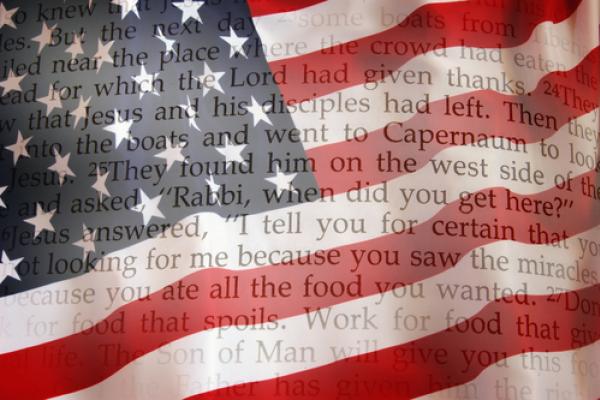
Both religion and politics are concerned with how we should organize societies. Yet the tendency for Christians has often been to begin with the politics and work backwards to find religious rationale for our political beliefs. As a result, most people read the Bible not to challenge our deeply held beliefs, but to affirm the decisions we've already made with our lives.
If you tend toward the political right you might say the chief political concern of the Scriptures has as much to do with smaller government, lower taxes, individual freedoms and gun rights as any explicit Christian concept.
If you tend toward the political left you might believe the chief political concern of the Scriptures has more to do with reproductive rights, religious pluralism, big government and labor unions.
Too often the ideologies of the secular right or the political left have been allowed set the terms for religious Christians.