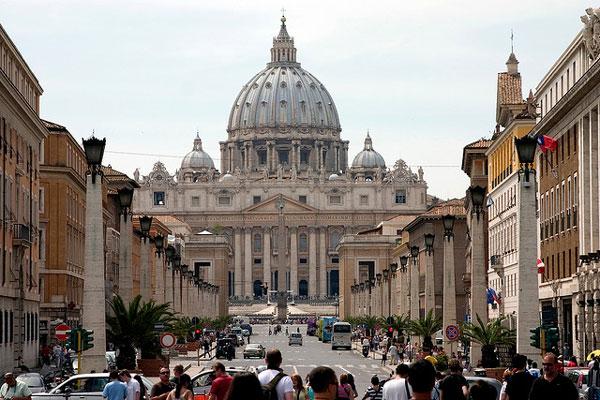
Just one week after Pope Benedict XVI ended his successful visit to Lebanon, the country's most senior Catholic leader called for a United Nations resolution “that will ban denigrating religions.”
Meanwhile in Pakistan, the country's only Catholic cabinet member, Minister of Harmony Paul Bhatti, this week told an interfaith gathering in Lahore that he will press U.N. Secretary General Ban Ki Moon to pass a UN resolution that condemns "defamation and contempt against religions." Bhatti said "we must not allow anyone to break our harmony" between Christians and Muslims.
Both moves are understandable in light of increasingly popular efforts in predominantly Muslim countries to outlaw blasphemy or defaming religion. But they could prove problematic for the Vatican as it fights to protect the rights of Christian minorities around the world.
The debate suggests a widening gap between the Vatican's official position, which opposes such measures, and the day-to-day reality of Catholic leaders on the ground, who often feel compelled to support Muslim efforts to protect religious tenets and religious figures from defamation.
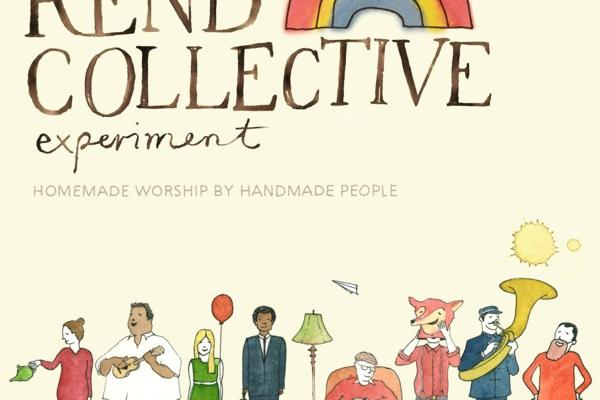
God Girl's New Favorite Thing for Sept. 27, 2012: Northern Ireland's Rend Collective Experiment
I love music. I love Jesus. And I love all things Irish.
So when a friend introduced me to Rend Collective Experiment last year, chances were pretty good that I'd vibe with this band from the North of Ireland (Bangor, to be specific.)
But ... and this was a BIG but ... my musical proclivities, while decidedly ecclectic, generally steer clear of contemporary Christian worship music (especially if it's billed as such.) When it comes to having a musical worship experience, give me Chris Martin and his bandmates, or those other four greying boyos from a little farther south in the Republic of Ireland.
Without putting too fine a point on it, Rend Collective are very much a contemporary Christian worship band. But they aren't what you're thinking.
Neither painfully earnest nor woefully twee. They're fun and funky — earthy, too, in a grab-your-banjo-and-trilby-hat kind of a way.
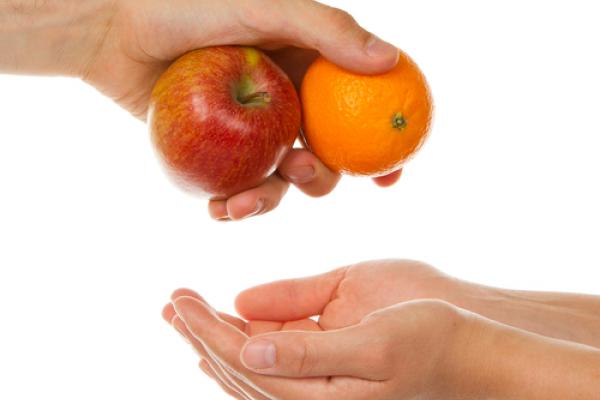
Food assistance programs have been helping millions of people get through the recession. With poverty remaining at record high levels, we should be grateful that these resources are available to protect families from hunger.
Unfortunately, some of our nation’s elected officials see it differently. New legislation (H.R 6518) introduced by Congressman Paul Broun and members of the Republican Study Committee targets some of the very programs designed to protect the most poor and vulnerable. Under the proposed legislation, six food programs administered by the federal government would be combined into a single block grant to states.
Does that sound like Washington slang? What it means is that spending on food programs would be dramatically reduced, administration of these programs would be shifted to state governors, and benefit level would likely vary from state to state. Programs such as the Supplemental Nutritional Assistance Program (SNAP) and Emergency Food Assistance (TEFAP) would be threatened by this legislation.
The world's most dangerous hiking trail, some underwater streets, skyscrapers cleaning our air, and having a cold brewski with President Obama. And then 2,601 people collaborated on a song. Today's links of awesomeness are pretty awesome.
"High nigh br-eye-n, K-eye"? Come again? Rend Collective and Bart Millard (of the band MercyMe) give us a lesson in how to speak Northern Irish.
“Another world is not only possible, she is on her way. On a quiet day, I can hear her breathing.”
~ Arundhati Roy
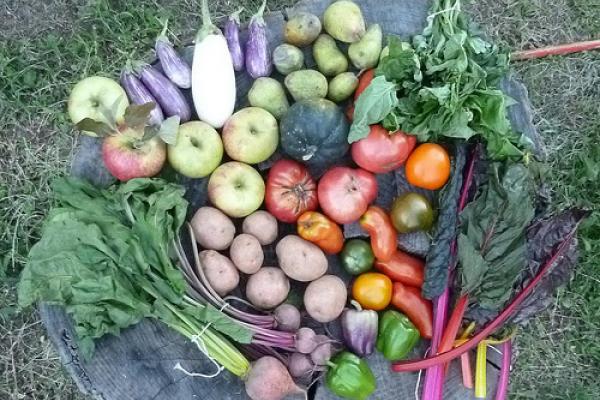
Vegetables.
Who could have imagined an economy in which gentle vegetables were subversive?
But this is our world. A world where a vegetable, whose growth is imperceptible to the naked eye, can spider a crack into the concrete of our industrial food system.
We find ourselves in a food economy that sickens us. Health is divided along race and class lines: the food economy particularly sickens those whose wages do not allow them to buy the foods that can cure us of the diseases industrial “foods” cause.
Corporations, which do not speak the language of human love and health, wrangle to profit from the stream of ill Americans falling from the industrial foods conveyor belt. But we know that type 2 diabetes, heart disease, obesity, and some cancers are fully preventable by replacing part of what we eat with fruits and vegetables.
Why, in a wealthy, fertile country are we wrecking the environment to produce foods that kill us?
The difference between sex trafficking and freelance prostitution is who has the control and who is keeping the money, said prosecutor Lindsey Roberson, an assistant district attorney in New Hanover County. If a girl or a woman is being forced or coerced by a pimp to perform sex acts without monetary gain, that’s trafficking.
The North Carolina Coalition to Combat Human Trafficking ranks the state among the top 10 states for the problem. North Carolina’s three major highways connect much of the East Coast, and the state has a large transient military and farmworker population, and international seaports in the Cape Fear region.
In May, Roberson helped start a deferred prosecution pilot program for first-time offenders with prostitution charges, partnering with a local rape crisis center.
As a Christian, Roberson is also on the board of a new faith-based effort called the Centre of Redemption, which is scheduled to open in December to help pregnant teens and teen moms who are also trafficking victims.