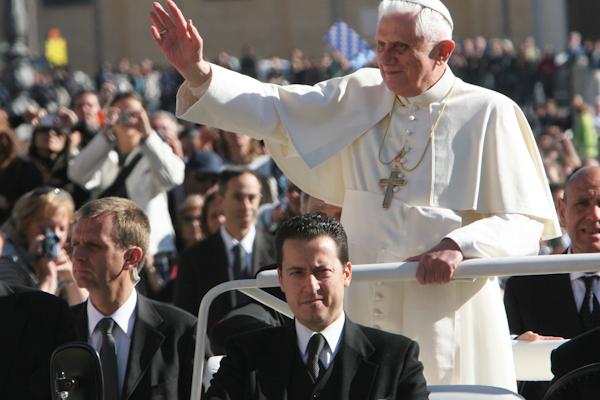
The Vatican's most sensational trial since the end of the Inquisition might end fairly quickly — and with a surprisingly light sentence.
Paolo Gabriele, Pope Benedict's former personal butler, goes to trial on Sept. 29 for stealing the pontiff's private papers and leaking them to the press. His crime proved a global embarrassment for the Vatican, revealing infighting and allegations of corruption among the secretive top echelons of the Catholic Church.
But, according to professor Giovanni Giacobbe, a Vatican prosecutor, a conviction carries a maximum jail term of only four years in the lenient legal system of the world's smallest state.
Gabriele was arrested by Vatican police on May 23, and will be tried for “aggravated theft” together with Claudio Sciarpelletti, a computer technician at the Vatican's Secretariat of State who has been charged with aiding and abetting Gabriele.
At its best, Christian faith provides a moral compass for advancing the common good. At worst, Christianity can be hijacked by partisan political agendas that divide and destroy. Sojourners encourages you to develop a robust and well-informed conscience around elections, measuring candidates and their platforms against Christian ethics and values. While we must be careful about translating scripture directly into public policy positions, there are principles and suggested approaches on a range of issues that can provide a critical framework to shape our perspective on public policy.
As we have since 2004, Sojourners has published an issues guide of principles and policies for Christian voters. We encourage you to use this guide to educate yourself on these issues. This can inform you as you write letters to candidates or to your local newspaper, call radio talk shows, and ask candidates at forums or town hall meetings questions based on these principles. Think and pray about whom, you would entrust with the responsibility to lead your community, state, and nation.
According to Article 19 of the Universal Declaration of Human Rights, “Everyone has the right to freedom of opinion and expression; this right includes freedom to hold opinions without interference and to seek, receive and impart information and ideas through any media and regardless of frontiers.”
Similarly, the First Amendment to the United States Constitution declares “Congress shall make no law…prohibiting the free exercise of; or abridging the freedom of speech…”
While certain opponents exist, most of us agree that free speech is an essential ingredient for a mature democracy, thus it should be encouraged, protected, and further developed. With these thoughts in mind, while we should indeed celebrate the numerous positive outcomes of free speech in the USA, we should also account for its costs, for even the most worthy of causes – such as free speech – bring an assortment of unintended negative consequences.
As our November Election Day draws closer, we are mindful that a defense of free speech has led to millions of dollars directed toward ads, phone calls, literature distribution, and other activities that seek to sway the electorate. As countless studies have shown, the totality of these campaign strategies holds a significant impact on voter decisions and overall turnout.

For most of my life, I have been a “Christian with conjunctions.”
So I’m a Christian BUT… I’m not like that street preacher who yells about hell and damnation on the downtown corner.
I’m a Christian BUT I’m different from the televangelist who raises his fist in the air and screams about salvation.
My own priest, the Rev. Thomas Murphy, first described himself as a Christian with conjunctions in a sermon the morning before our Episcopal congregation took to the streets during a festival in downtown Asheville, N.C. Across the street from a karaoke booth, we handed out cold water to festivalgoers and offered a simple ministry with no judgment or obligation.
For most of us, it was the first time we had prayed the Eucharist in public, with our colleagues, students, and neighbors walking past. The white banner above us proclaimed: “God loves you. No exceptions.”
I have realized that the ubiquitous street preacher has something to teach me: there is virtue in being bold about my faith. Through my research on congregations and climate change, this public witness to God’s love has become easier for me as my church life now reflects my deep value of God’s good earth.
The stakes of silence are high. If we don’t speak out and act on our moral mandate to reconcile with creation, we risk destroying God’s very creation.
What if music were ethics?
You know, the art of listening and producing sounds as ethics?
I'm just thinking on the old blog here. I'm preaching next Sunday and I'm thinking about listening and music and how we learn to be good to one another. Somewhere someone wrote "It is better to give than receive."
It takes a lot for me to get excited.
Maybe I'm cautious, or maybe I'm just a tough sell, but it takes a big something to get me on board.
Today was that big something.
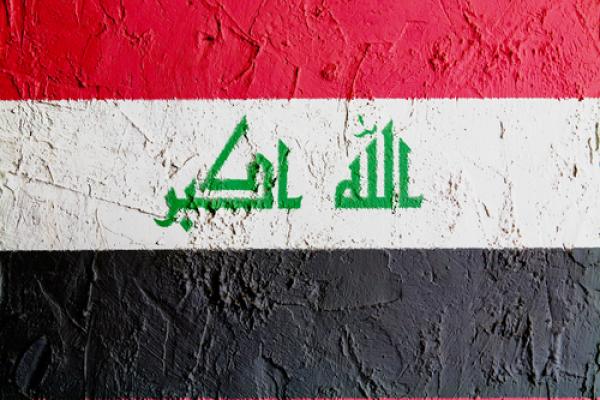
Last week, Pamela Geller of the Freedom Defense Initiative and Stop Islamization of America, put up ads in New York City subway stations that read, "In any war between the civilized man and the savage, support the civilized man. Support Israel. Defeat Jihad."
Well, I think that's a problem. And Sojourners thinks that's a problem.
Our world is a powder keg, and Geller flagrantly lit a blowtorch with these ads, which, in case you were wondering, are protected fully under the Constitution.
They may be legal, but they're not moral.
Most of us know what physics is, but what in the world is metaphysics? One might first recall Meta World Peace, who currently plays for the Lakers. So, metaphysics is just another one of those guys who adopted some sort of weird name, right?
Wrong.
According to John Cobb, a theologian who played a crucial role in the development of process theology, metaphysics asks, "what is it in and of itself that constitutes what is truly real and actual"? In physics you don't quite get to that. Metaphysics deals with ousia, which is substance in Greek. The world is made up of substances and the questions of metaphysics are to understand what substances are.
Woah. That sounds intense.
You can hear more and hopefully understand a little more (via the "substance" of your brain) HERE, as Cobb talks theology during the Emergent Village Theological Conversation at Claremont School of Theology in California.
As the radio emcee at Homebrewed Christianity describes it, "It's time to nerd out with your geek out."