
This past year, I’ve been working out of my house, something like a stay-at-home dad, what with the after-school hours and school holidays and such. All day, everyday – or at least whenever I get up from my desk to go to the bathroom or get a glass of water or collect the mail – I observe the messes my kids have made, the dirty dishes in the sink (or, more likely, scattered on coffee tables, the dining table or kitchen countertops), the dried mix of toothpaste and spit all over the vanity, the explosion of Legos and Polly Pockets and precious scraps of torn fabric they collect to role-play their fashion-design dreams – hundreds upon hundreds of swatches, all frayed edges and little threads perpetually freeing themselves and covering the carpet, much as dog hair would, except we don’t have a dog because I hate dog hair all over everything, and you can’t hate your daughters’ fashion-design dreams.
What I have discovered, in all this mess, is that I am a selfish, lazy bastard. When I get really fed up, or just need to do something physical, I might vacuum a couple of rooms or clean half a bathroom or straighten up the kitchen or do some little household project like patch a hole in the drywall from when the toilet-paper holder fell out of the wall six months ago. But that Benedictine slogan, ora et labora, “pray and work,” the idea that drudgery points you to God? Forget it. I’ve seen beautiful portrayals of it, like in the film Of Gods and Men, how the monks wash dishes or hoe rows or mend fences without complaint, because taking care of one another is part of their calling. “Let the brethren serve each other so that no one be excused from the work in the kitchen,” states St. Benedict’s Rule. “We all bear an equal burden of servitude under one Lord.”
I don’t doubt that taking care of my family – not just earning money, but hands-dirty domestic sort of care – is part of my vocation. In fact, it’s probably the part of my calling that’s closest to monastic holiness, if I’m honest. It’s just that I find the other parts of my calling: the writing, the making music, the seminary studies – I find all of this a whole lot more interesting than scrubbing the toilet. That is to say, if I’m honest, I think my thoughts and my words and the combination of sounds I create are more important than keeping our home clean – at least, that’s the belief I act on, more often than not. Selfish, lazy bastard. I told you, didn’t I?

WASHINGTON — A bronze statue of civil rights heroine Rosa Parks was unveiled at the U.S. Capitol Wednesday, a day for members of her African Methodist Episcopal Church to celebrate one of their own.
President Barack Obama, capping an hourlong ceremony in Statuary Hall, recalled the desegregation of public buses in Montgomery, Ala., after a yearlong boycott that was sparked by Parks’ simple act of defiance: refusing to move to the back of the bus.
“And with that victory, the entire edifice of segregation, like the ancient walls of Jericho, began to slowly come tumbling down,” he said before hundreds gathered just outside the Capitol Rotunda.
As Parks was hailed for her civil rights achievements, members and leaders of her African Methodist Episcopal Church celebrated Parks taking her place among the monuments to American icons from every state and walk of life.
Parks was a stewardess, who helped with Communion and baptisms in her local AME congregation in Detroit, and also a deaconess, the highest position for a laywoman in the denomination. She died in 2005 at age 92.

Politics at its best serves the common good — far above any one interest or political party. And right now in Washington, we see that playing out as we continue to reach accord on immigration reform. But when it comes to our budget debate, partisan ideology and special interests are winning out over the common good.
The ever-looming “sequester” that was never supposed to happen goes into effect tomorrow. Billions of dollars will be cut from domestic and military spending without any plan or strategy; jobs will be lost and people will suffer. Public frustration is growing with our elected officials, while they continue to argue over the role of government instead of governing responsibly. The press discusses who wins and loses in the polls, but it is clear that it is the common good that is losing.
On the other hand, immigration reform is being discussed, at the same time with the same political players, in a very reasonable and hopeful way. On that important policy change, bipartisan work is going forward to shape legislation that could pass both houses of Congress.

The House Judiciary Committee yesterday held one of the first public hearings on U.S. drone strikes, with Democratic and Republican members expressing concern about the secret program. Reuters reports:
“The public congressional hearing on "drone-kill policy" was noteworthy: government officials refrained for years from even uttering the word "drone" when talking about the use of armed, pilotless aircraft because such operations were classified.
“But in the past year, the White House has sought more publicly to present its justifications for drone strikes, through comments by officials like Obama counterterrorism adviser John Brennan, who has been nominated to become CIA director.”

While the U.S. continues to debate whether the president has legal authority to order the drone killing of American citizens, it seems the British have found their answer to the question. According to The Independent:
“The Government has secretly ramped up a controversial programme that strips people of their British citizenship on national security grounds – with two of the men subsequently killed by American drone attacks.
“An investigation by the Bureau of Investigative Journalism for The Independent has established that since 2010, the Home Secretary, Theresa May, has revoked the passports of 16 individuals, many of whom are alleged to have had links to militant or terrorist groups.”
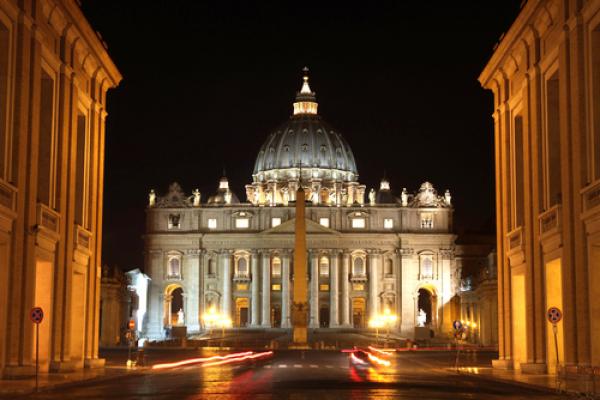
The Vatican appears rocked by scandalous rumors and resignations just as church leaders must gear up to replace frail Pope Benedict XVI with a closed-door conclave.
But Vatican experts say if you think the world’s largest nongovernmental institution is in unprecedented chaos right now, think again.
Vatican Secretary of State Cardinal Angelo Sodano presents the papal fisherman ring to Pope Benedict XVI at the new pope’s installation Mass. The fisherman’s ring bears an image of Peter, his boat and his net, which figure in two Gospel accounts of miraculous catches of fish. Benedict said that while fish die when removed from the sea, “in the mission of a fisher of men the reverse is true.”
“Have you ever heard of the Borgias?” quipped professor Terrence Tilley, chairman of the theology department for Fordham University in New York. They were the larcenous, adulterous, murderous, election-rigging, Renaissance-era family of renaissance popes “who ran the papacy for decades like a private fief.”
For all the sex, money, and power headlines wafting out of Rome these days, at least no one has been murdered. Infighting and innuendo, though, are ancient traditions that have moved into the bright lights of the 24/7 news cycle and social media.
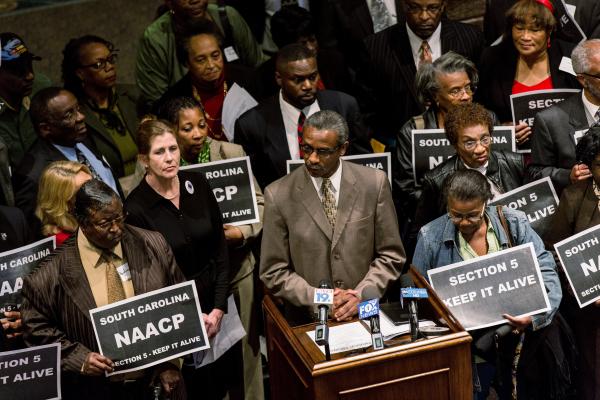
I was on the airplane, looking forward to reading Taylor Branch’s new book, The King Years: Historical Moments in the Civil Rights Movement. As I opened my Kindle, I realized that it offered large excerpts of Branch’s previous works, and was glad that while I have the other books in hard cover, I had these stories in my Kindle. But as I re-read some of the accounts, I realized that my 40-something-old self reacted differently than when I first read some of the accounts when I was 20-something. My younger self yearned to know: How did they organize? How did they deal with differing motives and different movements? And I yearned to believe that I, too, would have sacrificed my being for “The Movement.”
My late 40-something-old self read these words as a mother — as someone who understood the fury of the parents who were scared as their children sacrificed their very lives for justice’s sake.