
Argentinian Cardinal Jorge Mario Bergoglio was elected as Pope Francis I on Wednesday, after only two days of voting in the conclave tasked with choosing a successor to Pope Benedict XVI.
According to anonymous reports of the 2005 conclave, he was the leading contender against then-Cardinal Joseph Ratzinger, who became Benedict XVI. Bergoglio, 76, has served as the archbishop of Buenos Aires since 1998 and was made a cardinal in 2001. He is the first Latin American and the first Jesuit to rise to the papacy.
In his first address to the huge crowd that had gathered in St Peter’s Square, Francis asked for the prayers of “all men and women of good will” to help him lead the Catholic Church.
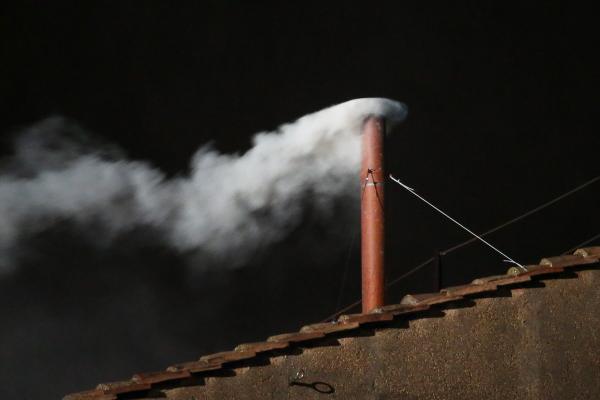
White smoke billowed from the chimney atop the Vatican's Sistine Chapel on Wednesday, followed by bells ringing from St. Peter's Basilica — signaling the election of a successor to Pope Benedict XVI.
Jorge Cardinal Bergoglio, 76, current Archbishop of Buenos Aires, will be Pope Francis I.
It took just two days and four votes for the 115 members of the College of Cardinals to elect the new pope.
We will continue to update you as more information is released.

I have often wondered about the trajectories my life has taken. I was raised a Latino Pentecostal in New York City but educated in a liberal arts tradition at Columbia University in Manhattan. I was exposed to evangelical and then liberal Protestant traditions in seminary and graduate school. My theological views have changed over the years. I have moved from Pentecostal to Baptist to Congregational (United Church of Christ) church traditions.
Yet at each step of the way, I have been able to build on the solid foundations of the past in moving to new understandings for the new circumstances in my life. These life transitions never started from “scratch.” Some of these same tensions might have motivated Paul in considering, at least rhetorically, his past a “loss” in comparison to a new way of living and being in Philippians 3:4b-14.
...
In these days, what are the sources of such life-altering “new knowledge?” There are many places for us to turn. Though I grew up without guns, I was surrounded by plenty of gun violence in my inner city neighborhoods in the Bronx and Brooklyn. In the aftermath of the tragic losses of our children and educators in Newtown, Conn., I wonder if we have gained any new knowledge. Apparently, we live in a country that values the freedom to own guns, even overly powerful ones like assault rifles. “Second Amendment rights” are invoked as if our founders could predict the kinds of weapons that would be available to regular Americans today, even with the “militia” (local police forces) that we also have available to us.
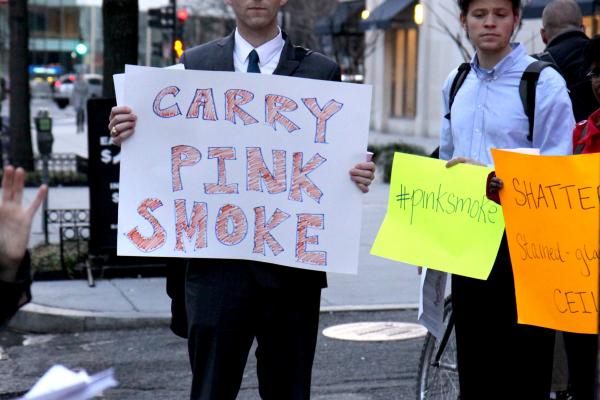
As cardinals in the Vatican wrapped up the first day of the conclave with no decision on the next pope, a small crowd assembled on the steps of the Cathedral of St Matthew the Apostle here in Washington, D.C., with signs, a guitar, and fervent prayers that the conclave would usher in a new openness to women in Catholic leadership.
The chilly March wind rose as volunteers passed around flickering candles. “There’s too much Holy Spirit here tonight,” one organizer joked. “We should tell her to tone it down a bit.”
Those assembled were praying for something popes have long opposed: an active recognition of women as decision-makers in the church.
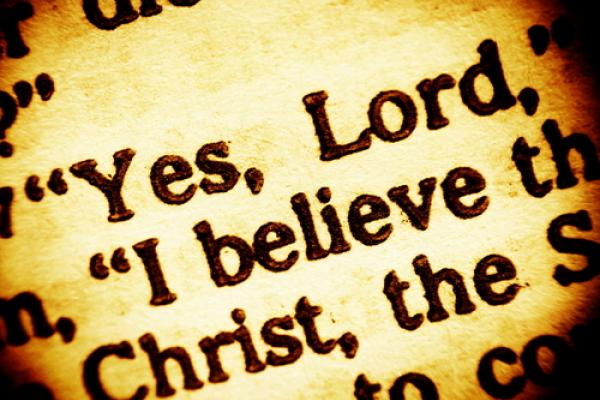
I am part of a liturgically worshiping tradition. There are days I wish I wasn’t; days when our Kyrie is lacking splendor and our Eleison feels redundant; moments that I wish we could get to the important stuff — my inspired and infallible message (I kid) — and toss the unending Psalm or Prayers of the Church.
And then there are the other times, when I am guiltily reminded that cutting the creed means missing out on the same words spoken by millions of believers before me. Or when the music just all works and my heart is stirred by the Hallelu– (shhh, its Lent) Chorus.
So I like to remind my community of believers from time to time why we do what we do. I have long felt the risk of liturgy is that it becomes rote narration, a thoughtless speechifying of sorts. So that this might be avoided, here are my thoughts on the creeds and why a corporate confession of faith is still valuable today.
The White House announced today the appointment of Melissa Rogers as new director of its Office of Faith-Based and Neighborhood Partnerships. In a statement, former director Joshua DuBois called Rogers a "leader on religion and public life" and a "stalwart advocate for religious freedom." He added:
Melissa is also a committed Christian and lifelong Baptist. She is active in her local church – I know that Melissa has taught youth Bible study, she and her family volunteer with the church food pantry, and she takes care of infants in the church nursery – and she truly cherishes the role of people of all faiths and belief in American public life.
Sojourners president and CEO Jim Wallis released the following statement:
I’m privileged to know Melissa Rogers as both a valued colleague and a friend. Over the course of her career she has distinguished herself by her ability to thoughtfully and knowledgeably bring her faith and her understanding of the law to bear on important questions of public policy. Her genuine spirit and concern for others has earned her the trust of people on different sides of issues. Her deep competence on legal and policy matters will be very helpful in her new role. She will serve both the White House, the country, and the faith community well in this new position. I can't think of anyone who would have been a better choice for this key job at this critical time. Melissa is widely respected and trusted in the faith community, and many of us will support and assist her in any ways we can. Good choice, Mr. President!
When Ugandan parliament member, David Bahati, introduced the so-called “Kill the Gays Bill” in 2009, many Americans were shocked, including a group of 60 ecumenical Christian leaders who released a statement deploring the bill.
But as Frank Mugisha told Sojourners magazine earlier this year, what is perhaps more upsetting, albeit little known, is the level of influence American evangelicals have had in crafting Uganda’s violent homophobia.
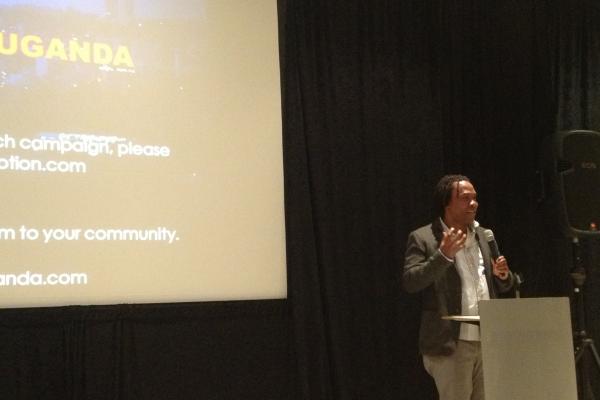
Academy Award-winning director Roger Ross Williams hopes to put this issue front and center with his new film God Loves Uganda, which made its Washington, D.C., premiere Tuesday night at the Human Rights Campaign headquarters.
The film opens with Rev. Kapaya Kaoma, an Episcopal priest from Boston by way of Zambia, who went to Uganda in 2009 to study the relationship between American conservatives and the Ugandan people. What he found was that “religion was being used to demonize and even to kill.”