
While the drone debate continues to grow, the administration is moving to expand their use. According to the Washington Post, the U.S. Air Force began flying surveillance drones from a base in Niger late last month.
“Since taking office in 2009, President Obama has relied heavily on drones for operations, both declared and covert, in Afghanistan, Iraq, Pakistan, Yemen, Libya and Somalia. U.S. drones also fly from allied bases in Turkey, Italy, Saudi Arabia, Qatar, the United Arab Emirates and the Philippines.
“Now, they are becoming a fixture in Africa. The U.S. military has built a major drone hub in Djibouti, on the Horn of Africa, and flies unarmed Reaper drones from Ethiopia. Until recently, it conducted reconnaissance flights over East Africa from the island nation of the Seychelles.
“The Predator drones in Niger, a landlocked and dirt-poor country, give the Pentagon a strategic foothold in West Africa.”
At this point, the primary objective from the new base is the fight against an Islamic insurgency in Mali, intelligence information from the drones is shared with French and African troops involved.
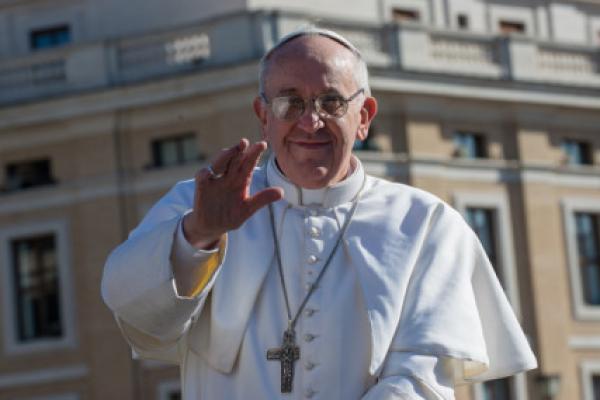
Since the moment of his election on March 13, Pope Francis has been warmly embraced by his own flock and even the media and the wider public in a way his bookish predecessor, Benedict XVI, was not.
Such an effusive welcome is especially good news for Catholic leaders who spent years fending off criticism of Vatican dysfunction under Benedict and a cloud of scandal and crisis at home. And the hot start for Francis is also crucial in building up a reservoir of good will that will be needed when the new pope refuses to bend on unpopular teachings or commits a gaffe of his own. Polls show that anywhere from 73 percent to 88 percent of American Catholics say they are happy with the selection of Francis, as opposed to about 60 percent who were happy with the choice of Benedict — and many of those are extremely pleased with the new pope.
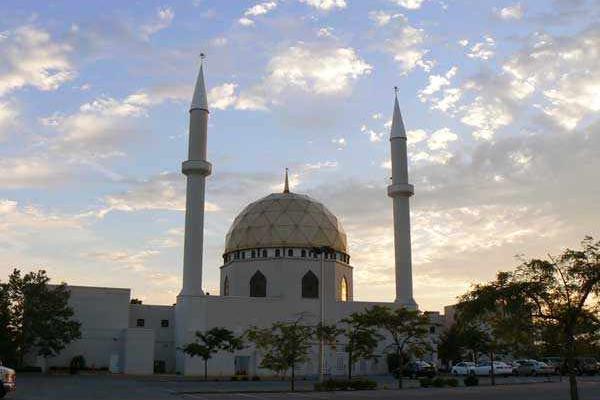
A federal judge on Thursday denied an Indiana man’s request to withdraw his guilty plea in an arson blaze last September at a Toledo-area mosque.
The judge confirmed a sentencing date of April 16 for Linn, who was charged with intentionally defacing, damaging, and destroying religious property; using a fire to commit a felony; and using and carrying a firearm to commit a crime of violence. Judge Jack Zouhary of U.S. District Court in Toledo said Randolph Linn, 52, of St. Joe, Ind., was fully competent on Dec. 19 when he pleaded guilty to federal charges related to the Sept. 30 fire at the Islamic Center of Greater Toledo.
Linn, who did not testify at the hearing, had filed a motion seeking to withdraw his guilty plea, saying he had signed the plea under duress and that he “did not have the opportunity to discuss defenses, tactics, strategies, or the nature and effect of my guilty plea and sentencing.”

We're anticipating.
We're jubilant!
“Hosanna in the highest! Blessed is he who comes in the name of the Lord!”
So, we dance and we sing.
But just before this moment in the story there's this surprising passage. The Gospel of Luke reads, "As they were listening to this, he went to tell a parable, because he was near Jerusalem, and because they assumed that the kingdom of God was to appear immediately."
"Immediately." Well, at least they knew their own minds. This is the trouble about knowing our own minds. It's not the same thing as having a thesis with a well constructed argument. And it's not the same thing as being right.

As a seminary graduate and a Masters of Social Work student, I have a passion for social justice and working to improve the wellbeing and health of vulnerable populations. After seminary, during my time as a youth leader, we often turned to Matthew 25:31-46, the familiar passage about “the least of these,” and discussed God’s emphasis on justice and serving the marginalized in our societies.
My time as a social work student, particularly through my current class on international social work, has expanded my concept of the “least of these.” We have learned about some of the most vulnerable populations around the world – child soldiers in Uganda and Colombia, young girls trafficked into the sex trade in Cambodia, HIV/AIDS patients from Haiti, migrants left to die in the desert while trying to cross the Mexican-U.S. border, and the list continues. These concepts were not completely unknown to me and would likely not be new to you either. This past week, however, we studied a different topic, one that has not drawn as much media attention – global mental health.
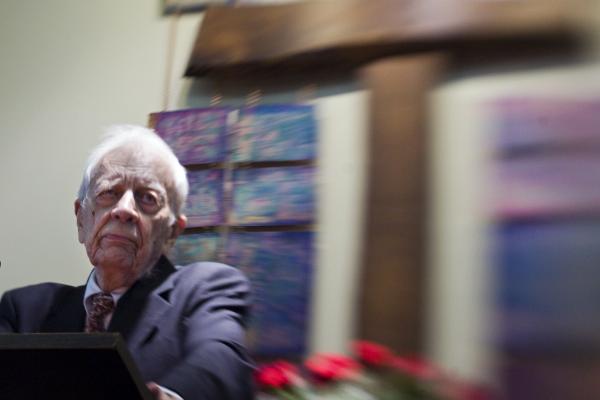
Gordon Cosby was my spiritual father, not simply a brother in Christ. This relationship continued for some 45 years until his dying days. In a time when egalitarianism defines nearly all relationships as the desired norm, it’s well to remember the role of mentors who maintain, purely through their own internal integrity and faithfulness, a spiritual authority in the lives of others. Gordon Cosby was such a person to me, and to countless others.
I first encountered Gordon when I was a young legislative aide on the rise in Washington, D.C., working for Senator Mark O. Hatfield and his legislative efforts to end the Vietnam War. Disgusted with the moral vacuity of the evangelicalism that had been my heritage, but searching for faith that was more than just following a progressive social agenda, I discovered the Church of the Saviour. Gordon’s insistence that following Jesus required a disciplined inner spiritual journey always expressed in joining God’s outward mission in the world captivated me then, and ever since.
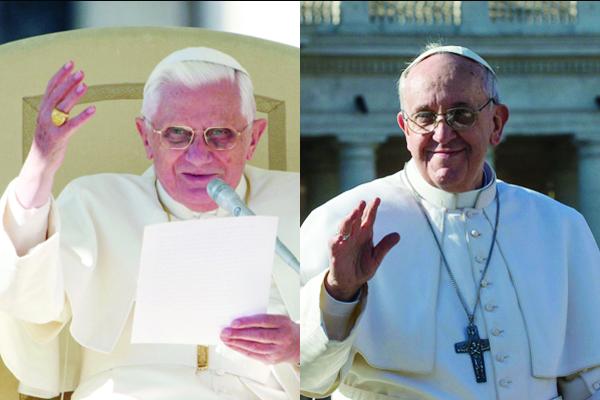
Now that the cardinals have elected and installed their new boss, Pope Francis can get to work being the Roman Catholic pontiff, with his next order of business doing something no other pope has done in centuries: meet the guy he replaced.
Benedict’s resignation — the first by a pope in 600 years — paved the way for the conclave that elected Francis on March 13, but it also created an almost unprecedented potential for confusion and division in a church hierarchy that has room for only one pope at a time.That will happen on Saturday, when Francis is scheduled to travel a few miles outside Rome to the hilltop town of Castel Gandolfo, the summer papal residence where Benedict XVI has been staying — out of sight — since he resigned and left the Vatican on Feb. 28.
“Benedict XVI could turn into a shadow pope who has stepped down but can still exert indirect influence,” said Hans Kung, the dissident Swiss theologian and friend (as well as frequent critic) of Benedict’s since he and the former Joseph Ratzinger were up-and-coming theologians.

When it comes to the Keystone XL pipeline, the oil and gas industry want you to believe that you have to choose between jobs and prairie grass. This tactic is called the “divide and conquer” or “divide and rule” strategy. It’s as old as the empires of ancient Greece and Rome. It still works because human nature hasn’t changed that much.
Two years ago I sat down across the table from Dr. Kerri-Ann Jones, the highest ranking State Department official (short of the Secretary of State) to weigh in on the Keystone XL pipeline permit process. A group of religious leaders were delivering thousands of petitions to Dr. Jones asking her to to stop the pipeline.
I said to her, "If this decision about the pipeline was made purely based on the climate science, we wouldn't be here having this discussion." She’s a scientist. She knows the score. She didn't disagree. “But,” she said, “everywhere we go across the country we hear about the need for jobs – especially in the middle of the country.”
Divide and conquer.
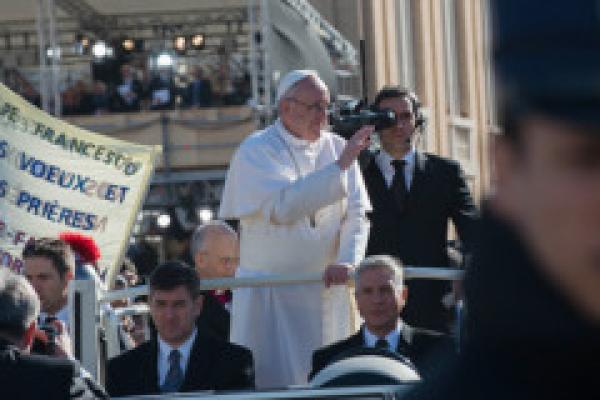
VATICAN CITY — Pope Francis on Friday called for more intense dialogue between religious leaders, particularly Muslims, as he tries to recalibrate relations between the world’s two largest religious groups.
Speaking in the Vatican’s majestic Sala Regia, the Argentine pontiff said that part of his mission is to connect “all people, in such a way that everyone can see in the other not an enemy, not a rival, but a brother or sister.”
In a meeting with Vatican diplomats and foreign leaders, Francis also reaffirmed the church’s commitment to protect the poor and the environment, an early theme in his young pontificate.
“Fighting poverty, both material and spiritual, building peace and constructing bridges: these, as it were, are the reference points for a journey that I want to invite each of the countries here represented to take up,” the pope said.