Over the past two years, an alliance of faith, law enforcement, and business leadership has come together to forge a new consensus on immigrants and America. These relationships have been built through outreach in the evangelical community; the development of state compacts in Texas, Indiana, Utah, and Iowa; and regional summits in the Mountain West, Midwest and Southeast, where faith, law enforcement and business constituencies are strongest and support for immigration needs a boost.
Sojourners has been an active partner in this new alliance. As a founding member of the Evangelical Immigration Table, we have worked to lift up faith voices in the immigration debate and drive a new immigration discussion based on moral values.
In order to build momentum and increase collaboration, we’ve launched "Bibles, Badges and Business for Immigration Reform" (BBB) as a national network of faith, law enforcement and business leaders working together to educate and support members of Congress. 2013 presents a major opportunity for immigration reform, and this rising network of allies will become a driving force in the renewed effort.
In the video below, Sojourners’ Jim Wallis and Lisa Sharon Harper discuss the importance of working with other constituencies to enact commonsense immigration reform.
Investigative reporter Lee Fang looks at how private prison corporations are making money off of criminalizing immigration status infractions and how they are protecting their profit margins by lobbying against pathways to citizenship and for increased "border security" when none is needed.
On the one hand, a pathway to citizenship and legal reforms sought by advocates could reduce the number of immigrants detained by CCA and its competitors in the private prison industry. “Private prison corporations have an enormous stake in immigration reform,” says Bob Libal, a prison reform advocate with Grassroots Leadership. “A reform that provides a timely pathway to citizenship without further criminalizing migration would be a huge hit to the industry,” he says.
On the other hand, Libal observed that a bill with increased security measures “could be very profitable” for the industry. Legislators and the Obama administration could adopt a plan that mirrors Republican proposals for an “enforcement first” approach, which include increased police powers, new mandatory detention and sentencing laws, further militarization of the border and proposals for more prisons and detention officers.
See more at How Private Prisons Game The Immigration System

The New York City Commissionon Human Rights is suing ultra-Orthodox Jewish business owners in Brooklyn because they posted signs calling on customers to dress modestly in their stores.
The commission said the owners, whose businesses are located in an ultra-Orthodox neighborhood, violated human rights law with signs that read: “No shorts, no barefoot, no sleeveless, no low-cut neckline allowed in this store.”
Ultra-Orthodox Jews practice a strict form of Judaism; men, women and older children are expected to wear clothes that cover their arms, legs and necklines.

Martha Rodriguez always thought Catholic school was expensive and out of reach — not a place for her kids. But when the time came to send her daughter to the same public middle school she’d struggled at decades earlier, Rodriguez decided to check out what the church had to offer.
“I was intimidated, I thought everyone there would be rich,” said Rodriguez, the daughter of first-generation Mexican immigrants. “But when I went, I was surprised — and kicking myself for not sending my kids sooner.”
Rodriguez now spends $800 a month to send two of her children to Catholic schools in Los Angeles. Her husband works as a paralegal, and she’s out of work, so tuition cuts into the family budget. But Rodriguez says it’s worth it to give her kids opportunities she never had.

So much for turning the other cheek.
After evangelical icon Tim Tebow canceled his scheduled appearance at First Baptist Church in Dallas because of controversial remarks made by senior pastor Robert Jeffress, the pastor appeared to fire back at the New York Jets quarterback in his sermon on February 24.
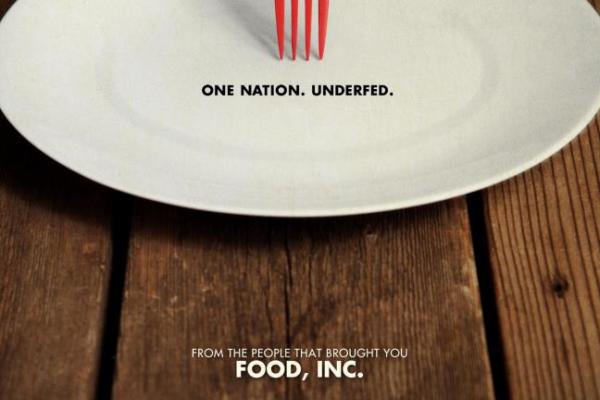
A new documentary from the producers of Food, Inc. premieres today, serving up the critical problem of rising hunger in the United States with a surprising thesis: we’ve already solved it.
… Forty years ago, that is. A Place at the Table, the newest documentary from Participant Media, reveals how political will in the 1960s and 70s ushered in an era of bipartisan-sponsored, government-funded programs that “nearly solved” the problem of hunger.
Compare that with today, in which 50 million Americans rely on food assistance programs – and nearly one-in-two children will require food assistance in their lifetimes. The stark disparity between then and now begs the question: what happened?

At the Justice Conference last weekend I had the opportunity to sit down with Nathan George, founder of Trade As One, and ask him about buying fair trade and his company's awesome — and newly launched — fair trade subscription service. Here is the fruit of that conversation.
The interview was edited for length and content.