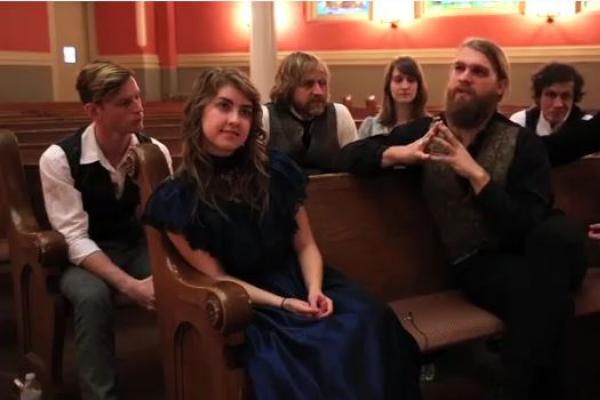
Chesapeake, Virginia-based folk band The Last Bison talked with Sojourners about music, creativity, and God before their show in Washington, D.C. a while back. Be sure to listen to their recently released debut album Inheritance and catch them while they're on tour in the U.S.! Their music is definitely worth a listen.

I spent an entire day a couple of months ago in an outpatient clinic (I'm fine; thanks for asking). I met a lot of nurses, and every one of them was excellent.
When Velda came to take away the remains of my lunch, I offered her my untouched can of ginger ale.
"I don't drink soft drinks," she replied. Since I rarely do either, we started chatting.
Velda grew up in Tanzania, moved to Belgium, spent several years in London, and finally came to the United States. She returns to Tanzania regularly, and she is not happy with what she sees.
"I grew up eating lots of vegetables," she told me. "We might have had ice cream once every three years. But now people are eating American-style junk food. They don't know it's not good for them."

The National Veterans Art Museum in Chicago has an unusual work of art.
When visitors first enter the museum, they hear a sound like wind chimes coming from above them. Their attention is drawn upward 24 feet to the ceiling of the two-story high atrium.
The metal dog tags of the more than 58,000 service men and women who died in the Vietnam War move and chime with shifting air currents. The 10-by-40-foot sculpture, titled “Above and Beyond” was designed by Ned Broderick and Richard Steinbock.
Family and friends locate the exact dog tag of a loved one as a museum employee uses a laser to point to the tag with the name imprinted on the dog tag, now part of a chorus of wind chimes.
After the horror and tragedy in Boston, our heads have been down. This work of art serves as a reminder to look up to hear the sound of the spirit of goodness, compassion, and creativity that can turn tragedy and death into wind chimes played in silence by the air.
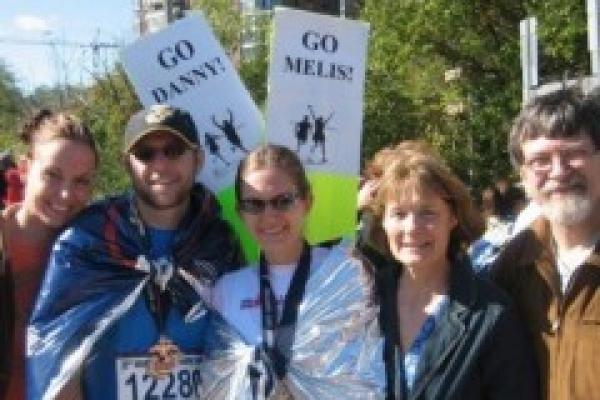
When it comes to running, America often looks like a country divided between apostles and apostates.
For true believers like Olympian Ryan Hall, marathons assume an almost-biblical importance.
“I have heard stories and had personal experiences in my own running when I felt very strongly that God was involved,” Hall, an evangelical Christian, has said.
Other Americans — athletic atheists, you might call them — roll their eyes and see marathons as a painful waste of a perfectly nice day.
In the Church of Running, I sit somewhere in the back pew.

No sooner had the reality of the Boston Marathon bombing sunk in on Monday afternoon than Muslim activists in the U.S. began sending out a slew of news releases, tweets, and Facebook messages urging prayers and aid for the victims — and condemning whoever was behind the horrific attack.
“American Muslims, like Americans of all backgrounds, condemn in the strongest possible terms today’s cowardly bomb attack on participants and spectators of the Boston Marathon,” Nihad Awad, executive director of the Council on American-Islamic Relations said in a statement on Monday.
It’s a familiar race against time for Muslim groups. Almost as soon as the smoke cleared around Copley Square, they knew from long experience that some would immediately point the finger of blame in their direction.
Many widely believed Muslims were behind the 1995 Oklahoma City bombing, until American militiaman Timothy McVeigh was convicted of the crime.
“We also call for the swift apprehension and punishment of the perpetrators,” Awad added, echoing a statement from the Muslim Public Affairs Council that called on “all of us as Americans to work together to bring those responsible to justice.”
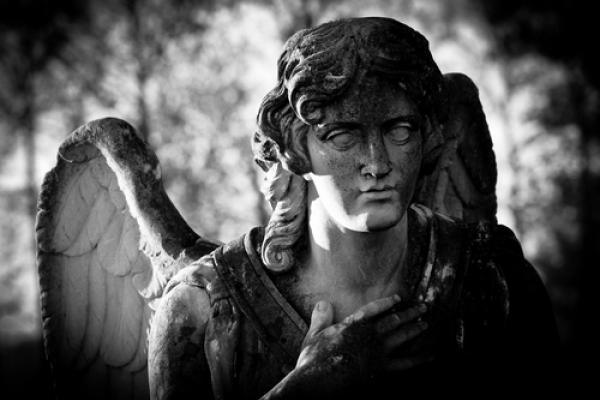
I am tormented by what took place at the Boston Marathon. An iconic event that is supposed to be a celebration of achievement and companionship will be scarred with memories of injury and death for years to come. However, the source of my distress is not only the horrific sights and sounds of violence and terror, but in such dreadful disasters I also struggle with our common conceptions of a loving God. As many wonder where God was in the midst of such tragedy, and while others question why God did not (or could not) prevent such terror from taking place, I am personally tormented with my belief of where God's love will be placed in its aftermath.
On the one hand, we are told “blessed are those who mourn, for they will be comforted” (Matthew 5: 4), and in receiving the Gospel in such ways, we take comfort in the belief that God is with those who suffer and directly at the side of those who struggle. This conception of a loving God offers relief for the victims in Boston and all those on the receiving end of transgression. However, while we proclaim a God in solidarity alongside those in pain, we are also often told that God is present with those who cause the pain, for the love and forgiveness found in Jesus is inclusive, it has no boundaries, and nothing is able to “separate us from the love of God in Christ Jesus our Lord” (Romans 8:38-39). So just as Jesus was sent to soothe those who suffer, he also absolves those responsible for the suffering. As a result, we are left with a God who seems to love both saints and sinners, which means we are both comforted and confronted in the aftermath of tragedy in Boston.
Resurrection is the theme of the 50 days of Eastertide. Yet, for decades, the month of April has been filled with particularly horrific deaths:
- The assassination of Martin Luther King, Jr. (April 4, 1968)
- The murder of 13 persons at the American Civic Association Immigration Center in Binghamton, N.Y. (April 3, 2009)
- The shooting death of 32 students at Virginia Tech. (April 16, 2007)
- The end of the Waco siege and the death of 82 members of the Branch Davidians. (April 19, 1993)
- The bombing of the Alfred P. Murrah Federal Building in Oklahoma City that killed one hundred sixty-eight children and adults. (April 19, 1995)
- The Columbine High School shooting resulting in deaths of 15 persons (April 20, 1999), a shooting that has been echoed in 31 schools since, most recently in Sandy Hook Elementary School of Newtown, Conn.
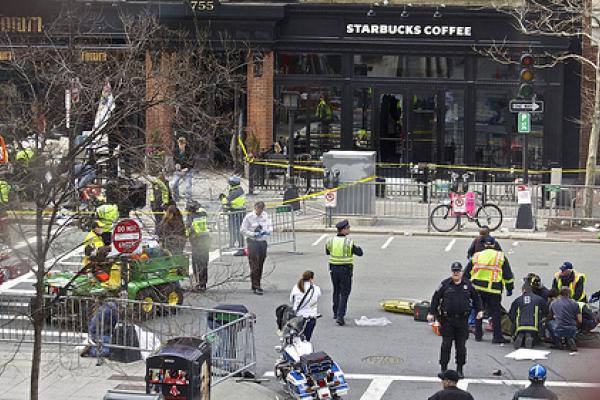
In 2013, April continues its trend. On Monday, April 15, someone decided to plant bombs along the route of the Boston Marathon. The explosions killed at least three people and wounded more than 100. Among the dead is 8-year-old Martin Richard.