
Pope Francis on Friday met with Pope Tawadros II, head of Egypt’s Coptic Orthodox Church, an encounter that brought the number of popes within the Vatican walls to three this week.
Benedict XVI, the emeritus pope, returned to the Vatican on May 2, two months after his resignation, while Tawadros is only the second Coptic pope to visit the Vatican, after the historic visit of Pope Shenouda III to Pope Paul VI in 1973.
Tawadros — on his first foreign trip since he was elected in November — is staying at the Vatican’s guesthouse where Pope Francis is also living. Benedict is now living in a revamped convent a 5-minute walk away, but there were no plans for the two men to meet.
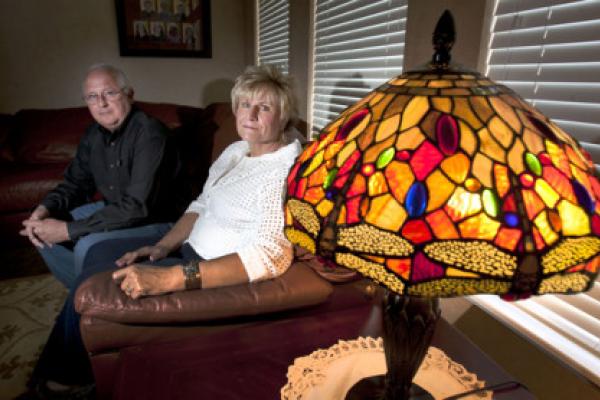
DRAPER, Utah — As young brothers, Kris, and Kourt McGuire often spent hours chasing the shimmering dragonflies that floated above a lush, green pasture behind their house.
One day, when their mom told them to come inside to clean their room, they silently obeyed — or so she thought. After a time, she went to check on the two youngest of her four sons. She found their bedroom alive with dragonflies, which they had tied with strings hung from the ceiling.
She smiled, and they all broke into laughter.
It’s one of Lyn McGuire’s favorite recollections of the two boys — a memory that predates the heartache of losing them both.
Kris died at age 8 in 1986, when a car hit him on the way to school. Kourt died about 10 years later, at age 17, killing himself amid depression and the still-stinging absence of his older brother.

Julia Ward Howe, best known for writing "The Battle Hymn of the Republic" in 1862, began working to heal the wounds of the Civil War once the war ended. By 1870 Howe had become convinced that working for peace was just as important as her efforts working for equality as an abolitionist and suffragette. In that year she penned her "Mother's Day Proclamation," exhorting women to:
“Say firmly: ‘We will not have great questions decided by
irrelevant agencies.
Our husbands shall not come to us, reeking
with carnage, for caresses and applause.
Our sons shall not be
taken from us to unlearn all that we have been able to teach
them of charity, mercy and patience.
We women of one country will be too tender of those of another
country to allow our sons to be trained to injure theirs.
From the bosom of the devastated earth a voice goes up with our own.
It says "Disarm, Disarm! The sword of murder is not the balance
of justice.’"

NPR ran a story today with an interview of a former Air Force drone pilot. He describes some of his experiences, including a death he believes was a child who ran into the target area at the last minute. It brought home to him “the reality of war. Good guys can die, bad guys can die, and innocents can die as well.”
You can listen to the interview here.

Recent studies from both the Urban Institute and the Pew Forum tell the story of America's growing racial wealth gap. In the May issue of Sojourners magazine, Otis Moss III talked about the unjust trend:
The call of the church has been, and always will be, to become the compassionate hands and feet of Christ. Poverty, when attached to race, is the original sin of America, a country built by slave labor and enriched by the unfair labor practices of the Industrial Revolution.
Read the full piece HERE.

See the full infographic at the jump.

The stories pastors, chaplains, and charity workers too often hear behind closed doors and through frustrated tears are being brought to light. Acting Secretary of the United States Department of Labor Seth Harris has hit the road to listen to people struggling to get by on the minimum wage.
Courageous people are publicly coming forward to tell their stories of personal pain, indignity, and frustration in the interest of creating the will to increase the federal minimum wage from $7.25 an hour to $9.00 an hour by 2015.

We have come to Kenya to hear our brothers and sisters bear witness to the ways environmental degradation and recent changes in the climate are harming them. Their testimony is disturbing and compelling. We are privileged to hear their stories, and honored by their trust in us as bearers of the message that they and their land, water, and air are suffering. Their words are a painful reminder of the brokenness of our world.
It is the most vulnerable in our world who suffer primarily and predominately from climate and other environment-related problems. While here, we are reminded that it is the poor who are affected first of all, and most of all, by these problems. The loss of one season’s crop can be catastrophic for those who live on the margins. Today, we are looking at massive dislocations in the ecosystems which sustain our world and all the life on it. Of these dislocations, the world’s poorest bear the brunt.