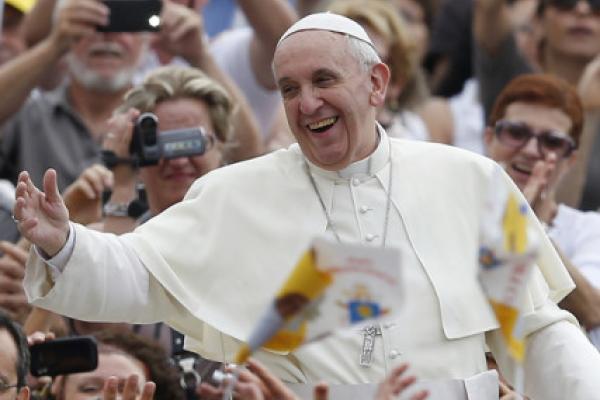
As Pope Francis approaches the one-year mark of his papacy, his global flock and a fascinated public are starting to measure the changes he is making against the sky-high hopes for transforming an institution many thought impervious to change.
Every personnel move and every new proposal is being scrutinized for what it might indicate about the direction of the church, what it might augur about possible adjustments to church teaching and whether the aspirations of so many will be fulfilled — or frustrated.
But as important as such structural and policy moves can be, church leaders and Vatican insiders say the 77-year-old Francis is really focused on a more ambitious (and perhaps more difficult) goal: overhauling and upending the institutional culture of Catholicism.
Francis, they say, is bent on converting the church, as it were, so that the faith is positioned to flourish in the future no matter who follows him to the throne of St. Peter.

Many viewers may be hoping that Cosmos: A Spacetime Odyssey lives up to the original series created by astronomer Carl Sagan 35 years ago.
But no one will watch the program, airing Sunday on Fox, with greater anticipation than nonbelievers — atheists, agnostics, humanists, and other “nones.”
Among this group, many credit Sagan and the original Cosmos with instilling in them skepticism of the supernatural and a sense of wonder about the universe. Both, they say, encouraged their rejection of institutional religion.
Humanists are especially eager. They claim Sagan as their own, and see in the Cosmos series — a multipart journey to the outer reaches of our universe — and in his dozen books a vibrant strain of their own philosophy. That philosophy favors reason over religion and holds human beings as both good and responsible for the Earth’s plight.
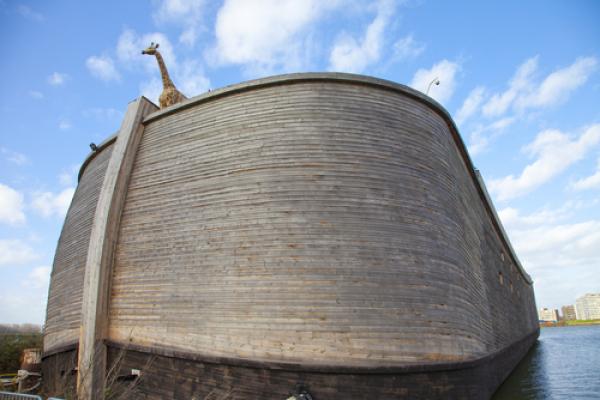
Every so often, the young-earth groups come up with an idea that is just so plainly, utterly, obviously wrong — in every sense of the word — that it demands a response from a larger subset of believers. To do otherwise would be to make a mockery of the Christ we claim to follow — a man who was hated by the religious establishment of the day precisely because he called them out for their hypocrisy and refused to let them claim divine fiat for their immoral actions.
I'm speaking of the so-called Ark Encounter. If you're not familiar with the project, it's the latest brainchild of Ken Ham (of recent "Ham on Nye" fame) and AiG, a planned "biblical" theme park centered around a scale, wooden replica of Noah's ark, constructed according to the instructions in Genesis (except this one will be built by teams of modern-day professionals rather than a single, unskilled old man, won’t be seaworthy, and won’t hold two of every unclean animal and 14 of every clean one).
Ham and his team have been discussing these plans for years, but few outside their devoted following paid them much heed till now, probably because the project’s well-publicized funding issues led us all to believe the thing would never be built. But, according to a statement by Ham last week, enough investors are on board to “start” construction on the 510-foot-long, boat-shaped building. The cost of completing the first phase of the theme park has been estimated at more than $70 million.
Seven years ago this week, I had my “come to Jesus” moment.
That’s not to say that over the past few years I haven’t had many experiences in which I’ve come away wondering “did I ever really believe up until now?” Many of those moments were far more profound and life-changing. It’s just that for me, it’s where a certain chapter of my life began.
I was raised in a Christian tradition that prized altar calls and bowing your heads, closing your eyes, and raising your hands to be saved. There was a clear delineator of when you were “born again” and when you were not. It was a moment in history, not just a spiritual exercise.
I don’t totally disagree. I think that there is something significant about the moment you first say yes, the same way I can remember the first time my best friend and I stopped just being colleagues. Our friendship has had many more important moments, but going to see Alice in Wonderland after work on a rainy Monday evening in March was where it started.
But as I have persisted (persevered for you Calvinists) in this faith I’ve discovered more and more what a relationship with God is like. In order for it to work, as Martin Luther famously said, all of life must be repentance. Every day the choice to say “yes” and not “no, I’m so done with this” is just as significant, if not more because coming to Jesus is often easier than staying.

Even the winter won’t last forever. We’ll see the morning, we’ll feel the sun.
We’ll wake up in April, ready and able, Sowing the seeds in the soil.
Even the darkness cannot disarm us. We’ll see the morning, we’ll feel the sun.
-Audrey Assad
Easter is what many would argue to be the quintessential turning point of the Christian faith. The crux. The climax of the story. The thing that you must be able to articulate into carefully formed sentences depicting your belief, as though words and theology solely define your spirituality and very existence. Perhaps from all of this lies the basis for the trite messages that I, along with so many others, have heard about the Christian faith. “Jesus died for your sins.” “Jesus paid the debt.” “Jesus stood in your place and died for you so that you might have life.”
And if those words bear truth and meaning to you, I have not come to take them away, nor discredit them.
It’s just not the Jesus I’ve come to know, face-to-face in my human spiritual struggle.
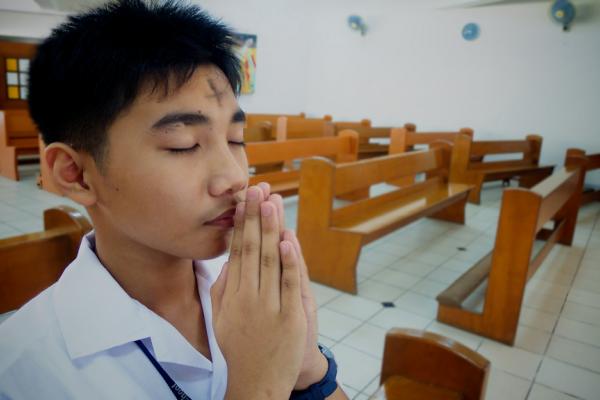
Today is Ash Wednesday and the beginning of Lent. I grew up in a small evangelical church that only paid attention to the Christian calendar on Christmas and Easter. But over many years now, I have learned to celebrate the richness of all the Christian seasons from my friends in more liturgical traditions and from marrying a Church of England priest!
Lent offers us the much-needed spiritual preparation for Easter. Ash Wednesday is the place to begin; and that often includes fasting — in different ways and traditions. At Sojourners, we usually have a big staff pancake breakfast on Shrove Tuesday morning, the day before Ash Wednesday. But today, many of us are fasting.
Ash Wednesday doesn’t begin a hunger strike, but rather a season of self-examination, spiritual reflection, repentance, sacrifice, and focused prayer. Lent is a time to examine our hearts and lives, to acknowledge our sins, to look for the ways we are not choosing the gospel or welcoming those whom Jesus calls us to.
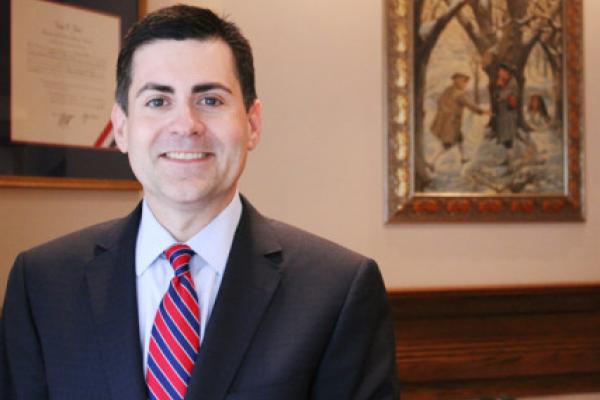
American evangelicals are denouncing a new Uganda law that criminalizes homosexuality, reiterating a position that many have held for years but which has nonetheless drawn scrutiny and skepticism from critics.
Since 2009, several American pastors and leaders have condemned legislation in Uganda that in its initial version imposed the death penalty for some offenders. Under the revised law signed recently by President Yoweri Museveni, the death penalty was removed and replaced with life in prison in some cases.
Now, American evangelicals who insist they never supported either version of the law nonetheless find themselves playing defense, saying their statements against homosexuality at home are being twisted as an endorsement of harsh penalties against gays and lesbians abroad.