
As President Trump has pointed out, others have made bad use of that same power, favoring cronies (Scooter Libby) and benefactors (Marc Rich.) He is right about that. Both of those made my stomach turn. I was a federal prosecutor when President Clinton pardoned Marc Rich, and it was infuriating — rewarding a fugitive cut against everything I worked for. In pardoning former Maricopa County Sheriff Joe Arpaio, though, Trump has done something worse: The president has not only rewarded someone who is unrepentant, but he has celebrated the crime itself. When asked about the pardon, Trump said of Arpaio that “He’s done a great job for the people of Arizona, he’s very strong on borders, very strong on illegal immigration, he is loved in Arizona ...”

While there still have been no executions in California since 2006 — largely due to a court battle over lethal injection drug protocols — that could change if the state’s proposed single-drug method for lethal injection passes legal muster. More than 15 of the state’s death row inmates have exhausted all of their appeals, so if it does, prosecutors undoubtedly will be asking judges to set immediate execution dates.
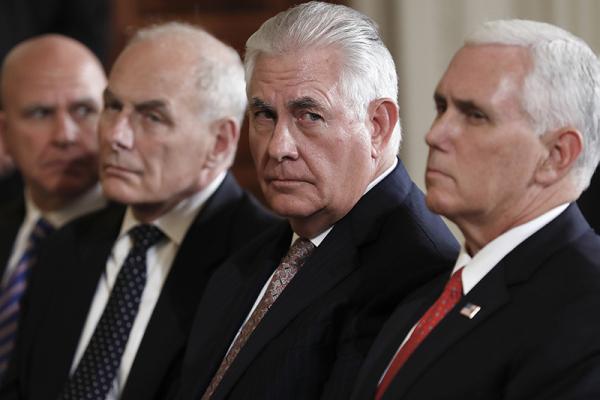
The State Department will retain its special envoy on anti-Semitism, a position some Jewish groups feared the Trump administration would eliminate. The envoy handling HIV/AIDS will also be retained, but many others will not survive cuts at the department, which plans to scrap 30 of the 66 current “special envoy” positions, including one that handles climate change issues.

A starting point is recognizing the truth that war is never noble or courageous. Noble and courageous acts occur during war, but war itself is always the ultimate human failure and must never be portrayed as anything else. War is the expression of our worst impulses — killing and maiming one another while destroying the many good things we've built together.
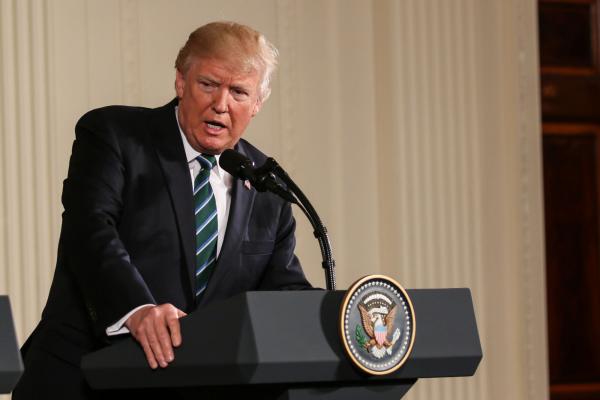
In past weeks — in the wake of Trump comments about white supremacy widely condemned as too late and too soft — disagreements among Jews about the president played out on a very public stage
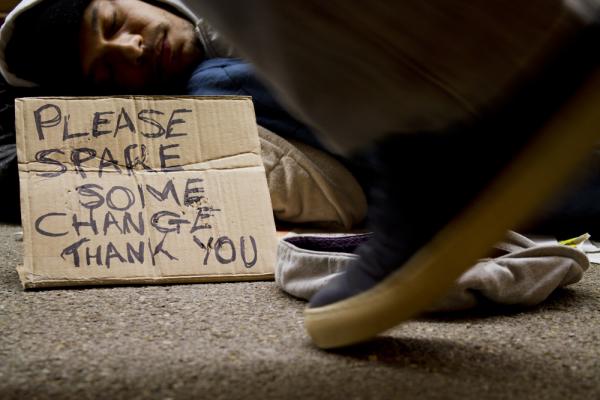
Our toxic apathy is rooted in a lot of places, but sadly we don’t have to look any further than the church itself to find several excuses to not care for the poor, vulnerable, marginalized, and downtrodden in our community and in our world.
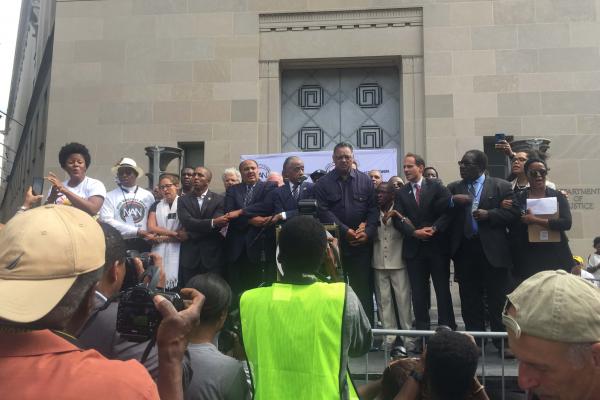
On the 54th anniversary of the “I Have a Dream” speech, the voice of Dr. Martin Luther King Jr. echoed across the lower end of the National Mall as thousands of clergy gathered in Washington, D.C., to march for racial justice. The Ministers March for Justice brought together faith leaders of many traditions to speak out against racism and white supremacy, and sought to call the government to accountability.
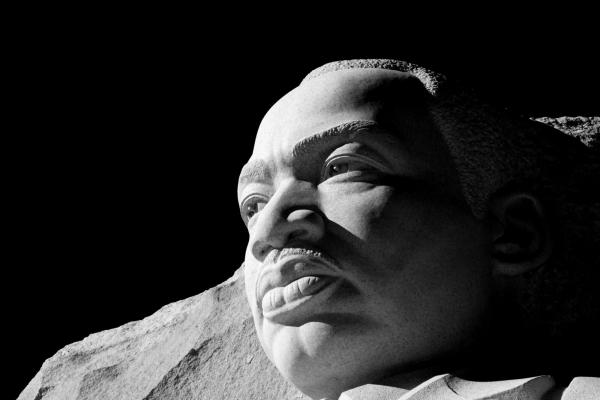
Fifty-four years ago today (Aug. 28), the Rev. Dr. Martin Luther King Jr. declared in his baritone voice, which still hangs in the air all these years later, “I have a dream.” A forgotten aspect of King’s witness was his ability to move and bring about change from the “prophetic middle.” The prophetic middle is not about being politically indecisive, indifferent, or even about being a political moderate, as King was none of those. In fact he was far more radical than the domesticated version of his life that is paraded about each January.

Take off your shoes.
No, I really mean it. Right now. Stop what you’re doing. Put down your phone, turn away from your computer screen. Loosen your laces, step out of your sandals, and free your feet from wherever they are currently confined.
Shoes off? Ok, now keep reading.
Take off your shoes, for you are standing on holy ground.

Jesus, when you walked on the water,
you beckoned Peter to come out of the boat, unafraid.