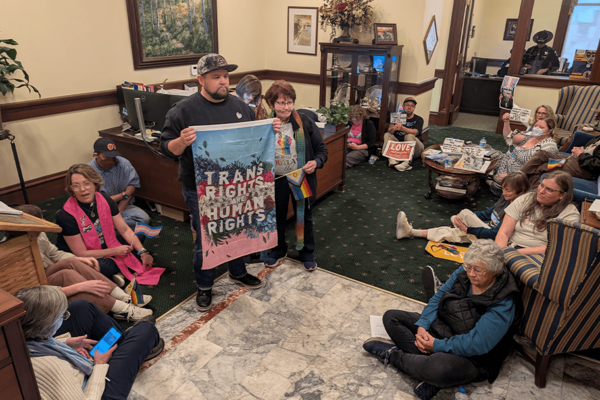
Progressive religious leaders in Idaho are pushing back against a new state law that would force transgender people to use bathrooms aligned with their sex assigned at birth, a measure that is partially on hold following a preliminary injunction issued in June.
House Bill 752, which was scheduled to go into full effect on July 1, would require people to use bathrooms, locker rooms and other sex-segregated facilities matching their sex at birth, with criminal penalties for those who don’t comply. Six transgender Idahoans challenged the law in federal court, and a federal judge issued a temporary order predicting it would not survive legal scrutiny. The injunction also ruled that transgender people can use restrooms of their choosing if a single stall restroom is not readily available.
The state’s attorney general said he plans to appeal.
Although the law is backed by conservative Christians and was drafted by a legislature that opens most meetings with a Christian prayer, many progressive religious leaders have said it is unrepresentative of their faith and are speaking out against it. Some are also wrestling with separate questions: Does the bill apply to religious institutions, and should it?
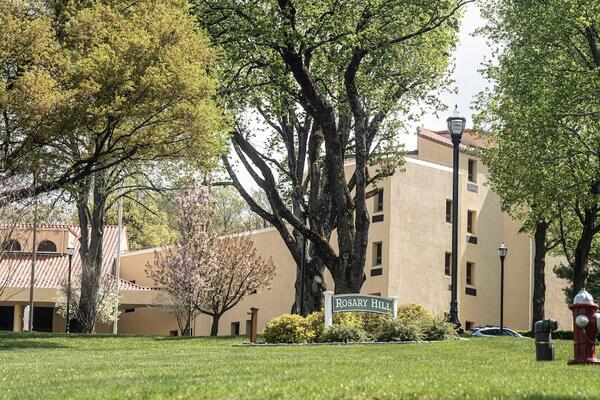
Several Catholic nursing homes in New York, including two in Westchester County, won’t have to comply with the state's newly-enacted Medical Aid in Dying Act while their lawsuit against it is underway.
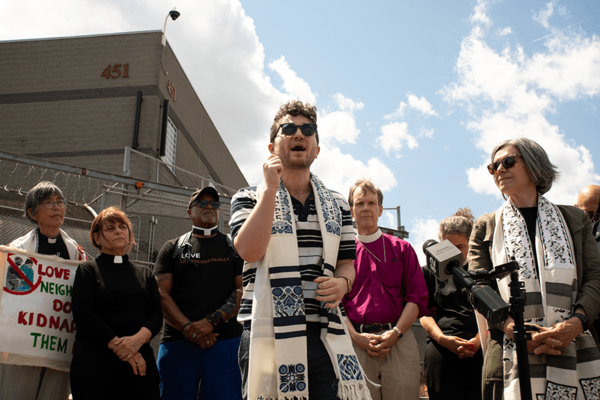
Walking into the Immigration and Customs Enforcement Delaney Hall detention facility in New Jersey, Rev. Robin Tanner quickly noticed that the windows were blocked off. Tanner, a Unitarian Universalist minister in Summit, N.J., pointed out one issue for people inside: “For many people in their faith tradition, [prayer] is a daily act,” she said. Muslims are instructed to face the city of Mecca during their five daily prayers, and a Muslim detainee wouldn’t have any way to know which direction to pray.
But for months, Amadou, a father and truck driver from Burkina Faso, whose full name Sojourners is withholding for his safety, struggled to convince guards to let him pray with other detainees at all. In Islam, Friday prayers, or salat al-Jumu’ah, are not only obligatory for every nondisabled man but are required to be performed in congregation. Amadou was detained 16 months ago and transferred to New Jersey last year. In Delaney Hall, it took four months for Amadou and other Muslim detainees to gain access to occasional gatherings for Friday prayer, finally prevailing in time for Ramadan.
ICE has a stated duty to provide spiritual care for those in its custody. According to ICE manuals, detainees must be provided with “regular opportunities to participate in practices of their religious faiths, limited only by a documented threat to the safety of persons involved in such activity itself or disruption of order in the facility.” As ICE continues to fail even its own guidance, a host of faith leaders have emerged to chip away at the agency’s spiritual blockade of those in its custody.
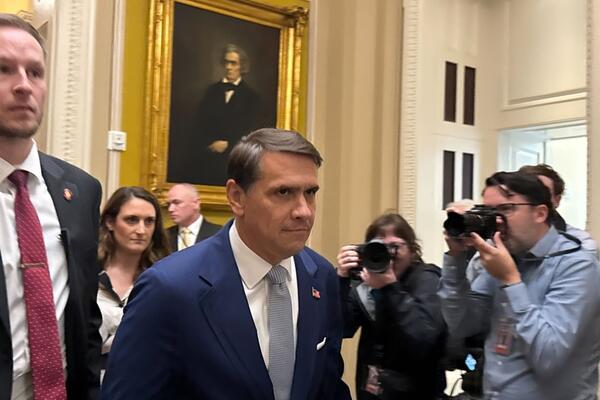
Acting U.S. Attorney General Todd Blanche is one step closer to confirmation after the Republican Judiciary Committee voted to advance his appointment on a party-line vote on Tuesday, and based on promises he made to faith leaders around the country last week, that means national anti-abortion actions may be one step closer as well.
In a conference call hosted by the White House Faith Office on July 30 with thousands of religious leaders around the country, Blanche said he was committed to achieving policy solutions so that the U.S. Supreme Court’s Dobbs decision “becomes permanent in every single state.”
A recording of the call was publicly available on YouTube as of Tuesday, posted by Intercessors of America, a religious group in Virginia, but was removed by late Tuesday afternoon.

Midway through Spider-Man: Brand New Day, Peter Parker (Tom Holland) needs to track down the escaped villain Scorpion, so he tells his NYPD contact, Detective Jean DeWolff (Liza Colón-Zayas), that he’s going to hack every security camera in New York City to find his face.
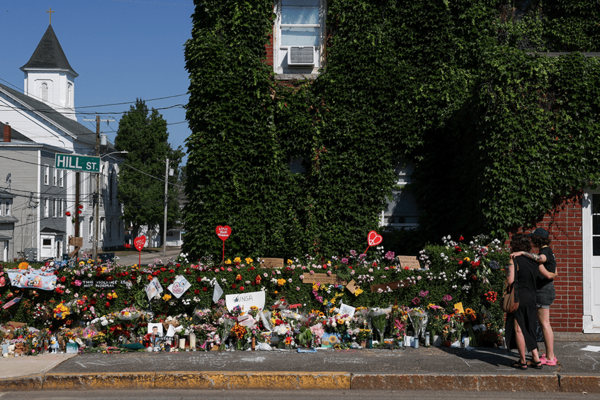
Bee Moorhead was surprised by the turnout at a July 7 press conference in San Antonio, calling for free and fair elections. The event was simple: a group of clergy, standing in front of San Fernando Cathedral on the city’s Main Plaza, announcing their intention to ask individual lawmakers to sign commitments to defend constitutional voting rights. Important work, she knew, but not usually the stuff of headlines. Moorhead has been organizing clergy around the state as executive director of Texas Impact for more than 20 years, and she said she’s accustomed to being all but ignored by the media and everyone else.
“Faith leaders all over the country, and certainly in Texas, keep speaking up and what comes back is, ‘Why aren’t you saying anything?’” she said. But suddenly, there were microphones and cameras. People were listening to what the group of interfaith pastors, imams, rabbis, and priests were saying about the need to protect voting rights. Something was changing.
Moorhead had launched the policy initiative and called the press conference in coordination with national interfaith organizing group Faith In Us, which formed after clergy from multiple faiths in Minneapolis and St. Paul took a visible role in the resistance movement during Operation Metro Surge. In January, when Immigration and Customs Enforcement was overwhelming the Twin Cities, clergy there began to call for sustained national mobilization of their peers. Faith leaders invited colleagues from around the country to come and train with community organizers and unions in Minneapolis.

I’ve noticed a new trend among evangelical Christians: They’ve been recording themselves as they preach on airplanes. In each video, the evangelist rises with the chime of the seatbelt sign to address the whole plane. “You know, San Diego is known for the beautiful landscapes, right? And the perfect weather?” says one woman named Whitney Lynn in a video she posted to TikTok. “But I want to tell you who is so perfect and so beautiful, better than anything in this life, is knowing Jesus Christ personally as Lord and Savior.” Smiling from ear to ear, the evangelist returns to their seat knowing that they stood up for the gospel and did their part for God’s kingdom.
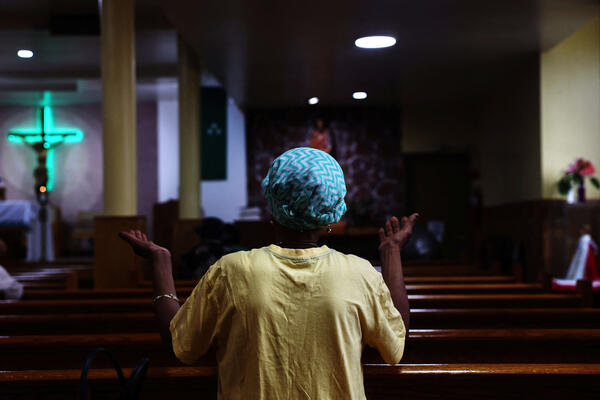
Hundreds of thousands of Haitians in the U.S. are living in uncertain times. On June 25, 2026, the U.S. Supreme Court ruled that the Trump administration could proceed with a plan to end Temporary Protected Status—a federal program that allows people to stay in the United States when the government considers their own country unsafe—for around 350,000 Haitians and 6,000 Syrians. Their work permits are scheduled to end July 24, leaving TPS holders at risk of deportation.
This uncertainty is not new. In 2010, President Barack Obama granted TPS to Haitians living in the U.S. after an earthquake killed approximately 200,000 people in Haiti. The original period was 18 months, but TPS has been renewed multiple times because of humanitarian concerns, gang violence, and political unrest.
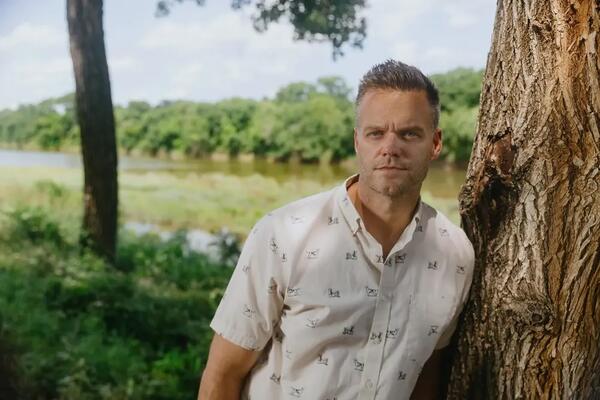
Matt Long stood before the Granbury City Council at an April zoning meeting to oppose the influx of proposed data centers in Hood County, likening them to a spiritual abomination.

Last week, we were proud to publish Georgia Coley’s review of Christopher Nolan’s newest epic: The Odyssey. In it, Georgia notes that the film’s frequent use of “Zeus’ Law” has a lot in common with the biblical Golden Rule.