
One carol I’ve been humming this Advent is “I Saw Three Ships Come Sailing In.” It’s not one I grew up singing, but I love it. The most popular contemporary lyrics talk about “three ships come sailing in” to Bethlehem on Christmas morning. Bruce Cockburn says the weird lyrics are the result of English folk in the 18th century hallucinating from eating too much ergot in their moldy English bread. Certainly there were no ships sailing into landlocked Bethlehem.

Facebook is breaking my heart.
As I survey the reactions of my fellow evangelicals to the Newtown tragedy, I have seen three strains of thought, each of which absolve us of any responsibility: (1) It would have been different if the principal or a teacher was armed; (2) If Americans care about the slaughter of innocent children, why don't they care more about abortion?; and (3) The secularization of school and society plays a role in these shootings. A few stray comments about mental illness have also floated around vaguely.
Absent from all of this analysis is any consideration of our own failure to do exactly what evangelicals should be all about: Evangelism, in the form of reaching out and giving meaning to lost souls like the loner kid who became the 20-year-old who committed these murders. If a relationship with God is what gives a young life a connection to community, a sense of humility and service, and a devotion to what is good, that is exactly what Adam Lanza needed.

This is not a blog post about gun control. Everything that can possibly be said about that subject, pro or con, has already been said millions of times since Friday. We are talking too much, too soon. In the words of my rabbi, “Judaism teaches that when there is nothing to say we should say nothing….Sometimes only silence gives voice to what has happened."
We Americans should all be sitting shiva.
But when, next week, we rise from our knees and begin working – together, I hope – to reduce the terrible problem of violence in our country, we must realize that our disorder goes much deeper than simply owning too many guns, and that any effective solution will have to go much deeper too.
When they are distressed, some people clean house or do push-ups I collect data. All week I have been amassing numbers and arranging them in rows and columns, trying to shed light on the question: Why are some nations violent while others are not?
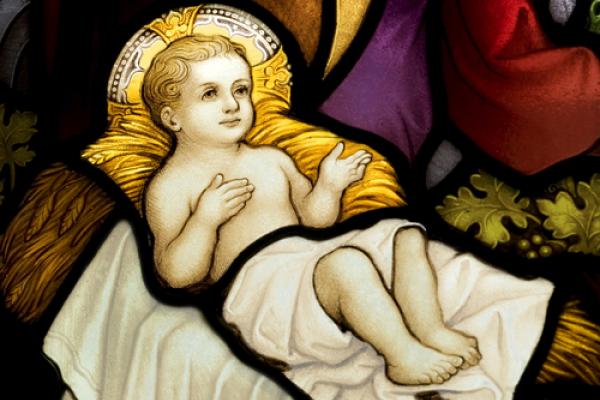
“What Child is This,” written by William C. Dix in 1865 is one of the few Christmas carols I know of that does not have its own musical arrangement. It uses the tune, “Greensleeves” (a traditional English folk song, thought to have been written in the late 16th or early 17th century), which when paired with Dix’s lyrics creates a haunting and beautiful image of the birth of our Lord.
There’s another song that’s less well-known titled “Child of the Poor,” written by Scott Soper (published in 1994). The counter melody blends stunningly with the melody of “What Child is This.” Reading the lyrics, side by side, gives me chills. In part, because it reminds me that hope is found in low places — God could’ve chosen to be raised in comfort (as Moses was). The cross was only the finale of Jesus’ discomfort. “Child of the Poor” honors the death and discomfort we often don’t want to think about while we’re sitting around the fire drinking cocoa.
WASHINGTON — Foes of the federal contraception mandate are cheering a Tuesday appeals court decision requiring the Obama administration to devise exemptions to the new rule for two Christian colleges.
They’re also buoyed by the D.C. Circuit Court’s reversal of lower court decisions to throw out their cases. The administration had argued that because it was crafting an exemption to the contraception rule, the cases should not go forward.
Now the cases continue, and every 60 days, the administration must report on its plan to ensure that the colleges do not have to comply with the new rule, which mandates that employers cover contraception in their health plans.
“This is a win not just for Belmont Abbey and Wheaton, but for all religious non-profits challenging the mandate,” said Kyle Duncan, general counsel of the Becket Fund for Religious Liberty, who argued the case.

Whoops. I was joking with a co-worker today about writing a subversive post about how the song “Do You Hear What I Hear” is an extended metaphor for the Roman Empire’s takeover of Christianity, contorting Jesus’ message for its own ends. “Listen to what I say,” orders the unnamed king, as he urges adoration of Jesus and calls for peace — Pax Romana.
I did a quick Wikipedia search, and learned exactly how wrong I was. Rather than a subversive message about the twisting of the Gospel, “Do You Hear What I Hear” was actually a call for peace during the turbulence of the 1960s.
I mean, think about it: the song talks about the humbleness of the announcement of Jesus’ birth – only the night wind and the little lamb have heard about it. This whisper gets passed up to ever-increasing degrees of authority (a grassroots movement if we’ve ever seen one), until the king himself is calling for peace.

Many will remember pastor Terry Jones as the champion of the “Burn a Quran Day” event, intended to fan anti-Islamic rhetoric on the anniversary of the Sept. 11 attacks. Though many shouted him down and criticized his motives, he continues to have somewhat of a national platform for his agenda.
In this video produced by the New York Times, we get to witness what I consider a momentary intervention of God’s spirit in a beautifully, creatively nonviolent way. As Pastor Jones condemns Muslims and their religion, a man in the crowd pulls up the lyrics to the Beatles song, “All You Need is Love” on his phone. He stands next to jones and begins to sing, inviting the crowd to join in. It is beautiful because his hate is repaid with song, and the sting of his venomous words is neutralized without a hand or another voice being raised in anger (though I could do without the “idiot” sign, thanks).