The 113th Congress is the most diverse in U.S. history. New members include the first Hindu, first Buddhist, and the first "none." The Washington Post reports:
The new, 113th Congress includes the first Buddhist to serve in the Senate, the first Hindu to serve in either chamber and the first member of Congress to describe her religion as “none,” continuing a gradual increase in religious diversity that mirrors trends in the country as a whole. While Congress remains majority Protestant, the institution is far less so today than it was 50 years ago, when nearly three-quarters of the members belonged to Protestant denominations.
Read more here.
After a 25-day hunger strike by Attawapiskat chief Teresa Spence, First Nation leaders will meet with Canadian Prime Minister Stephen Harper on Jan. 11. Spence began fasting to protest a budget proposal that weakens native land rights and environmental safeguards. BBC reports:
On Friday, Mr. Harper released a statement which cited his January 2012 meeting with First Nations leaders and said he would meet with chiefs "in this spirit of ongoing dialogue."
Mr. Harper said the "working meeting" would focus on "the treaty relationship and aboriginal rights and economic development."
While the Attawapiskat leader has continued her fast, First Nations protesters and others have rallied around her, as well as Canadian indigenous rights movement Idle No More, in protest on a range of issues.
Read more here.
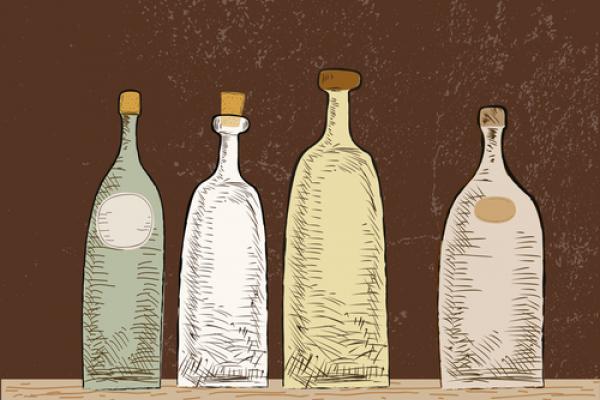
One morning, I walked out the front doors of the center and turned down Jefferson Street toward the Ohio River. There, huddled in a circle beside the wall of our building, was a group of worn, ragged homeless men. I knelt down with them and said, "Hello."
One of the men smiled a toothless smile at me, reached into his coat, pulled out a bottle of Wild Irish Rose, took a swig, and passed it to me. "Here," he said. "Have a drink."
It was truly a John Irving moment. Here I was offering my alcoholic friend a “hello” and he offering his ministerial friend a drink. He was offering me the thing that was most important to him.

Drone strikes are being escalated in Yemen with the fifth attack in the past ten days occurring on Thursday. Reuters reports:
“At least three suspected al Qaeda militants including a local commander were killed on Thursday in Yemen by a strike from an unmanned aircraft, residents and a local official said.”
Today, in response, Yemeni tribesmen organized a protest in front of a government administration building. According to Reuters:
“Dozens of armed tribesmen took to the streets in southern Yemen on Friday to protest against drone strikes that they say have killed innocent civilians and increased anger against the United States. …
“One tribesman participating in a sit-in in front of the government administration building in Redaa told Reuters by telephone that at least seven innocent civilians were killed in the recent raids.”
Unlike Pakistan, the Yemeni government openly supports the U.S. strikes.
When Chinese kids won’t eat their Cheerios, do their parents tell them there are starving kids in America to convince them to finish?

The good news is, we didn’t take their advice; instead, we sold ourselves to China! ***Footnote: I have since been educated on the context of this sign, which makes it understandable. The sign actually suggested that crushing China was a bad thing. Why does history have to go and ruin my fun??? Stupid history!!!
WASHINGTON — At a time when the ideals of compromise and collegiality seem like a distant dream in the nation’s capital, an unusually diverse coalition of religious leaders is asking Americans to pray for civility.
“Through daily prayer, we are calling on the ‘better angels of our nature’ needed to sustain our nation and solve problems,” said the Rev. Peg Chemberlin, immediate past president of the National Council of Churches and one of the faith leaders taking part in “18 days of Prayer for the Nation.”
Prayers began Thursday, the first day of the new Congress, and end on Jan. 21, the day of President Obama’s second inauguration.
Faith leaders from left, right and center have signed on, including Episcopal Presiding Bishop Katharine Jefferts Schori, Richard Land of the Southern Baptists’ Ethics, and Religious Liberty Commission and Richard Cizik, president of the New Evangelical Partnership for the Common Good.
The Faith & Politics Institute, a nonpartisan group that nurtures the spiritual life of members of Congress and their staffs and presses political foes toward civil debate, organized the days of prayer and an online “commitment to prayer” page to document participation.

A new year evokes so many emotions in us. For some a wonder of potential opportunities. Others, the hope of change. Still others, the fear of uncertainty. In each case there lies a moment of suspense. A pause. And yet our resolutions are spoken, written and relayed far before the time has been taken to contemplate what we feel and how we feel.
This year my challenge is to start with the place of inaction and pause to consider what we in fact feel. To each of us we have to slow down after the Christmas season high of purchasing, giving, praying, lighting candles, waiting in Advent, and hoping for the Christ Child to know what kind of year we will encounter.
Resolve to be irresolute until the time of knowing appears.
Resolve to sit silent and listen.
Resolve to move slower until weary legs are refreshed.
Resolve to know loved ones as they are right now.
Resolve to build, to grow, to transform those parts that 2012 has damaged or left broken.