In the 1980s television show, “Fantasy Island,” the island watchman heralded the arrival of individuals attempting to escape their reality with a call of “the plane … the plane … the plane!”
In the weeks since the Sandy Hook tragedy, I’ve spent much of my time in Washington, D.C., preaching about our moral mandate to reduce gun violence, especially in our urban neighborhoods. However, in my time in the capital, I have come to feel as though there are many arriving in Washington on the proverbial plane, escaping the realities of their hometowns, for the Fantasy Island in the beltway.
In the Book of Proverbs, we read, “Buy the truth — don't sell it for love or money; buy wisdom, buy education, buy insight (Proverbs 23:23, The Message).”
Sadly in Washington, truth seems to be for sale; wisdom seems to be radically individualized; education seems to be mocked; and insight seems to be unable to breach the partisan walls in our nation’s capital.

Death doesn’t make sense — especially when it interrupts the life of one so young. Richard Twiss was only 58 years old.
It makes me think: Richard was one life, cut short by a heart attack. What about all the images of God erased from our lives and families every year through gun violence in the U.S.? What about their families and pastors and youth groups who held vigils in waiting rooms across the country? What about the estimated 1,793 gun deaths since the Newtown massacre? How valuable are their lives?

Edmund Burke once said, "all that is necessary for the triumph of evil is that good men do nothing." So what is at the heart of the endless stream of violence in our country — is it guns or is it something a lot harder to eradicate — passivity?
The overwhelming response would likely be "it's the guns, stupid." But in this fight, the individual with the loaded AK-47 rifle may be only slightly less dangerous than the passive citizen, the average person who may think "something should be done about guns,” but fails to stand up and make their voice heard.

A well-known restorative justice film, "A Justice That Heals" recounts the role of faith and the church in caring for the families of both a murderer and his victim. The film climaxes in the mother’s act of forgiveness and counsel to the young man who killed her son. The power of that image of repentance, reconciliation, and restoration almost obscures another dimension of the grieving family's response to the death of their son. The victim's father resigns his job and becomes the director of an advocacy group for gun control.
The late Carl Dudley demonstrated in his research on mobilizing congregations that communities of faith rally to advocacy only after they have generated sufficient energy about and engagement with those affected by the policy. Congregations care about people not policy, stories over statistics, and narratives before numbers. Even the civil rights movement found its genesis in the story of Rosa Parks, and others like her, rather than in the "ethics" of segregation and discrimination. So, like the family in "A Justice That Heals," our work to mobilize around gun control requires creating a climate where people's experience with those who are victimized by bad policy.

Military medals have historically been given for exceptional bravery in combat. But the Defense Department has announced a new medal – for flying a drone. A servicemember can now sit at a screen in the United States with a joystick and earn a “Distinguished Warfare Medal.” Army Times reports,
“The Pentagon is creating a new high-level military medal that will recognize drone pilots and, in a controversial twist, giving it added clout by placing it above some traditional combat valor medals in the military’s 'order of precedence.'
“The Distinguished Warfare Medal will be awarded to pilots of unmanned aircraft, offensive cyber war experts or others who are directly involved in combat operations but who are not physically in theater and facing the physical risks that warfare historically entails.”

As the drone debate continues, the Senate Intelligence Committee is delaying a confirmation vote on John Brennan as CIA Director. Brennan most recently was President Obama’s counter-terrorism advisor, and in that capacity the administration’s point person on drones. The Washington Post reports:
“A Senate confirmation vote on John O. Brennan as CIA director has been postponed for at least two weeks as lawmakers step up pressure on the Obama administration to provide more information about its drone campaign against terrorism suspects.
“In particular, Senate Intelligence Committee Chairman Dianne Feinstein (D-Calif.) said Wednesday that she is seeking seven Justice Department memos related to the administration’s targeted killing program, in addition to four the committee has been allowed to view.”
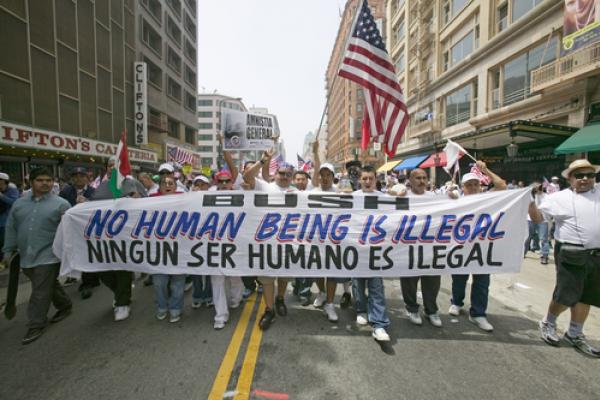
During the House Judiciary Committee hearing on immigration reform last week, many of the committee members described the creation of a roadmap to citizenship for aspiring Americans as a topic too “toxic” to even discuss. As a DREAMer, a Californian, and a civically engaged college student, I have painfully discovered that a major source of toxicity comes from members of Congress themselves.
Since learning in high school that I was undocumented, I’ve known that people struggled with the idea of undocumented Americans living and working alongside them. But I have never before experienced the kind of naked hostility I did when I attended a meeting in Washington to discuss citizenship legislation with Congressman Dana Rohrabacher, who represents my hometown in California’s 48th district.
I have lived in Costa Mesa since my parents brought our family here when I was 3 years old, and it is the only home I have ever known. I played in TeWinkle Park with my brothers and cheered for the Mustangs at Costa Mesa High School. I was a part of the Business Academy team that placed 5th in the nation my senior year. Now I am 18 years old, working and going to college full time. Last November I went door to door to encourage people who could vote to support more funding for our schools, and because of our civic engagement we showed that Californians care about education.
I work hard, I study hard, I pay taxes, and I have applied for the deferred action program that President Barack Obama instituted last year for young undocumented Americans like me.
From the Senate staff to the 2008 campaign to the White House, Joshua DuBois has been President Obama’s top faith advisor. Last week, DuBois resigned as the director of the Office of Faith-based and Neighborhood Partnerships. On CNN Belief Blog, he shares reflections on his journey and what is ahead – writing a book, launching a new social enterprise, teaching and speaking. DuBois concludes:
“As a committed African-American Pentecostal, I never thought I could become such dear friends with so many in the faith community – Christians and Muslims, Hindus and Jews, conservatives and liberals, Republicans and Democrats – who care first about God, and second about their neighbors, and seek to live this care out into the world. I would hope to honor those friendships, continue to serve this good president, and let my life and work be a song of worship in the exciting days ahead.”
Like former Sen. Chuck Hagel, Richard Lugar is a moderate-to-conservative Midwest Republican. Lugar was defeated in a primary election last year by a tea party candidate, and this week gave his first public speech since leaving office in January. According to the Ft. Wayne Journal Gazette, he spoke of the out of control partisanship that now controls Washington politics, specifically noting the “politicization of national security policy” in the debate over Hagel’s nomination as Secretary of Defense.
“Hagel’s “main transgression is that he is a Republican who has questioned policies that are sacred among most conservative senators,” Lugar said. “These include whether the surge in Iraq was worth the lives lost, whether the current high levels of defense expenditures make strategic sense, whether nuclear forces can be reduced further and whether there are non-military options in dealing with Iran.”
There is a tradition in the black church named “call and response.” It’s simply the experience of the preacher “calling” and the congregation “responding.” I’ve always loved it. When you’re preaching in a black church, and the congregants begin to actively and vocally respond, your sermon can actually get better, stronger, deeper, and more powerful than it might have been if everyone just sat there. Sermons get interactive. Congregations can be inspired by the preacher — and the other way around. Ideas grow, get taken further, and even develop during and after the sermon. And it can make things change.
After his first year in office, I sent a letter to President Barack Obama humbly suggesting he needed “the political equivalent of the black church’s call and response.” Just talking to and in Washington was never going to get important things done. Washington just sits there and mostly makes sure that things don’t change — and that the special interests that buy, shape, and control this city usually have their way. (That private letter to the president will be published for the first time in my new book about the common good coming out in April.)
I recalled something Obama said right after the 2008 election — that he would need “the wind of a movement at my back” to get anything really important done. He would have to go over the heads of Washington, to speak directly to the people that had elected him and also those who didn’t. He would have to have public debates about the common good and not just debate in Washington.
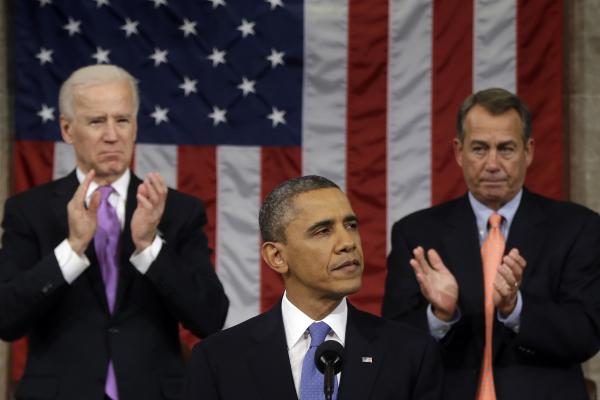
I saw him do that in this week’s State of the Union speech.