People of faith are in the 'miracle business.'
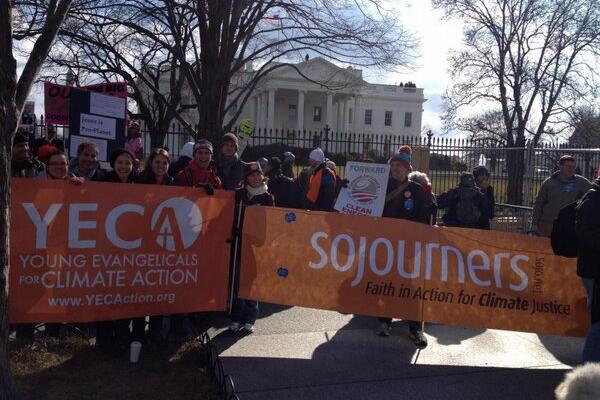
An estimated 200 people of faith gathered in Washington, D.C., on Sunday morning in preparation for the Forward on Climate Rally on the National Mall. The brief prayer service preceded the larger rally of an estimated 40,000 people urging President Barack Obama to take action against climate change and to reject the Keystone XL pipeline.

SALT LAKE CITY — For years, Matt Duff was an uber-Mormon.
At 17, he ran away from home and moved in with the only black Latter-day Saints family in his New England town.
Two weeks shy of his 18th birthday, he joined the Utah-based Church of Jesus Christ of Latter-day Saints.
By 19, he was on a Mormon mission in Denver, and two years later he enrolled at Brigham Young University-Idaho, where he met his future wife, Kylee, a multigenerational Mormon with a winning smile and a guileless faith. The two married in the Salt Lake LDS Temple.
Eight years and three children later, Matt Duff stopped believing.

The third season of the megahit PBS series “Downton Abbey” wraps up on Sunday, capping another must-see run of ruin and redemption at Lord Grantham’s stately English manor. Yet some are still left puzzled over the absence of what should be a leading Upstairs player in this colorful cast: God.
Writing last month in the flagship evangelical magazine Christianity Today, Todd Dorman wondered why — despite the heart-rending melodrama and all the “divine trappings” that gild the 1920s scenery — “God is a peripheral presence at best.”
“There are numerous fascinating blog posts … that search for implicit Catholic and Christian themes in the show — good and evil, suffering for cause, various types and grades of love and devotion,” Dorman wrote. “At some point, though, especially with a vicar in the family’s employ, it seems odd for such connections to remain unnamed, unspoken, and, for all we can see, unperceived.”
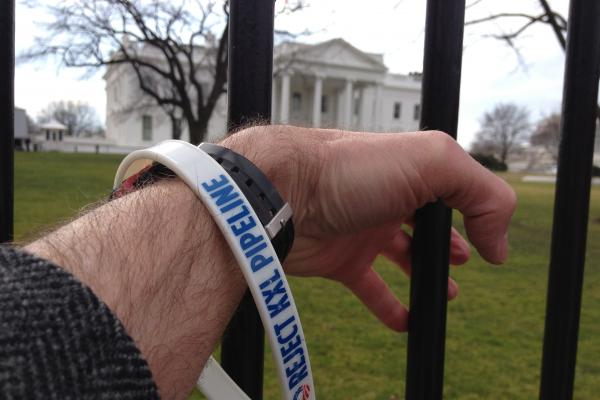
My wrist was cuffed to the White House fence next to the wrist of Robert F. Kennedy, Jr. Our nation’s chief climate scientist James Hanson stood next to me; Daryl Hannah sat in front of us. A few feet away, also cuffed to the fence, Julian Bond stood next to Bill McKibben and Michael Brune, Executive Director of the Sierra Club. Altogether, 48 of us from all over America obeyed our consciences. The days of safety and silence have ended. The time of pretending is over. Humanity will be held accountable for our desecration of creation. It is happening already.
And it was Ash Wednesday. When I mounted the platform to address the rally that preceded our civil disobedience, many were unaware that Lent was beginning. In the context of climate disruption, anyone who cares about creation can embrace the significance of Ash Wednesday. It’s a day of conscience, repentance, and conviction; a day when we take stock of our lives and our life together on the planet; a day when we confess our self-indulgent appetites, our intemperate love of worldly goods and comforts, and our obsession with consumption of every kind. For Christians, Ash Wednesday is a day to acknowledge that we are accountable to the God who gave us life and who entrusted the earth to our care.
Ash Wednesday is a good day to be arrested, I told the crowd. It’s a good day to realign our lives with God's desire to preserve this good creation. I invited any who wanted to receive ashes as a sign of their repentance to approach me on their way to White House.
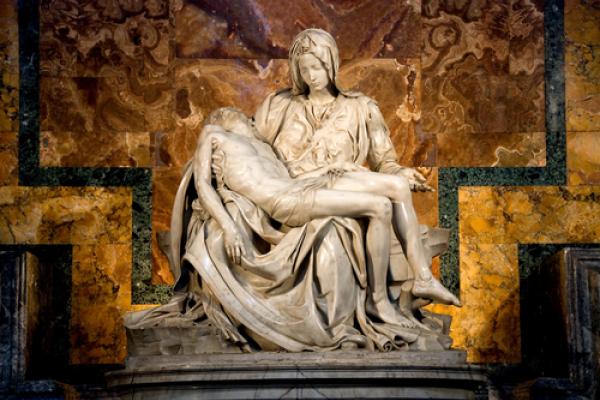
For the first time in six centuries, the head of the Catholic Church is stepping down. Some, like Huffington Post Religion’s Senior Editor Paul Raushenbush, have suggested this is an indication that the stodgy religious institution is creeping its way toward modernism. Could it be that the role of Pope will be considered to be that more like a CEO than a sovereign ruler? Is there room within today’s church for its leadership to step down when they feel they can no longer adequately fill the tremendous demands heaped upon them?
Can Popes retire? And if so, do they have to give up those cool red shoes?
So if, indeed, the Catholic Church is moving in a new direction, why not consider a more thorough overhaul? Some have suggested that the next Pope should come from the southern hemisphere, given that this is where the faith is growing the most (actually, it’s not really growing much at all in the northern half of the world). But as some have suggested within the church, the process of selecting a Pope is not necessarily driven by creating a representative leadership.
That said, it seems a rare opportunity to do something exciting. I, like many people, assumed that the successor to Pope Benedict would have to come from within the College of Cardinals. But though this has been tradition for most of the life of the Church, Pope Clement V is a rare exception. He was plucked from a monastery to become Pope, with the hope of overcoming much of the perceived corruption within the College.
And though the College of Cardinals is not explicitly mired in scandal at the moment, the Church itself certainly has suffered some blows in the court of public opinion, as well as in the court of law, in some cases. So given that precedent, perhaps it’s time for another radical departure from tradition, one that will signal to the world that the Church is more committed than ever before to its mandate to care for the poor, and support the marginalized.
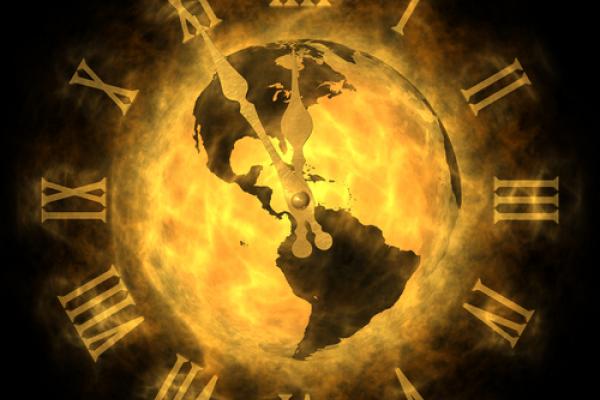
In contrast to the ongoing public and political debate surrounding the legitimacy and urgency of climate change, the global scientific body of knowledge appears to be overwhelmingly clear, as highlighted in The Great Disruption by Paul Gilding:
"The consensus position on climate change is reflected in the rigorously peer-reviewed journals in which research is presented and issues are debated. One study by Naomi Oreskes, published in the journalScience, demonstrated that of the papers whose abstract contained the keywords global climate changebetween 1993 and 2003, none questioned the consensus position – not one. Oreskes’s subsequent book,Merchants of Doubt, revealed how many who once fronted the tobacco industry’s anti-science campaign to deny the link between smoking and lung cancer are also now prominent and vocal climate change skeptics, and they are often funded to create doubt that has no credible scientific basis."
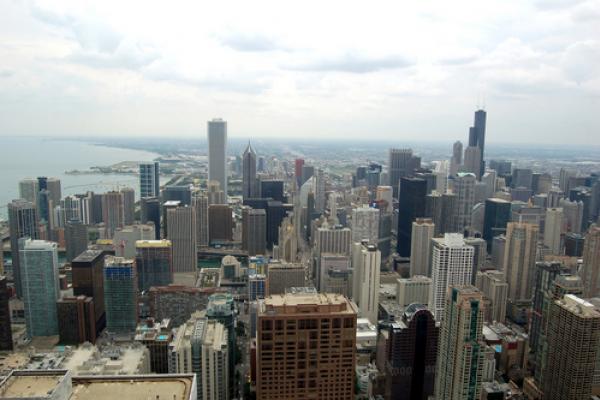
My city of Chicago, known as the City with Big Shoulders, is now on its knees. But it’s not prostrate in some humble submission to God. No. Instead Chicago is weeping from the emotional exhaustion of having to bury too many youth who have been murdered.
Last year Chicago recorded 2,400 shootings and more than 505 murders, of which more than 108 were teenagers of color from seven violent communities. Already 2013, with less than two months into its birth, has seen 49 murders. Those of us on the ground seeking to bring change to this pandemic of violence know that if the Chicago cold winters are this violent, then the hot summers will not cool off. On top of the hard and constant news about those who are killing and being killed, Chicago Police stats show that only 34 percent of the murders get solved within one year. If the detectives have two years on a case, then the rate barely reaches 50 percent. The national average of murders solved is 64 percent. New York’s rate is only 60 percent. In Chicago, though, one has a 50-50 chance of getting away with a murder.