Let your religion be less of a theory and more of a love affair. - G.K. Chesterton + Sign up to receive our quote of the day via e-mail
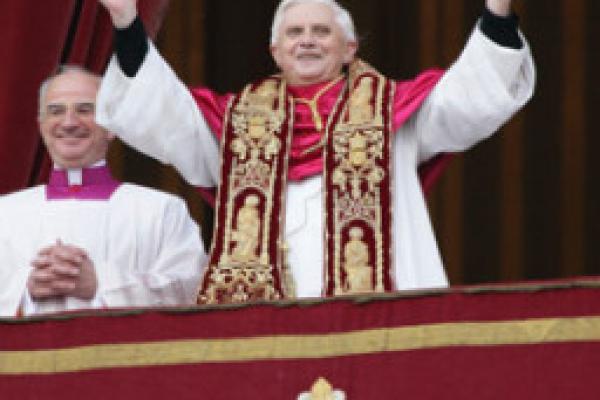
VATICAN CITY — The Vatican on Wednesday confirmed that Pope Benedict XVI is considering changes to church law regulating the election of a new pope, but stopped short of saying whether voting could start earlier than currently planned.
Pope John Paul II’s 1996 Apostolic Constitution “Universi Dominici Gregis” regulates what happens between the death or resignation of a pope and the election of his successor.
It stipulates that the conclave of cardinals must begin 15 to 20 days after the end of the previous pontificate.
But after Benedict’s surprise announcement that he will resign on Feb. 28, several voices within the church have asked for an earlier start to the voting to shorten the time the Catholic Church is left without a leader.
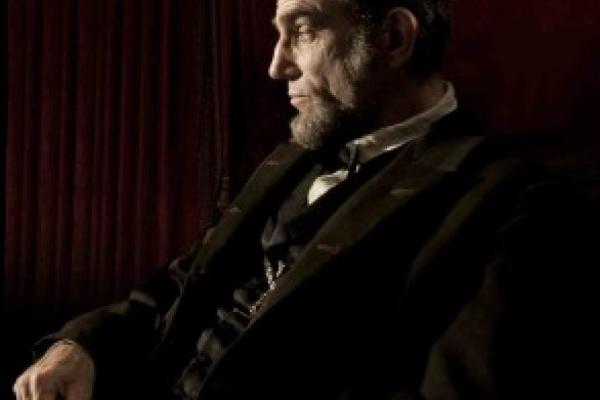
Steven Spielberg’s Lincoln will probably nab a few of its 12 nominated Academy Awards when the Oscars are handed out on Sunday — a sign that Americans never have and probably never will tire of our 16th president.
Abraham Lincoln’s face is etched in stone on Mount Rushmore and his brooding statue sits enshrined in a Greek-style temple in Washington. His succinct Gettysburg Address (about 270 words) took all of about two minutes to deliver, yet remains this nation’s most famous speech 150 years later. His assassination lifted him to mythic status — a martyr who earned his place in our pantheon of national heroes.
We just marked the 150th anniversary of his Emancipation Proclamation, but that necessary action wasn’t enough. Spielberg’s film revives Lincoln’s second act, in 1865, to pass the Thirteenth Amendment to abolish slavery through a divided Congress. It wasn’t the only injustice Lincoln worked to correct.
In his recent book, When General Grant Expelled the Jews, Brandeis University Professor Jonathan D. Sarna recounts an important but little-known event in 1863 in Lincoln’s quest for full civil, religious, and human rights for all Americans — this time, for American Jews.

 This week, in the run-up to Sunday's Academy Awards ceremony, we've been taking a look at each of the Best Picture nominees, the stories they tell, and the spiritual questions (and answers) they offer.
In today's final installment, we turn our attention to Lincoln, Silver Linings Playbook, and Zero Dark Thirty.

Recent news, including the Oscar nomination of The Invisible War and the looming sequester, which threatens drastic cuts in defense spending, doesn’t sound good for military recruiters. But recruiters are still active at my local high school, offering freebies and making promises. For six years I’ve been visiting the high school to encourage students to stop and think about their choices.
I’m not a biblical literalist, but I take the commandments to love your enemies, not to kill and not to overcome evil with evil seriously. I don’t make this argument at the school; it would violate their rules about religious expression, and I think it might alienate our neighbors who believe simultaneously in Jesus, the right to bear arms, and the need to fight ‘terrorists.'
I also have a concern for the truth. Many young people enlist in the armed forces without understanding what they’re getting into. My county is rural and poor; jobs are scarce. Many students who lack money or grades to make college a viable option are attracted by the promise of steady work, sign-up bonuses, travel opportunities, money for education — and sometimes, it seems, by clearly false promises.

I’ve often heard that Lent is a season of slowing down. Of drawing closer to God, to others, to the wide open world around us. A time for spiritual reflection and inner examination. An opportunity to go a little deeper in trying to figure out Jesus. A time to pause. A time for simplicity.
This Lent, I decided to get back into biking to and from work (in addition to cold showers and placing a penny in the “Suck it Up or Shut Up” jar each time I catch myself complaining).
When I moved across town in June, I said I’d bike once I found a good route, but I weaseled my way out of it for reasons such as having to bike through some sketchy areas by myself, something I was a bit fearful of.
Now a few days into it, I’ve found a route and a rhythm. I got off to a rough start the first day of Lent, biking home drenched by the down-pouring rain. Two cars didn’t see me, causing me slam on the brakes, skidding in the middle of an intersection. Cars passing by splashed water up against me like a small ocean wave. It was cold. It was dark. And I kept making wrong turns, making my time in the rain even longer. I had a “shake your fist at God” moment, muttering things that warranted pennies in the jar, and then managed to put my sopping wet hand back on the handlebar. I thought about the journey that women in Africa make to and from water wells and firewood piles on a daily basis, often risking the possibility of getting raped just to gather these essentials for their families. Surely, I didn’t have it so bad.
And most of us don’t.
 Our friends and up-and-coming musicians Branches trekked all the way from California and stopped by our office in D.C. last week to play a couple of their songs during their East Coast tour!
Their songs explore the ideas of doubt, faith, loneliness, love, and above all, hope for life as it was meant to be.
Best friends turned band-mates, the lady and gentlemen of Branches are an independent, self-writing and self-producing collective. Birthed in a living room in the suburbs of Los Angeles in 2010, Tyler, Natalie, Jacob, Mitch, Tyler, and Mike have since spent their time together making friends, playing shows, and writing and recording the songs for their EPs ("O, Light!", "Cabin", "Covers", "Songs For Christmas") and their full-length ("Thou Art The Dream", released 2/12).
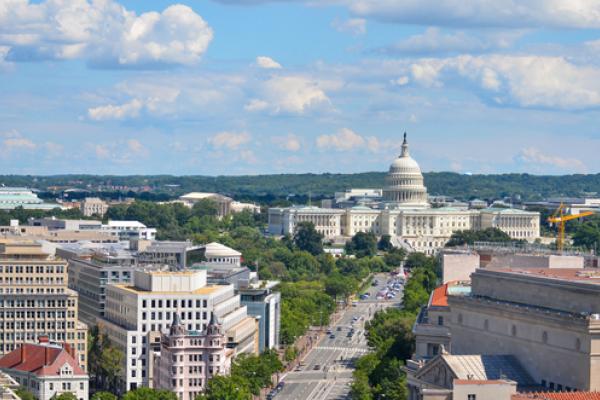
I know I am not the only one who is sick and tired of Washington’s manufactured crises around budget and deficit debates. Brinksmanship has replaced statesmanship in trying to find a sound path to fiscal responsibility. It is time to make the right moral choices that will defend the most vulnerable and pursue an opportunity agenda to reduce the highest poverty rate in 50 years.
Ideological debates over the role of government are the real battle in the nation’s capital — more than the debt crisis. Political calculations about the next election are more important to many of our political leaders than the common good of the country.
It’s just time to move on from the partisan politics that has polarized and paralyzed us for so long — by committing ourselves to moral issues that could and should bring us together. The first will be comprehensive immigration reform, which will change the lives of 12 million people in this country, lift many out of poverty, and help the economy at the same time. This is a clear example of how the faith community has changed, and now come together to become a political game changer in Washington, D.C., at both ends of Pennsylvania Avenue on both sides of the aisle.
And it’s time to make another moral commitment in the midst of our growing economic recovery — to include poor families and change poverty into opportunity. Fighting poverty must not be a partisan issue. When we look at both the causes and the solutions, this battle should bring both liberals and conservatives together. Overcoming poverty, by creating opportunity, happens because of three very basic things that most of us can agree on: family, education, and work. All three are crucial and necessary in moving people out of poverty and into opportunity.
Let’s break it down.