
Our country’s laws represent our values and our moral compass as Americans. They set norms, define transgressions, and mete out consequences for actions. And almost 50 years ago, our nation realized the harassment, intimidation, bureaucratic shenanigans, and violence so many African-Americans and other minority communities experienced when trying to exercise their rights to vote and participate in our great democracy. Our intolerance of such injustice led to the passage of the Voting Rights Act of 1965 — a great triumph in the defense of life, dignity, and equality.
Notwithstanding the near-universal praise the Voting Rights Act has received for ending some of the most overt discriminatory practices in our country’s voting history, there are some saying the Voting Rights Act’s time has passed. In fact, on Wednesday, the Supreme Court will hear oral arguments from Shelby County, Ala., that a key provision of the Voting Rights Act is unconstitutional and should be struck down. These arguments are misguided. The Voting Rights Act remains a vital piece of our national moral commitment never to permit racial discrimination in elections again.
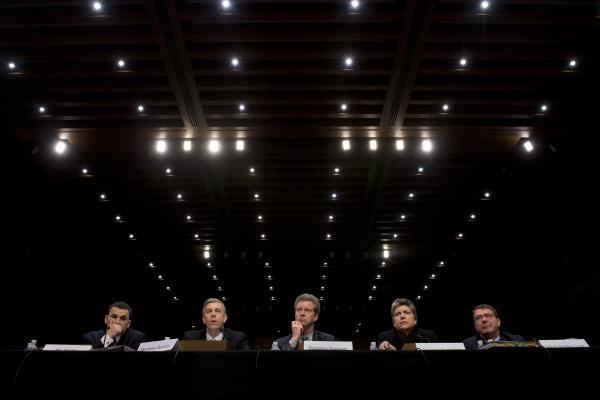
The sequester battle is a good but tragic example of how the idea of the common good is failing in American politics. By contrast, the growing bipartisan support for comprehensive immigration reform is an alternative example of how a moral issue can rise about our ideologically driven politics.
The faith community has stepped into both issues with a call for political leaders to serve the common good. On immigration, political leaders are listening to the faith leaders; on the debates about our nation’s fiscal soul, political leaders need to listen better.
With a short note to the Congressional leadership, President Barack Obama announced last week that a total of 100 U.S. troops are now in Niger to “provide support for intelligence collection and will also facilitate intelligence sharing with French forces conducting operations in Mali.”
“A U.S. defense official, speaking on the condition of anonymity to provide details about military operations, said that the 40 troops who arrived in Niger on Wednesday were almost all Air Force personnel and that their mission was to support drone flights.
“The official said drone flights were “imminent” but declined to say whether unarmed, unmanned Predator aircraft had arrived in Niger or how many would be deployed there.”
The Predator drones will be unarmed and carry out surveillance missions. But The Post noted that theadministration had not ruled out arming the Predators with missiles in the future.
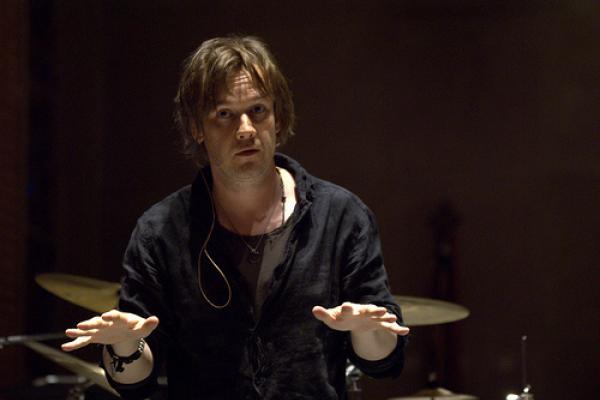
I love Peter Rollins' honesty about his dark night of the soul.
He's popularized a term for the intellectual position accompanying the dark night of the soul: a/theism. I interpret Peter's thought as being in relation to an experience of God's absence. [Note: corrected this paragraph's content from "even coined" to "popularized. Turns out another author coined a/theism."]
I thought it was hilarious that Tony Jones challenged Peter to give up atheism for Lent on the Homebrewed Christianity podcast.
But I took it seriously when Micah Bales, one of my best friends, wrote a post challenging Peter Rollins' Atheism for Lent. You can't give up God because God is a felt presence. (Peter later responded to Micah. And Brian Merritt a piece about who Micah is.) Our conversations got me thinking about what I value about Peter Rollin's voice and what I might challenge about a/theism as I understand it. In order to talk about why a person believes or disbelieves in God, you have to talk about a personal spiritual journey.

If one were to conduct a nationwide survey to learn the most common human fears, it is safe to conclude thatfailure would be near the top of the list. Due in part to the high value that North American society places upon success and achievement, we recognize through the twists and turns of daily life that everyone has – in some shape or form – firsthand experience of the fear of failure. We fret over falling short, we agonize about disappointment, and we even lose sleep from the potential shame of letting others down.
What if we, as a Lenten discipline, make a commitment to give up the fear of failure — for such fears are too often personally devastating and publicly debilitating if left ignored or unresolved?
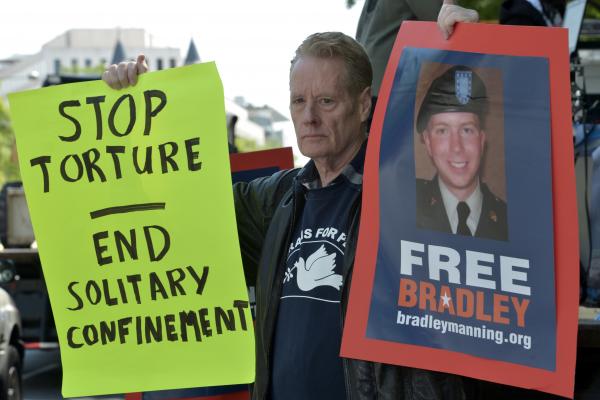
On Saturday, Feb. 23, Bradley Manning marks his 1,000th day in prison without a trial. Manning, the 23 year-old Army intelligence analyst accused of leaking classified documents to WikiLeaks while stationed in Iraq, spent a full 600 days in prison before he even saw a judge, even though military law requires arraignment within 120 days of a person being detained. (Amid the material that Manning released was the now famous video showing two American military helicopters shooting civilians in Baghdad in 2007, killing two Reuters journalists.) During his confinement, Manning has been subjected to abuse and humiliating treatment.
Amnesty International wrote, “We’re concerned that the conditions inflicted on Bradley Manning are unnecessarily severe and amount to inhumane treatment by the US authorities. Manning has not been convicted of any offense, but military authorities appear to be using all available means to punish him while in detention. This undermines the United States’ commitment to the principle of the presumption of innocence.”
U.S. law is based on the presumption that a person is innocent until proven guilty. Our Constitution guarantees all persons in U.S. custody (not just citizens — Cole, D., Enemy Aliens, 2003) the rights to due process of law, humane treatment, and a speedy and public trial. Bradley Manning is only one example of how the U.S. is failing our own constitutional standards.