
When it comes to running, America often looks like a country divided between apostles and apostates.
For true believers like Olympian Ryan Hall, marathons assume an almost-biblical importance.
“I have heard stories and had personal experiences in my own running when I felt very strongly that God was involved,” Hall, an evangelical Christian, has said.
Other Americans — athletic atheists, you might call them — roll their eyes and see marathons as a painful waste of a perfectly nice day.
In the Church of Running, I sit somewhere in the back pew.

No sooner had the reality of the Boston Marathon bombing sunk in on Monday afternoon than Muslim activists in the U.S. began sending out a slew of news releases, tweets, and Facebook messages urging prayers and aid for the victims — and condemning whoever was behind the horrific attack.
“American Muslims, like Americans of all backgrounds, condemn in the strongest possible terms today’s cowardly bomb attack on participants and spectators of the Boston Marathon,” Nihad Awad, executive director of the Council on American-Islamic Relations said in a statement on Monday.
It’s a familiar race against time for Muslim groups. Almost as soon as the smoke cleared around Copley Square, they knew from long experience that some would immediately point the finger of blame in their direction.
Many widely believed Muslims were behind the 1995 Oklahoma City bombing, until American militiaman Timothy McVeigh was convicted of the crime.
“We also call for the swift apprehension and punishment of the perpetrators,” Awad added, echoing a statement from the Muslim Public Affairs Council that called on “all of us as Americans to work together to bring those responsible to justice.”
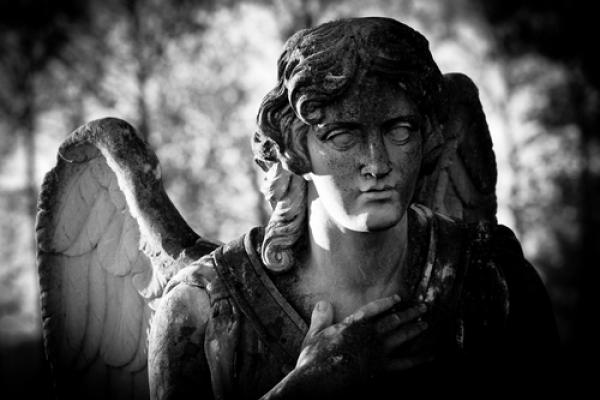
I am tormented by what took place at the Boston Marathon. An iconic event that is supposed to be a celebration of achievement and companionship will be scarred with memories of injury and death for years to come. However, the source of my distress is not only the horrific sights and sounds of violence and terror, but in such dreadful disasters I also struggle with our common conceptions of a loving God. As many wonder where God was in the midst of such tragedy, and while others question why God did not (or could not) prevent such terror from taking place, I am personally tormented with my belief of where God's love will be placed in its aftermath.
On the one hand, we are told “blessed are those who mourn, for they will be comforted” (Matthew 5: 4), and in receiving the Gospel in such ways, we take comfort in the belief that God is with those who suffer and directly at the side of those who struggle. This conception of a loving God offers relief for the victims in Boston and all those on the receiving end of transgression. However, while we proclaim a God in solidarity alongside those in pain, we are also often told that God is present with those who cause the pain, for the love and forgiveness found in Jesus is inclusive, it has no boundaries, and nothing is able to “separate us from the love of God in Christ Jesus our Lord” (Romans 8:38-39). So just as Jesus was sent to soothe those who suffer, he also absolves those responsible for the suffering. As a result, we are left with a God who seems to love both saints and sinners, which means we are both comforted and confronted in the aftermath of tragedy in Boston.
Resurrection is the theme of the 50 days of Eastertide. Yet, for decades, the month of April has been filled with particularly horrific deaths:
- The assassination of Martin Luther King, Jr. (April 4, 1968)
- The murder of 13 persons at the American Civic Association Immigration Center in Binghamton, N.Y. (April 3, 2009)
- The shooting death of 32 students at Virginia Tech. (April 16, 2007)
- The end of the Waco siege and the death of 82 members of the Branch Davidians. (April 19, 1993)
- The bombing of the Alfred P. Murrah Federal Building in Oklahoma City that killed one hundred sixty-eight children and adults. (April 19, 1995)
- The Columbine High School shooting resulting in deaths of 15 persons (April 20, 1999), a shooting that has been echoed in 31 schools since, most recently in Sandy Hook Elementary School of Newtown, Conn.
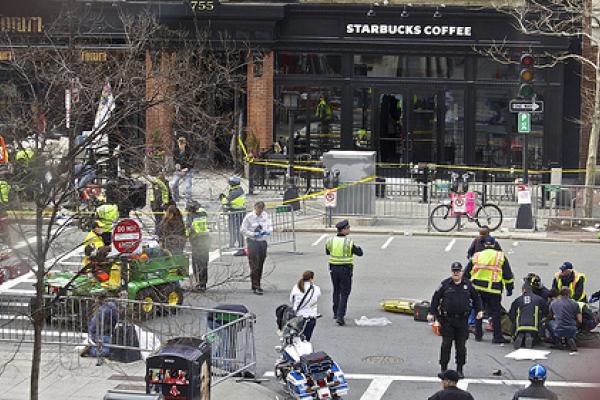
In 2013, April continues its trend. On Monday, April 15, someone decided to plant bombs along the route of the Boston Marathon. The explosions killed at least three people and wounded more than 100. Among the dead is 8-year-old Martin Richard.
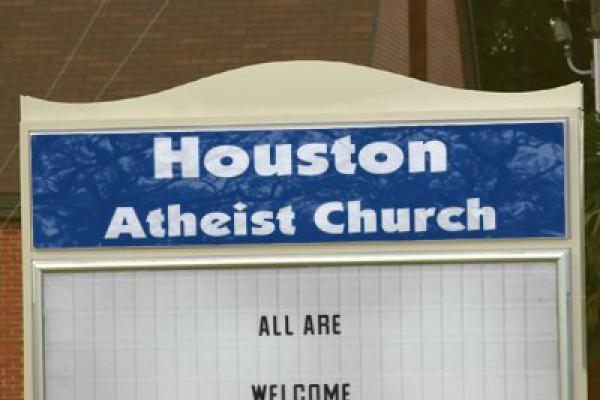
HOUSTON — Sunday mornings at Houston Oasis may look and feel of a church, but there’s no cross, Bible, hymnal, or stained glass depictions of Jesus. There’s also nary a trace of doctrine, dogma, or theology.
But the 80 or so attendees at this new weekly gathering for nonbelievers come for many of the same reasons that others pack churches in this heavily Christian corner of the Bible Belt — a sense of community and an uplifting message that will help them tackle the challenges of the coming week, and, maybe, the rest of their lives.
“Just because you don’t believe in God does not mean you do not need to get together in community and draw strength from that,” said Mike Aus, a onetime Lutheran pastor who is now an atheist and founder of Houston Oasis.
“We are open to any message about life as long as no dogmatic claims are made.”
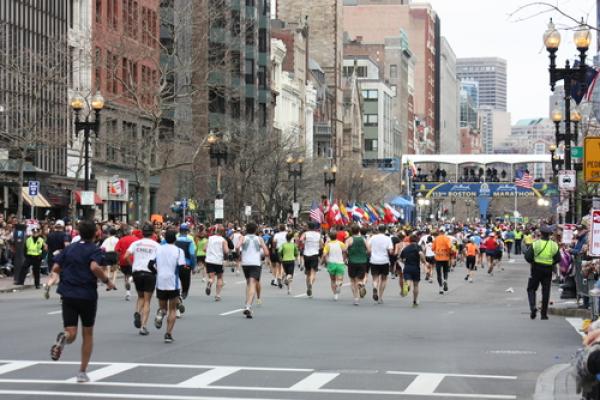
“How do you defend against terrorists?” asked a colleague, as we processed news reports of two bomb explosions near the finish line of the Boston Marathon.
The answer, truth be told, is you probably don’t defend against terrorism. Like a deadbolt on a residential door, you can create deterrents that slow the bad guys down. But a determined thief will only be delayed, not prevented.
Although it isn’t yet known whether these bombs in Boston were a terrorist attack, questions like my colleague’s arise because we live in such an open and “target-rich” society.
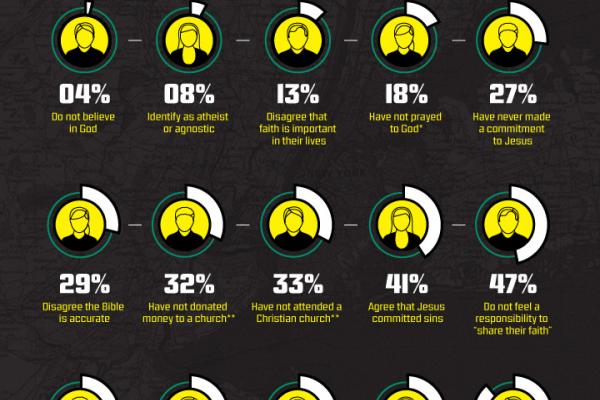
Here are the criteria for post-Christianity according to Barna:
1. do not believe in God
2. identify as atheist or agnostic
3. disagree that faith is important in their lives
4. have not prayed to God (in the last year)
5. have never made a commitment to Jesus
6. disagree the Bible is accurate
7. have not donated money to a church (in the last year)
8. have not attended a Christian church (in the last year)
9. agree that Jesus committed sins
10. do not feel a responsibility to “share their faith”
11. have not read the Bible (in the last week)
12. have not volunteered at church (in the last week)
13. have not attended Sunday school (in the last week)
14. have not attended religious small group (in the last week)
15. do not participate in a house church (in the last year)
As I read through the list I am struck by the evangelical bias. There are very specific practices included in this list (Bible study, house churches, sharing the faith, small group attendance, Sunday school) that reveal this bias. They are asking about practices they consider normative, their presence and their absence. There is no mention of receiving the Eucharist, charitable giving, or social outreach such as volunteering in a soup kitchen.
Let me be clear, I am not judging them positively or negatively on their list. Instead, I'm intrigued ... deeply and profoundly intrigued, truth be told.