Women’s church leadership, London’s Extinction Rebellion, America’s messiah complex, and more!

As I watch these dynamic leaders suffer for their brilliance and their courage — as I watch you suffer for your calling to ministry — I have to point out that this is not a story about individual women. It's not only about me or about you. We are confronting a cancer of bias, a perhaps at times unconscious reaction to #MeToo and Trump's presidency and female gains in graduate school and income and costs of childcare and impossible parenting standards and devaluation of teachers and an impossibly toxic yet superficial social media environment.

Christian Climate Action played a key role in securing the protest site at Marble Arch as they arrived by a truck which was used to block traffic and was later transformed into a solar-powered stage. Rev. Sue Parfitt, 77, along with two other Christians, ensured that the truck was not removed by police by locking themselves to the underside with metal chains. Richard Barnard, a member of the U.K. Catholic Worker Movement, then climbed on top of the truck and unfurled a banner reading “tell the truth.”

We’ve all seen the mountain of coverage and passionate political opinions on all sides in response to Special Counsel Robert Mueller’s finally released — and heavily redacted — report. Without repeating all the coverage and commentary on the full report, here are my takeaways from a moral lens. The report proves that ...

Tobeka Daki became one of 10 million people who die each year because they cannot afford the cost of medicines. Most medicines are inexpensive to make, and virtually all were discovered thanks to government investments. So, it is no exaggeration to say that the worldwide network of medicine monopolies, which give unchecked power to charge virtually any price on life-essential goods, were the cause of most of these deaths.

When new people come to our Mennonite church in North Carolina, whether from other traditions or from no church background, I imagine they are stirred by our views on peace and violence. The strangest part of our religious life is not that we believe that dead people come back to life, or that we try to live like a peasant we believe was God — it is our disposition toward military service.

You don’t have to be in prison to recognize the power dynamics among the characters and how their bored desperation could remind us of what happens when the most emotionally unhealthy habits of mind mingle with the least human technologies. You don’t have to launch into space to find yourself clicking a button over and over and over, the offer of immediate gratification without genuine connection. It’s no wonder that the most psychologically mature astro-prisoner (played by André Benjamin) takes to sleeping in the garden — it’s the closest thing to real.
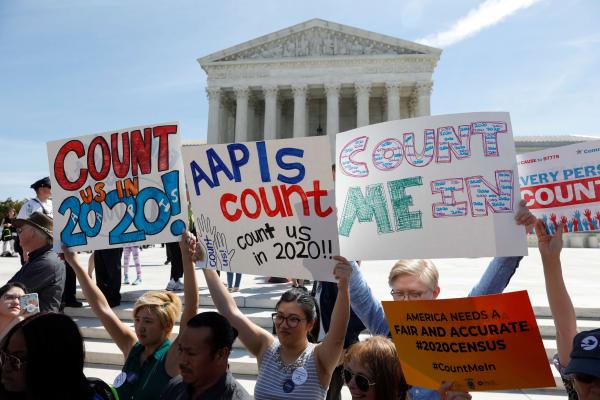
The court has a 5-4 conservative majority and has backed Trump in other high-profile cases. Conservative justices indicated a citizenship question would be eminently reasonable, noting that other countries use such questions and that the United States has done so in the past in one form or another.
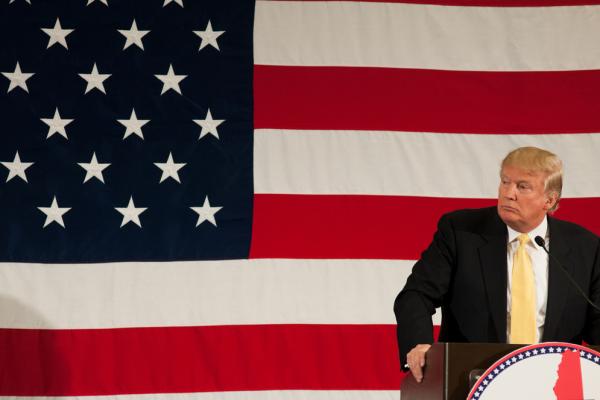
While, obviously, not everyone who spreads these memes is endorsing violence, its undeniable that some of the president’s supporters view them as a roadmap for the kind of radical action they believe it will take to “make America great again.” Cesar Sayoc, for example, affixed this very image to the window of his van before he mailed bombs to news outlets, Democratic politicians, and former government officials. And the truth, more broadly, is that we communicate much by what we find “humorous.” Even though many who traffic such imagery would never mail bombs, it strains credulity to say they are entirely disconnected from support for a president who openly wishes he could order the military to rough up migrants at the border, or who endorsed violence against protesters at campaign rallies.

Speaking and preaching will only take a congregation so far. Real and sustained progress requires a change in cultures that demand people hide a part of who they are. “We must become congregations in which people are welcome to be their whole selves,” Snell writes. “When we do the work of making our congregations welcoming to those with mental illness, we can live into a vision of the fullness of the body of Christ, accompanying all and excluding none.”