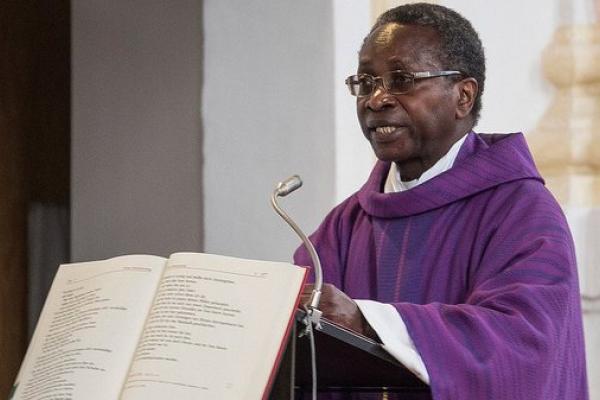
A Catholic priest has resigned from his parish in Germany after racist threats and abuse by local politicians. The Rev. Olivier Ndjimbi-Tshiende told parishioners during his March 6 sermon that he would be leaving his post in Zorneding, close to Munich, after Easter. The Congolese-German priest received race-related death threats five times in the past few months and has also been stalked, German magazine Der Spiegel reported.
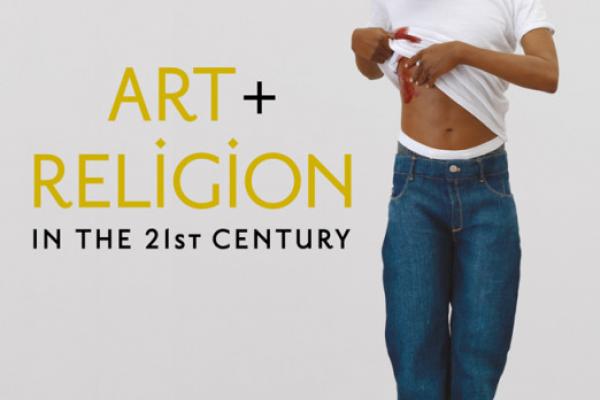
It is not easy to be a respected member of the art-world intelligentsia and take religion seriously.
“Religion and modern art continue to be typecast as mortal enemies,” writes Aaron Rosen.

Jackson, who said her Christian faith is everything to her (it’s “the pie, not a piece of pie,” she said), talked to her minister as she wrestled with the morality of marijuana. “I’m a byproduct of the 1980s and ‘Just Say No,’ so I grew up thinking this was evil,” she said. Stacey Mobley, minister of the church of Christ of Colorado Springs, an independent, Bible-based congregation, said members support Jackson’s work.
“God made the plant, and said in Genesis 1:31 that everything he made was very good,” said Mobley, who opposes recreational marijuana.
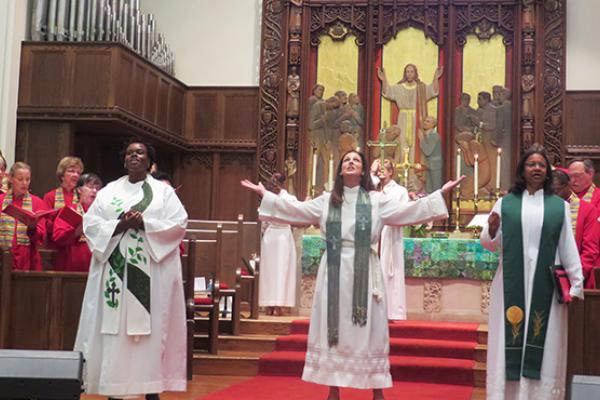
Perhaps the most surprising finding is that the pay gap does not diminish (and may grow wider) when we take into account education and experience. Women in the clergy tend to be better-educated than their male colleagues. As a result, when we take into account age, years of schooling, and having a theology degree, the number becomes 85 cents.
In other words, female clergy really do earn less for the same education and experience.
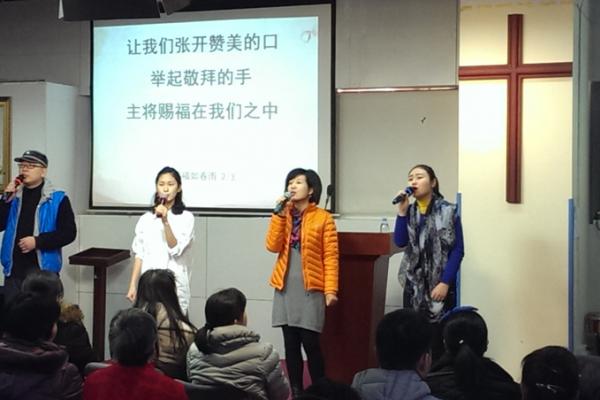
In August 2014, a top-ranking official in the Chinese government informed the world that China was planning on nationalizing Christianity. Wang Zuoan, director of the State Administration for Religious Affairs, told a forum in Shanghai that the “construction of Chinese Christian theology should adapt to China’s condition and integrate with Chinese culture.” The announcement, unsurprisingly, triggered significant consternation among Christian groups in China and around the globe.

The state of American distrust has led me to the conclusion that the single most important issue in American politics is integrity — that is, a constancy of moral character that fosters trust. More important than any policy on economics or healthcare is the ability of a candidate to rebuild trust in the system to which we all belong.
And this can only be done by a candidate who possesses integrity.
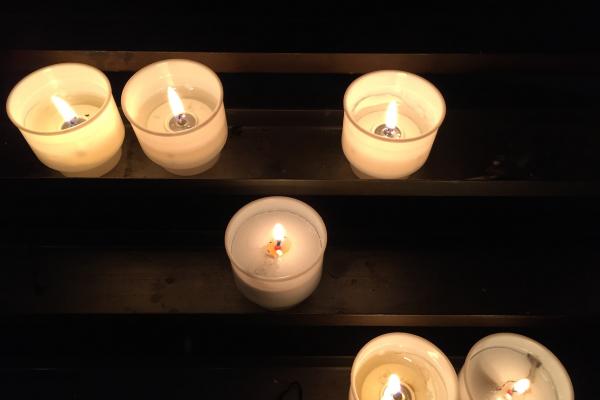
Since I was born Baptist, I think I was taught in utero to be skeptical of all this Roman Catholic stuff. Of Mary. Of popes and princes. Of these incense-tainted, saintward prayers. Of the overreliance on the heritage that traces back to St. Peter (though of course we would never have called him St. Peter). At one point, our guide said, “Upon this rock, I build my church blah blah blah.” She meant no disrespect. Yet it was one of the funniest, most unwittingly perfect things she has said, pithily capturing our sometimes-cavalier attitude toward this church and, for some of us, institutional religion more broadly.
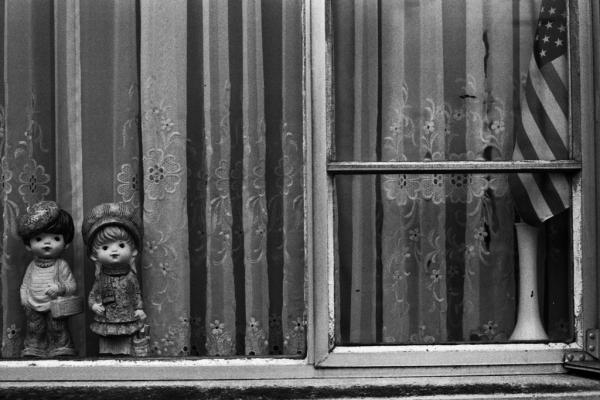
Some commentators say this season is anxiety-inducing but temporary, the moment when white Americans are realizing their way of life is over. But Dr. Jennifer Richeson's findings, with Northwestern colleague Maureen A. Craig, say something else: Unaffiliated white Americans, including those with progressive, moderate, and conservative leanings, express more racial bias when confronted with news of a majority-minority future — and, in a further study, demonstrate a tendency to shift right on race-related policies.
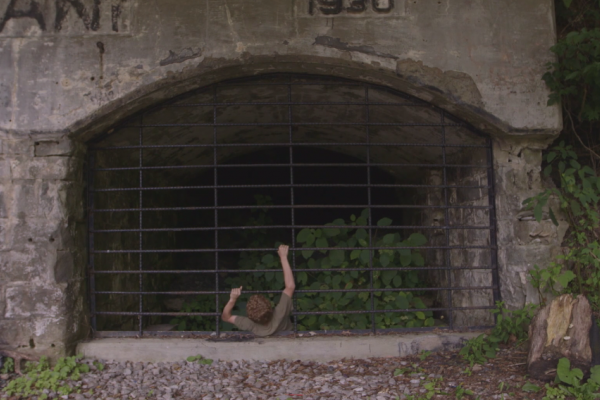
I was always going to make a film about prisons, but from the outside of the prison itself. I wanted to challenge the alienation we feel by seeing prisons simply as buildings we have no relationship to. I had originally thought I was just going to set it in one city. For example, when you look at the prison population in New York State, a lot of those prisoners come from a small section of neighborhoods, and I was originally thinking of setting the film in those places.
I ended up going on a longer journey, with a goal to disrupt the identity of these areas we think of as “free,” to reveal how deeply prisons influence our lives in all spaces.
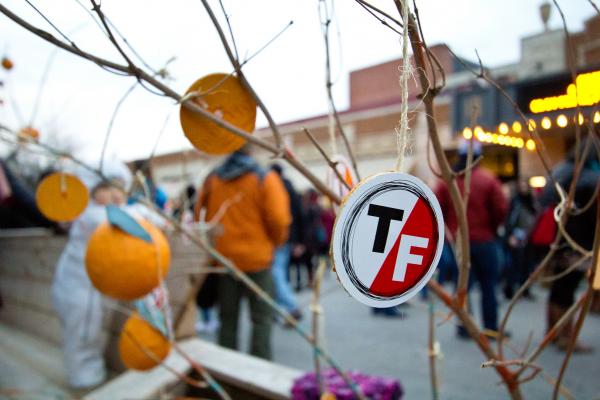
The True/False film festival in Columbia, Mo., likes to bill itself as “different.” And it is — the intimate weekend-long documentary fest has a well-earned reputation as a place where anything can happen: Here you’ll find award-winning directors hobnobbing with writers and college students over brunch, and accountants and lawyers who transform themselves, Cinderella-style, into flamboyantly dressed volunteers. But Columbia’s festival is unique in another way, one that’s more important than simple aesthetics: True/False also focuses on the unifying power of story.
Over its 13 years of existence, the festival has been committed to promoting the idea that introducing audiences to stories wildly different from their own expands our understanding of the human experience.