A group of priests and nuns, some of whom were assaulted as children, has quietly been gathering to publically urge the pope and American bishops to "clean house" on sexual abuse in the church.
Many members in the group, though vocal on sexual abuse cases in the past, did not know eachother until last year, when a laywoman brought them together for as a "confidential support group."
The New York Times reports:
Their aim, they say, is to support both victims and fellow whistle-blowers, and identify shortcomings in church policies. They hope to help not just minors, but also adults who fall prey to clergy who exploit their power for sex. They say that their motivation is to make the church better and safer, and to show the world that there are good priests and nuns in the church.
“We’ve dedicated our lives to the church,” the Rev. John Bambrick, a priest in the Diocese of Trenton, said at a meeting of the group last week in New York. “Having sex offenders in ministry is damaging to our ministry.”&nbsminp;
Read more here.

One of the ongoing discussions of the U.S. drone program is who should control it. Having it under the military provides more oversight and accountability; having it under the CIA provides more secrecy. The Obama administration has apparently decided to begin moving control of at least some drone operations to the military. Reuters reports:
Four U.S. government sources told Reuters that the decision had been made to shift the CIA's drone operations to the Pentagon, and some of them said it would occur in stages.
Drone strikes in Yemen, where the U.S. military already conducts operations with Yemeni forces, would be run by the armed forces, officials said.
But for the time-being U.S. drone strikes in Pakistan would continue to be conducted by the CIA to keep the program covert and maintain deniability for both the United States and Pakistan, several sources said.
Ultimately, however, the administration's goal would be to transfer the Pakistan drone operations to the military, one U.S. official said on condition of anonymity.
Read more here.

Last week Pope Francis spoke out against the cult of money. Here is how Catholic News Service's Carol Glatz summarized his remarks:
Pope Francis called for global financial reform that respects human dignity, helps the poor, promotes the common good and allows states to regulate markets.
"Money has to serve, not to rule," he said in his strongest remarks yet as pope concerning the world's economic and financial crises.
A major reason behind the increase in social and economic woes worldwide "is in our relationship with money and our acceptance of its power over ourselves and our society," he told a group of diplomats May 16.
"We have created new idols" where the "golden calf of old has found a new and heartless image in the cult of money and the dictatorship of an economy which is faceless and lacking any truly humane goal."

The Supreme Court agreed Monday to consider whether prayers can be offered at government meetings — a practice that’s been common in Congress and throughout the states for more than two centuries.
The religious expression case, which comes to the court from the town of Greece, N.Y., focuses on the first 10 words of the First Amendment, ratified in 1791: “Congress shall make no law respecting an establishment of religion.”
That Establishment Clause was violated, the 2nd U.S. Circuit Court of Appeals ruled last year, when the Greece Town Board repeatedly used Christian clergy to conduct prayers at the start of its public meetings. The decision created a rift with other appeals courts that have upheld prayer at public meetings, prompting the justices to step in.

Each year 90,000 parents in the U.S. confront the profound suffering that follows the death of a child or adolescent.
Some of those rely on faith to help them through their grief. Others look to psychiatrists, who offer therapy or prescribe antidepressants to help ease their patients’ pain.
On Saturday, in a move that could add to the tension between religion and science, the American Psychiatric Association changed a controversial diagnosis regarding how grief relates to mental health.
The change “will affect every single person in the country, because at some point we’re all going to be bereaved,” said Joanne Cacciatore, founder of the Center for Loss and Trauma in Phoenix and a professor of social work at Arizona State University.
At issue are questions as fundamental as how long we grieve, what clinical label we assign to sadness, and when grief transforms into mental illness.
The modification also rekindles long-standing debates about whether spirituality or medicine offers the best pathway out of bereavement.
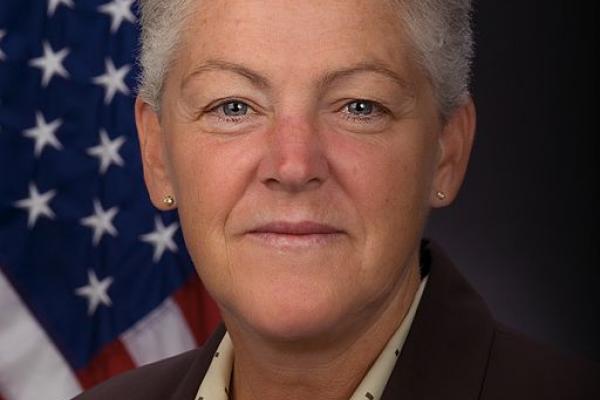
Last week, concentrations of carbon dioxide in the atmosphere reached 400 parts per million – nearly 15 percent over what many scientists estimate is a safe level. Amid this and other crises in creation, the Environmental Protection Agency needs a strong leader to navigate the complex policy and economic situation that governs environmental policy.
In March, In March, President Barack Obama nominated Gina McCarthy to lead the EPA. At the time, many regarded her as a shoo-in, as she has held top posts under Republican governors, was endorsed by many in the energy industry, and has acted as assistant administrator of the EPA under President Obama since 2009.
It was surprising, then, when all eight Republican members of the Senate’s Environment and Public Works Committee decided to boycott McCarthy’s nomination hearing. This surprise decision, which effectively canceled the vote, was part of a longer-term pattern of obstruction and partisanship on once-routine matters.
In the face of such unprecedented risk to human health and well-being, many were surprised that senators tasked with studying issues of clean air, clean water, and similar issues put ideology ahead of fairness in obstructing the vote. Sen. David Vitter, the leader of the obstructionist group, said it best himself in 2005 when discussing judicial appointments: “I think that every nominee deserves a vote. It’s a matter of fairness.”

Just two more months, the daughter promised her mother by telephone, then she’d be home for good.
Making shirts in this packed metropolis of 12 million people, Sheuli Akhter, 20, made decent money — about $140 a month — by the impoverished standards of rural Bangladesh. But she missed the family benefiting from the wages of her hard work.
Her mother, Ranjana Akhter, was found sobbing near the rubble of the Rana Plaza factory where her daughter worked, days after the eight-story complex collapsed and killed more than 1,100 workers. Viewing dozens of corpses a day, the 35-year-old woman still hoped her daughter had somehow survived.
The victims retrieved from the debris were crushed and unrecognizable in the South Asian heat.
“I am looking for her body, but they are all decomposed now. It’s getting harder to identify,” said Ranjana Akhter, tears falling from her eyes.
The scale of the mismanagement and breadth of the human tragedies in Bangladesh powerfully illustrated what years of abuse, inhumane conditions, and unthinkable danger could not: Garment workers in Third World countries take enormous risks to earn a living in Bangladeshi-owned companies that produce clothing for Western retailers.

A massive tornado swept through the town of Moore, Okla., on Monday afternoon, destroying homes and hitting two elementary schools. Emergency crews were rushing to the scenes to rescue staff and students trapped in the debris. One MSNBC report indicated at least 75 children and staff were trapped in one of the schools. From MSNBC:
Two elementary schools were heavily damaged, possibly completely destroyed, KFOR reported. Those schools are Briarwood Elementary in Oklahoma City and Plaza Towers Elementary in Moore.
It was unknown how many children may have been in the schools when the twister hit, but a KFOR reporter saw a student being rescued from Plaza Towers, where the roof was blown off and the cinderblock walls demolished.
Read more HERE.

Celebrating the best in Christian press for the past year, the Associated Church Press (ACP) recently honored Sojourners with 17 awards, including Best in Class for Sojourners magazine and Best in Class for the God's Politics blog!
Sojourners magazine also received 16 record-setting awards from the Evangelical Press Association (EPA) earlier this month.
We are grateful to all of YOU for being such enthusiastic readers, responders, and sharers of the work we do! Check out the following award-winning blog and magazine articles.

In March of this year, U.S. and Mexican citizens gathered together on both sides of the border fence to honor the memory of Jose Antonio Elena Rodriguez. Five months earlier, Rodriguez, of Nogales, Mexico, was shot seven times from behind by U.S. Border Patrol agents for allegedly throwing rocks over the 14-foot fence. He was only 16 years old — a young life caught in the crossfire of increased cross-border shootings.
Tucson, Ariz., residents Maryann and Barry Gosling were among those who participated in the bi-national vigil.