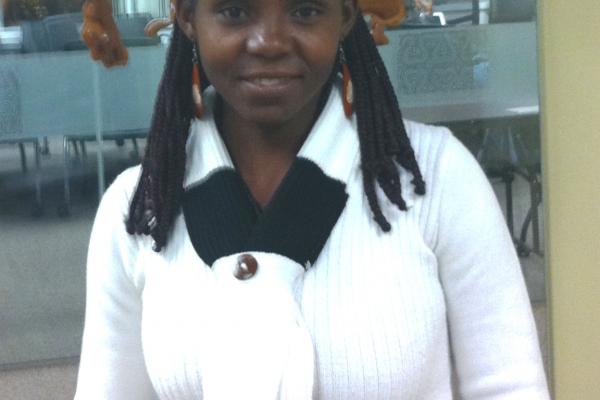
Most real-life law students I've met are at way, way less risk of being murdered than their counterparts in a John Grisham novel--except for Francia Marquez. The Afro-Colombian activist and mother of two has received multiple death threats as she advocates to keep her home community from having their ancestral home stolen by a land-grab big mining project.
There's gold in them thar hills in Francia's home, La Toma, in Colombia's Cauca province. Families in her hometown have lived for generations off of small-scale, by-hand gold mining. (Francia herself still puts in some mine time when she visits home, although these days she's spending the most time in her legal studies in Bogota.)
But lots of larger-scale mining concerns want in on the action. Some have sent in bulldozers illegally. Others are joining the land rush of getting mining concessions from the national government--notwithstanding laws on the books that give local communities various rights, including prior consultation on any mining projects.
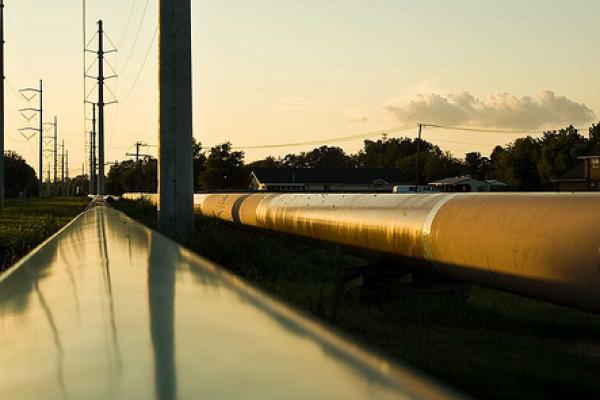
Late Wedesday (1/18), leaders from Christian and other faith communities welcomed the news that the Obama administration has rejected the construction of the Keystone XL pipeline.
The controversial project, which would have run for 1,700 miles from Alberta, Canada, through the American Heartland to the Gulf of Mexico, would have been a backward step in the administration’s professed commitment to investing in clean and renewable energy sources.
In August 2011, more than 1,200 peaceful protestors were arrested as part of a sustained campaign to demonstrate against the pipeline project. In November 2011, Sojourners CEO Jim Wallis, along with other Sojourners staffers and 15,000 members of the public, peacefully (and prayerfully) encircled the White House to urge President Obama to stop the project.
Sojourners welcomed the Obama’s decision in November to postpone the permitting of the pipeline until an environmental impact report was completed. While this new decision is a clear step forward, TransCanada has the opportunity to reapply for the permit along a different route and leaders have pledged to remain vigilant and watch the issue closely.
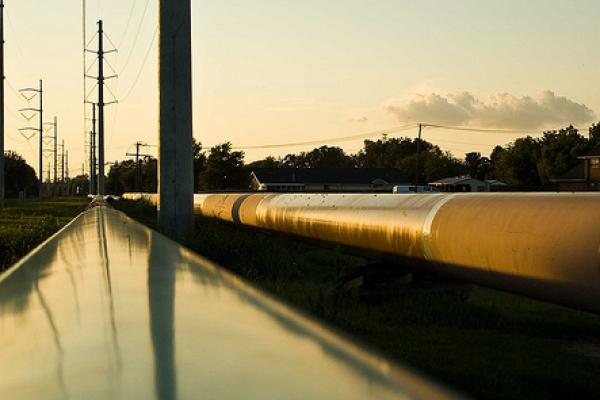
Politico is reporting that President Obama is planning to reject the Keystone XL pipeline this afternoon.
Here’s a quick roundup of some reasons why we think that’s awesome:
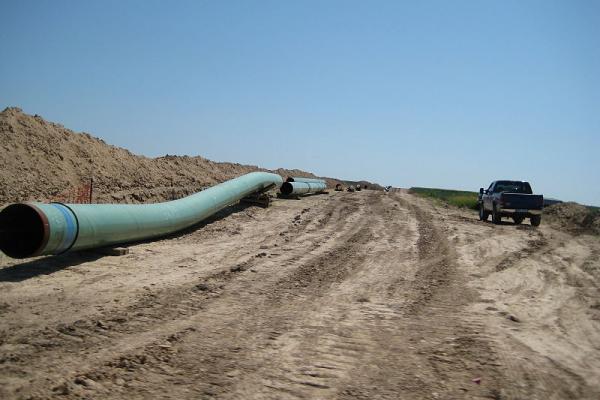
The building of a 1,700-mile pipeline through the heartland of the United States has been at the center of the debate on the economy for many months now. Much has been written by those who both support and oppose its construction. And much has also been written about just how important the pipeline would be to the U.S. economy if it were actually to be built.
With the deadline for the Obama administration’s decision on construction coming up fast (2/21), many have already made up their minds. But have they done so on the basis of accurate figures?
It might be pretty difficult to do so, given that various estimates put the number of jobs created though the construction of the pipeline at anywhere between 20 and 350,000. So where have all these different estimates come from, and which one (if any) is actually accurate?
The first difficulty that arises from trying to find an accurate estimate is that most of the numbers from the upper echelons of the estimates come from the company who are hoping to build the pipeline: TransCanada.
God of peace, we continue to pray for the country of South Sudan. Help their leaders to pursue holistic peace, and comfort those who have been victimized by recent violence. Amen.
"Christianity doesn't deny the reality of suffering and evil... Our hope... is not based on the idea that we are going to be free of pain and suffering. Rather, it is based on the conviction that we will triumph over suffering." - Brennan Manning
"[God] shall judge between many peoples, and shall arbitrate between strong nations far away; they shall beat their swords into ploughshares, and their spears into pruning-hooks; nation shall not lift up sword against nation, neither shall they learn war any more;" - Micah 4:3
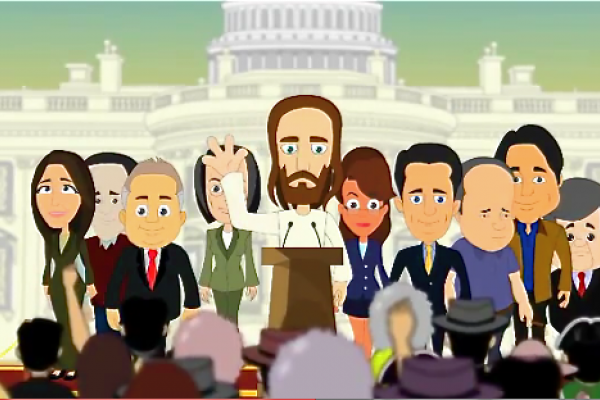
The video will be a satirical take on the Sermon on the Mount with various quotes, signs and policy positions of the Tea Party. While I don’t think the creators of the video would argue that this same test be applied to every piece of legislation Congress considers, it is an interesting experiment.
How often do we divorce the things we say and do or the beliefs we hold from what we read in the Gospels about the person and teachings of Jesus?
This video will drive some conservative Christians nuts for two reasons.
First, because there are conservative Christians, such as Chuck Colson, who have spoken out against Ayn Rand and don’t want to be lumped in with her followers.
Second, because Rand’s influence is real and it’s not a good thing.
Rand’s extreme individualism turns Christian virtue into vice and vice into virtue. Her worldview feeds selfishness and a disregard for our neighbors. I read all 1,046 pages of my paperback copy her Atlas Shrugged and I would like at least 700 pages worth of my time back.
Sometimes folks ask me if I’ve spoken at any conferences that I get excited about. I’ll be speaking more than 150 times this next year in about a dozen countries — at all sorts of events from a Spanish speaking conference in Florida to an economic think-tank in DC to schools here in North Philly and 30,000 Lutherans in New Orleans.
This year is going to be a blast. I decided to make a list of a few of the events that are real highlights for me in 2012. They are each unique and innovative, and a couple are in their infancy.
Here they are…Five Great Gatherings in 2012:
Last Thursday, Jan. 12, I was arrested in the Bronx for civil disobedience along with 43 others. It was a group that consisted mainly of clergy and church laity, a grassroots evangelical effort led by Bronx Councilmen Fernando Cabrera. Our protest was aimed at the city’s decision to prevent 160 churches from renting worship space in public schools beginning, Feb. 12.
I would like to clarify the nature of my involvement. I remain a proponent of healthy boundaries between church and state. The church I presently lead does not meet in a public school, and we’re not faced with an impending threat of relocation. My inspiration to protest began when I discovered how the city’s decision would affect churches in the Bronx — the poorest urban county in the country.
If New York City remains a trendsetter, a decision like this could lead to numerous copycat decisions in poorer districts all over the country.