
In early August, a mosque in Joplin, Mo., burned to the ground. It was the second fire that damaged the facility this summer — the first, determined to be arson. In light of this attack and others like it across the country — including the heinous shooting at a Sikh gurudwara outside of Milwaukee that killed six worshippers — Sojourners called on our community to help us get the word out that we are called to love our neighbors. All of them.
The response was overwhelming. As a result of generous contributions, Sojourners not only took out an ad in The Joplin Globe, but also erected billboards with the same message, both in Joplin and in Oak Creek, Wis., three blocks from the Sikh gurudwara.
The message is simple. "Love your Muslim neighbors." "Love your Sikh neighbors."
It's not radical in language, but it is a radical love that Jesus extends to us and asks us to show others.
Both President Barack Obama and presidential candidate Mitt Romney have been somewhat hesistant to discuss their faith in detail during the campaign season. In a recent poll by the Pew Forum on Religion and Public Life, fewer than 50 percent of Americans identified Obama as a Christian. About 60 percent knew Romney is Mormon.
The two discussed their faith in eight questions presented by Washington National Cathedral's magazine Cathedral Age. From the release:
"'First and foremost, my Christian faith gives me a perspective and security that I don’t think I would have otherwise: That I am loved. That, at the end of the day, God is in control,' said President Obama. “Faith can express itself in people in many ways, and I think it is important that we not make faith alone a barometer of a person’s worth, value, or character.'
Governor Romney said, 'I am often asked about my faith and my beliefs about Jesus Christ. I believe that Jesus Christ is the Son of God and the Savior of mankind.'"
For the full story, go HERE.

The impact of Citizens United v. Federal Election Commission (2010) is experienced with increased intensity as we approach Election Day. Since the U.S. Supreme Court ruled that corporations and unions have a First Amendment right to independent political expenditures, certain portions of the Bipartisan Campaign Reform Act were reversed.
As a result, the voices surrounding political campaigns have risen in strength and size. And so, while a variety of viewpoints exist on the consequences of Citizens United, most agree that it has dramatically altered the culture of U.S. politics, and has thus sparked major discussion on the reach and limits of freedom of speech.
Due to the ramifications of Citizens United, we should indeed recognize and critique the role that freedom of speech holds within a mature democracy. However, as we focus on free speech, the time has come to also consider the contributions of its equally important companion, the responsibility to listen. In other words, as we ponder the primary ingredients of a healthy society, the delicate balance between freedom of speech and the responsibility to listen should be held as a critical priority.
Interethnic violence has flashed through India during the conclusion of the Muslim holy season of Ramadan during which Muslims fast from sunrise to sunset. Catholic leaders in northern India, where Muslim migrants have been particularly targeted, has called for common ground dialogue and hosted meetings with leaders of the conflicted communities based on the Catholic churches long-standing relationships with both communities.
Anto Akkara for ENI NEWS reports:
"Churches are initiating steps to broker peace and restore harmony in the northeast Indian state of Assam, which has been rocked by bloody clashes between local ethnic Bodo people and Muslim migrants.
'We have hosted leaders of both communities twice already. We are now preparing a larger meeting of both communities after Ramadan,"'Roman Catholic bishop Thomas Pulloppillil of Bongaigaon diocese that comprises the troubled region, told ENInews on 15 August 2012.
The clashses have left 78 dead and over 400,000 refugees."
Read the rest of the article here.

Editor's Note: Over the next two weeks, Sojourners is celebrating our teachers, parents, and mentors as children across the country head back to school. We'll offer a series of reflections on different aspects of education in our country.
My elementary school is a Title I school. About 97 percent of our students qualify for free and reduced lunch and Medicaid. Research shows us that many children raised in poverty struggle to learn to read. 
Common sense tells us that children who don't learn to read can't read to learn. They often reach a frustration level with school by the time they're in the third grade. According to the U.S. Department of Education, 70 percent of low-income fourth-grade students can't read at a basic level. I often wonder, "What can I do in my day-to-day work as a teacher to help?"
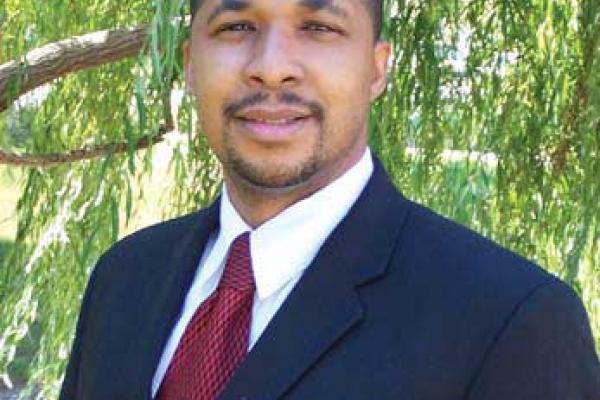
A professor who was fired in July by the Interdenominational Theological Center says the Atlanta consortium of black seminaries discriminated against his conservative Christian views.
The Rev. Jamal-Dominique Hopkins, an African-American expert on the Dead Sea Scrolls, filed a complaint with the Equal Employment Opportunity Commission in July. He accused ITC administrators of harassment that included “disagreeing with my conservative religious ideals, intimidating me, slandering my character, giving me poor evaluations, and changing student grades from failing to passing with no merit.’’
Hopkins, 42, told Religion News Service that tensions arose after a speaker from InterVarsity Christian Fellowship addressed an informal session he organized in February. During the session, attendees were offered a book that declared homosexuality was a sin.
He said his department chair, the Rev. Margaret Aymer, questioned the distribution of the book and threatened his job.

Maybe religion really is the opiate of the masses – just not the way Karl Marx imagined.
A University of Washington study posits that worship services at megachurches can trigger feelings of transcendence and changes in brain chemistry – a spiritual “high” that keeps congregants coming back for more.
“We see this experience of unalloyed joy over and over again in megachurches. That’s why we say it’s like a drug,” said James Wellman, an associate professor of American religion who co-authored the study.
The study, “‘God is like a drug’: Explaining Interaction Ritual Chains in American Megachurches” was presented on Sunday at the annual meeting of the American Sociological Association in Denver.
For some Mormon feminists, there can be only one goal on the road to gender equality: ordination to the all-male priesthood.
After all, every worthy male in the Church of Jesus Christ of Latter-day Saints — starting at age 12 — is ordained in this priesthood. It is seen as a holy power, described as the authority to act in God’s name, yet given exclusively to men.
At the same time, lots of Mormon women are perfectly comfortable with the roles they believe God assigned to them, including motherhood and nurturing. They would not want, they say, to “hold the priesthood.”
Now comes a third and, some suggest, growing group of Mormon women somewhere between these two poles.
They are not pushing for ordination, but they crave a more engaged and visible role for women in the Mormon church. It is a role, they believe, that their Mormon foremothers played — and one that could fit easily into the institutional structure without distorting or dismantling doctrine.

“So what are food stamps anyway?” my 8-year-old son, Mattias, asked as I drove him to his summer camp this morning. “Are they, like, stamps that you eat that taste like different foods?”
“Not exactly,” I said.
My family was less than thrilled when I presented the idea of living on the equivalent of what a family of four would receive on food stamps for a week. Actually, the program is now called “SNAP,” which stands for “Supplemental Nutrition Assistance Program,” and involves government-issued vouchers or debit cards, rather than the antiquated stamp method. But the result is the same; we have a lot less to spend on food this week than usual.
“But I don’t want to be poor,” Mattias moaned as I explained the challenge to him.
“We’re not poor,” I said, “but it’s important for us to know what it’s like to struggle to feed our family.”
“Why?”
“Because,” I paused, trying to figure out a way to explain privilege and compassion to a third-grader who was quite content to have all he has, and then some, “Jesus tells us to have a heart for the poor, but how can we really do that if we don’t know anything about what it’s like to live with less?”
“Hmm,” he wrinkled his brow, “I guess we can do it for a few days.”