Agencia Fides, the Vatican news outlet for Catholic missioners, is the only news source for reports about Mussalaha, the popular faith-led peace movement in Syria. With violence fracturing along religious/ethnic lines, this inter-religious movement seeks to maintain safe havens for all Syrians who will lay down their weapons. Mussalaha is also smuggling food, medicine, and hope into blockaded cities, such as Rableh where more than 12,000 Christians have been under siege for more than 10 days.
Agencia Fides reports: Over 12 thousand faithful Greek-Catholics are trapped in the village of Rableh, west of Qusayr, in the area of Homs. Food is scarce, the faithful are living on "bread and water", medicine is lacking to treat the sick and wounded. This is the alarm raised by local sources of Fides that invoke respect for humanitarian law, that confirm what the international press is reporting on the situation in Rableh. For more than ten days the village of Rableh is subject to a strict blockade by armed opposition groups, which surround it on all sides....
...representatives of the popular initiative for reconciliation "Mussalaha" were able to carry a small load of humanitarian aid to the village. A representative of "Mussalaha" assured the faithful by claiming that "everything will be done to allow the delivery of humanitarian aid." An appeal was launched by His Beatitude Patriarch Gregorios III Laham, visibly moved, to all men of good will so that "Rableh is saved and all other villages affected in Syria, and finally for peace to be reached in our beloved country." Even the Apostolic Nuncio in Syria, His Exc. Mgr. Mario Zenari, called on all parties involved "to the strict observance of the international humanitarian law", pointing out that the resolution of the crisis in Syria depends first of all on its citizens.
Read the whole article.
CLEVELAND — Federal prosecutors will be allowed to question witnesses about Amish leader Sam Mullet’s sexual activities when the hate-crime trial of Mullet and 15 followers begins next week, a federal judge ruled on Monday.
U.S. District Judge Dan Aaron Polster also agreed to allow testimony about Mullet’s use of corporal punishment to control followers, but forbid prosecutors from describing his group with words such as cult, sect, clan, band, schism, faction, offshoot, breakaway, renegade, rogue, or splinter group. Witnesses, however, can use any terms they choose.
Polster’s rulings set the stage for a trial that is scheduled to begin Aug. 27 and is expected to attract national attention because of the unusual nature of the charges and the glimpse the case offers into a reclusive Amish community.
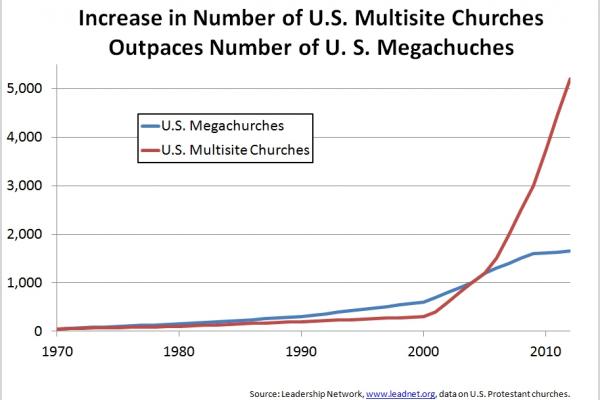
The number of congregations that host worship services at more than one physical location has grown to more than 5,000 in the last decade, according to a new report.
Researchers say these "multisite" churches, which may share worshippers across town or many miles apart, are growing at a much larger pace than traditional megachurches.
Without the burden of additional expensive buildings, congregations find they grow faster in new places, said Warren Bird, research director of Leadership Network, who announced his conclusions on Tuesday.
“It’s a combination of both evangelism and saying, `People may not come to this particular building. How can we take where we are to where they are?'” he told Religion News Service.
A federal judge on Monday dismissed the Vatican from a lawsuit filed by a former Portland teenager who says he was sexually abused by a pedophile priest who was transferred from Ireland to Chicago and then Portland in an alleged church effort to hide his past.
U.S. District Judge Michael Mosman of Portland said the Vatican didn't employ the Rev. Andrew Ronan, who — according to the lawsuit — molested the teenager in 1965 and 1966. Mosman's ruling means the Vatican can't be held financially liable for the abuse.
"It's clearly a disappointment, but we're definitely not discouraged," said Jeff Anderson, the Minnesota attorney who is representing the victim, listed in the suit as John V. Doe.

I’m not making friends among my family members with this challenge.
Because it was my idea to do this for a week (living on the equivalent budget of food stamps for seven days), everyone ends up coming to me to “check on the rules.” Basically, this means they ask me about ways they might work around the limitations of the challenge, and then get mad at me when I don’t give them a way out.
Yesterday ended up being a mixed bag. My wife, Amy, and I had to go to the other side of town for some errands, and it didn’t occur to either of us that we’d be gone over lunch time. Fortunately, one of the errands was at an Ikea, a giant housewares store that’s known for it’s affordable cafeteria-style meals, so we made it work. But even with their reduced-rate prices, we spent more than $9 for both of us and little Zoe to eat.
“Man,” I said, looking at my empty bowl, previously filled with pasta and Swedish meatballs, “that was way less than we usually spend going out, but it was still almost double what we have in the budget for one meal.”
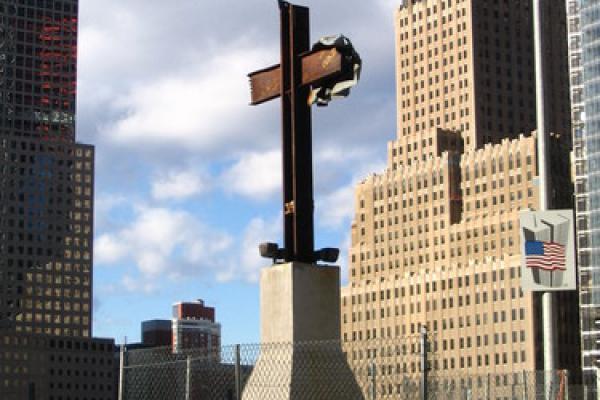
A lawsuit that was filed by the group American Atheists to keep a revered cross out of the National September 11 Museum is being challenged by a conservative law firm that defends the public display of religious symbols.
The American Center for Law and Justice filed a friend-of-the-court brief on Monday on behalf of the suit’s two defendants, the National September 11 Memorial & Museum Foundation and the Port Authority of New York and New Jersey, which owns the site.
“The legal arguments of the atheist organization are both offensive and absurd,” the center’s chief counsel, Jay Sekulow, said in a statement. He said 190,000 people had signed a petition opposing the lawsuit.

Slate's Brian Palmer put up a piece about four letter words--your potty mouth, people.
Does God care about certain words? Does he care about some and not others?
Here's a bit from it:
"The Old Testament and other religious texts prohibit taking the Lord’s name in vain, but do the gods have a problem with words like s--- and f---?
Some gods do. The Quran doesn’t directly address vulgar language, but the Prophet Mohammed made his opposition to it clear in theHadith—statements attributed to the prophet with varying degrees of reliability. According to one of Mohammed’s contemporaries, he once said that “Allah does not like obscene words or deeds,” while another acquaintance reportedly observed that “the prophet was not one who would abuse (others) or say obscene words.” These anti-obscenity provisions appear regularly in the Hadith, making Islam the sole Abrahamic religion with a clear prohibition in its sacred texts on obscene language."
Read the whole post: HERE.
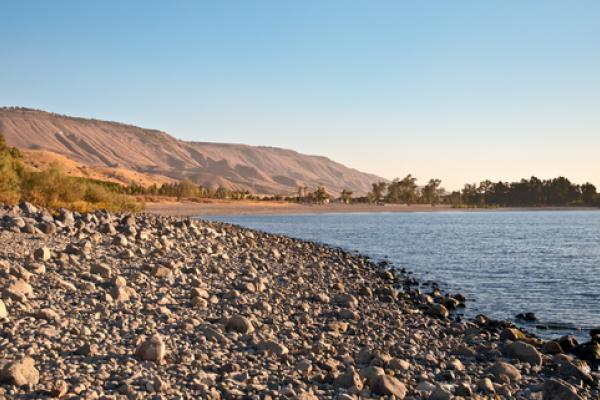
More than 20 lawmakers and Capitol Hill aides, including one nude congressman, took a booze-fueled late-night swim in Israel’s Sea of Galilee last summer, Politico reported on Monday. Which leaves at least one question: Is skinny-dipping at the biblical site sacrilegious?
Not really, Christian leaders and Holy Land experts said.
“Conservative Christians, obviously, aren't for getting naked in public or drunk anywhere,” said Russell D. Moore, dean of the School of Theology at Southern Baptist Theological Seminary in Louisville, Ky.
“The location of the Sea of Galilee, however, doesn't make the story any more offensive to Christians than it is to the general public,” he said.