New tracking software developed by Kevin Gurney, an ecologist at Arizona State University is intended to help cities across the country keep their word on climate. Many mayors have pledged to reduce their carbon footprint, but they have no objective way to measure progress. The software will allow them to identify and target areas of the city that are releasing the most carbon, in order to address the real problem areas.
The idea of a personal carbon footprint is not new, but software that can follow our dirty tailpipes down the street is certainly revolutionary. Could the uncomfortable feeling of being watched be the encouragement city residents need to change their habits?
"Gurney collects piles of information about a city's energy diet — from utilities, transportation departments and air-pollution monitors. When he analyzed Indianapolis, Gurney and colleagues from Purdue University and other institutions could pinpoint emissions down to the level of a building or a street."
It’s been a good week for getting real. After Tuesday’s revelation that the majority of Americans link increased natural disasters with climate change, a new report yesterday indicates that they may be right.
In their newly-published report, reinsurance company Munich Re claimed that global climate change has been driving natural disasters and extreme weather events, and that this trend will increase as the climate continues to change.
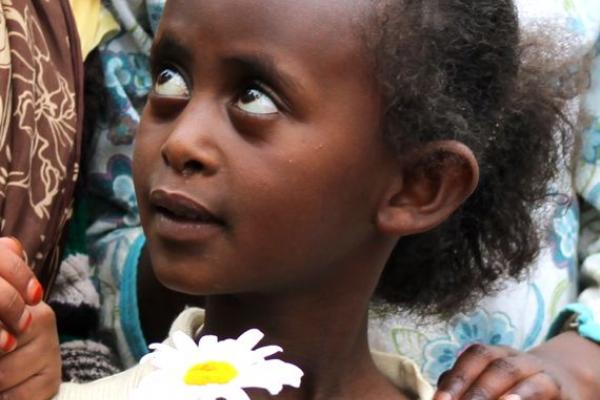
BAHIR DAR, Ethiopia — When I posted this photograph of a beautiful little Ethiopian girl holding a daisy a few days ago, my friend and fellow God's Politics blogger Christian Piatt responded on Twitter with a four-word comment:
"The Face of God."
Christian's remark stopped me in my tracks ... because it's absolutely true.
Editor's Note: Theologian extraordinnaire Tripp Hudgins put together this edition of First Thoughts prior to the first presidential debate. Still applicable before this evening's Vice Presidential debate.
 If you care about having a substantive conversation about issues that matter, you should share this post.
At its best, Christian faith provides a moral compass for advancing the common good. At worst, Christianity can be hijacked by partisan political agendas that divide and destroy. Sojourners encourages you to develop a robust and well-informed conscience around elections, measuring candidates and their platforms against Christian ethics and values. While we must be careful about translating scripture directly into public policy positions, there are principles and suggested approaches on a range of issues that can provide a critical framework to shape our perspective on public policy.
As we have since 2004, Sojourners has published an issues guide of principles and policies for Christian voters. We encourage you to use this guide to educate yourself on these issues. This can inform you as you write letters to candidates or to your local newspaper, call radio talk shows, and ask candidates at forums or town hall meetings questions based on these principles. Think and pray about whom, you would entrust with the responsibility to lead your community, state, and nation.
Share this with others and get ready for the conversation to begin.

OK, church folks. Fasten your seat belts. But don’t hunker down.
There’s a new study out this week that shows that one-in-five Americans has no religious affiliation. Not Baptist, not Catholic, not Lutheran, not Jewish, not Muslim.
For those of us in the world of organized religion, this just adds more data to a trend we have seen accelerating over the last decade.
In 2007, about 15 percent of the adult population in the U.S. described itself as unaffiliated with any religion. In a comparable survey done this summer and released on Tuesday by the Pew Research Center’s Forum on Religion and Public Life, the number hit 20 percent. And if you just focus on those under 30, the religiously unaffiliated constitute one third of that group.
Among those of us who are professional religious types, this is the kind of data that can prompt a lot of gloomy introspection about relevance and a lot of finger pointing at those who are not interested in the same kinds of religious expression that we are.
Let me suggest there’s a less gloomy and less judgmental way to think about this data.

The Christian Community Development Association (CCDA) has been a powerful force for Christian social action over the past decade. CCDA's leadership development, resources, and vision have been powerfully focused on helping pastors and community leaders facilitate the restoration of communities all over the country and around the world.
Born out of the traditions of the civil rights movement, CCDA is now engaging a new generation of pastors, prophets, and ministers. This next generation of CCDA will naturally look somewhat different from previous generations as they respond to the ever-changing landscape of our society. As it turns out, one major difference is a hunger among leaders for a more robust and powerful theological foundation from which to pursue ministry.
Practics has long dominated the field of Christian social action. What works? What strategies and techniques will actually bring about change in our community? These have been the central questions of past generations. However, among a new generation of church and community leaders, practical questions are not the sole concern, and in some cases not even the primary concern.