A majority of Protestant pastors plan to vote for GOP presidential nominee Mitt Romney, according to a new survey, but nearly a quarter are still undecided less than a month from Election Day.
Just 17 percent of Protestant pastors said they would vote to re-elect President Obama, with 57 percent favoring Romney and 22 percent undecided, according to a survey conducted by LifeWay Research.
Based in Nashville, Tenn., the research firm is a branch of LifeWay Christian Resources.
The results are remarkably similar to a LifeWay survey conducted in October 2008, which found that 55 percent of Protestant pastors planned to vote for then-GOP nominee John McCain, 20 percent for Obama and 22 percent were undecided.

Recently, I had the opportunity to visit the DMZ (Demilitarized Zone) between the two Koreas along with a group of students and faculty from George Fox University. As the most fortified border on the entire planet, the DMZ contains an arsenal of tanks, land mines, watchtowers, razor wires, artillery, and nearly two million armed troops ready to face off within a moment’s notice. Former President Bill Clinton described the DMZ as the “scariest place on earth,” a description more eerie coming from one of the few people in history to have had direct access to the “button.”
While observing the various sites within the DMZ, I thought about how the pacifist Quakers, who founded my school in 1885, would have reacted to such an experience.

Several of my rabbi friends have explained to me that there are three Ds that we should keep in mind when we criticize the policies of the State of Israel as we work for justice and peace for Israelis and Palestinians. I think these three Ds can be helpful and can also be applied to the way that many people – including Christians and Jews – talk about Palestinians and the future Palestinian State.
The first D is Demonization. I have been told that demonization of the State of Israel occurs when it is called “a pariah nation,” compared to the Nazis, or accused of committing genocide. I agree that these references cheapen their meaning in their original context and are not helpful in pinpointing the exact policies that the State of Israel engages in that are harmful – like using tax revenue to subsidize housing for Israeli Jews in more than 120 settlements on land the Palestinians lay claim to for their future state.
The first D also applies to the ways U.S. citizens, Christians, and Jews demonize Palestinians. And just like it is never acceptable regarding Jews, Judaism, and the State of Israel, it is never acceptable regarding Palestinians, Palestinian Christians, Palestinian Muslims, Islam, and the future State of Palestine. This is most obvious in the widespread use of “terrorist” with no admission that violent extremists are a minority and that most Palestinians are hardworking people who want the best for their families and a healthy society to live in. An example of this demonization is Sacha Baron Cohen’s movie Bruno. Ayman Abu Aita, a Palestinian Christian who works for peace, was identified in the movie with the caption “Terrorist group leader.” Cohen lied to the Palestinian Christian and then for comedy purposes named him a terrorist. Abu Aita sued Cohen for defamation and they recently settled out of court.

A friend of mine forwarded a link to a recent Huffington Post article about the most and least religious cities in the United States. Interestingly – but hardly surprising – you have to scroll waaaay down the list to find my current city of Portland, Ore.
“Looks like you have your work cut out for you,” he said. He’s right; I’ve met folks here who work in churches that tell people they work at a nonprofit when asked what they do, leaving the bit about the nonprofit being a church until they get to know each other better. And of course, we knew this when we came to the Pacific Northwest.
In fact, that’s part of what made me want to be here.
For some, there is great appeal in coming to an “unchurched” community, mainly because of the notion that this means there are that many more people in need of saving. And while this may or may not be true, there’s a lot of presumption that goes into saving those without religion, while assuming those who claim a faith are the ones to do the “saving.”
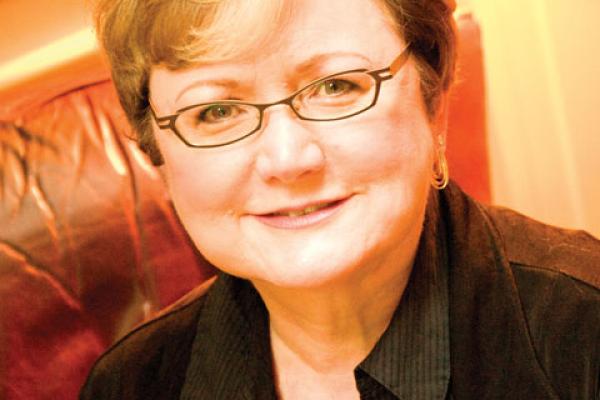
Eileen Guenther, the national president of the American Guild of Organists, reveals behind-the-scenes church struggles in her new book, Rivals or a Team?: Clergy-Musician Relationships in the Twenty-First Century.
Guenther, an associate professor of church music at Washington’s Wesley Theological Seminary and the former organist at Foundry United Methodist Church, talked with Religion News Service about her findings and advice. Some answers have been edited for length and clarity.
Q: You titled your book Rivals or a Team? From your research, which is a better description of most clergy-musician relationships?
A: I would say that rivals may well be the most prevalent, but team is our aspiration.
Q: Why is it so difficult for musicians and ministers to sometimes get along and not have an intense rivalry?
A:. Part of it is lack of understanding of roles. Part of it is control. Each of us is used to kind of being in control in our area, but sometimes if the roles haven’t been clarified, then the control issues become simply that, rather than sorting out, 'OK, who’s going to choose the hymn?' That’s one of the really big issues.

What struck me as he spoke was the sheer human potential of this my client, wasted. That matters for all of us because of an unflinching Scriptural text about how we can enter the kingdom of God: “for I was hungry and you gave me food; I was thirsty and you gave me something to drink; I was a stranger and you welcomed me, I was sick and you took care of me. I was in prison and you visited me….just as you did it to the least of those who are members of my family, you did it to me.” (Matt. 25:35-40)
That’s the test. Not beliefs or intentions. Actions.
Specific actions: Jesus tells us to visit people considered the worst among us, those accused of breaking the law.
It’s not just innocent prisoners we are to see; it’s prisoners. They are all Jesus.

Jazz is an embodiment of creative tension; it is essentially a medium that is expressed through creativity and change. It’s also a wonderful metaphor for what my life often feels like. There is beauty that often emerges from the tensions of life’s unpredictable rhythms. I have never resonated so deeply with this idea than in the last five years since I became a parent.
When I was pregnant with my son Javier, I read stacks and stacks of books on parenting: nurturing your child, building your child’s faith, raising a baby in the city, saving for college, and organic cooking — you name it, I read it. I conducted informal focus groups with all of my parent friends. I was prepared (I think you already know where this is going…). I was so proud of myself, I gave birth to this beautiful boy and I even graduated with (informal) honors from the nursing class at the hospital. So there I am, confidently pushing my newborn in his new stroller out of the Lenox Hill hospital, when I see the nurse smiling at me. I naturally think she is just as smitten with this beautiful baby boy of mine. But then she stops me and with a tone superiority tells me that my baby is backwards in the stroller: “you need to turn him around.” And it was at that moment that I realized I had no idea of what I was doing and that this creative process of raising a child was going to also going to involve a lot of not knowing, unlearning, and a surrendering of what I could not control or anticipate.
Notre Dame law professor Mary Ellen O'Connell, Professor at the University of Notre Dame Law School, has been fighting against drones since the first CIA drone strike in 2002. The Los Angeles Times has a story calling her “a fierce critic of America's drone attacks outside a war zone,” and writing about her insistence that the targeted killings are illegal under international law.
"We wouldn't accept or want a world in which Russia or China or Iran is claiming authority to kill alleged enemies of the state based on secret evidence of the executive branch alone," O'Connell said. "And yet that's the authority we're asserting."
Last weekend, the government of Pakistan prevented an anti-drone protest from entering the tribal regions. Led by former cricket star and now politician Imran Khan and including a delegation of 30 US activists, the caravan was blocked by barricades guarded by riot police.
The Guardian reported:
“Makeshift roadblocks, security threats and warnings from Pakistan's army forced Imran Khan to abandon his unprecedented attempt to lead a cavalcade of anti-drone protesters deep into the country's restive tribal belt on Sunday. Leading a convoy of thousands, the former cricketer was within striking distance of South Waziristan, where the CIA uses remote-controlled planes in the fight against Islamist militants, when he abruptly turned back.
“Later Khan said he had changed plan because of warnings from the army and the risk of becoming stuck after the military-imposed curfew. Addressing an impromptu rally of his supporters, he said the convoy had still been a huge success because he had gone to areas his political rivals "can only look at on maps." "We want to give a message to America that the more you carry out drone attacks, the more people will hate you," Khan told the crowd of around 2,500 supporters.”
On Wednesday, the drone strikes resumed. BBC reported
“A US drone strike targeting a militant base has killed five insurgents in a Pakistani tribal region near the Afghan border, security officials say. … "Several US drones flew into the area before dawn and fired four missiles on a compound, killing five militants," a security official told the AFP news agency after the strike in Hurmuz area, east of Miranshah, the capital of North Waziristan.”
Thursday, another major strike in which Pakistani newspaper Dawn reported 16 people were killed.
“A US drone attack killed 16 suspected militants and injured six others in the Orakzai agency of Pakistan’s tribal region on Thursday. Four missiles were fired in the Buland Khel area of the Orakzai agency, which is close to the borders of the North and South Waziristan tribal regions in Fata.”
The Associated Press added that according to a government administrator, as many as 12 others were injured and that “Drones were still flying over the site of the attack and locals were reportedly staying away from the site.”