
Rep. Keith Ellison (D-Minn.) writes in a Washington Post op-ed of the many unanswered questions about drone strikes. He points out that:
“The heart of the problem is that our technological capability has far surpassed our policy. As things stand, the executive branch exercises unilateral authority over drone strikes against terrorists abroad.”
And as a way of changing that unilateral authority, he proposes three major points that should be considered by Congress to create a “legal framework to guide executive action.”
“First, we must do more to avoid innocent civilian casualties.
“Second, Congress must require an independent judicial review of any executive-branch 'kill list.'
“Third, the United States must collaborate with the international community to develop a widely accepted set of legal standards.”
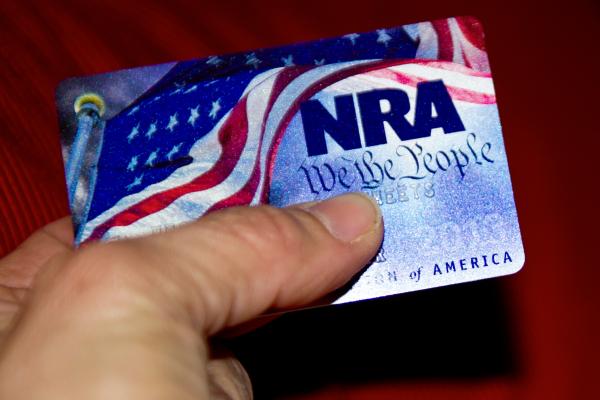
Tuesday was the 84th birthday of Rev. Dr. Martin Luther King, Jr. I don’t know about you, but I miss his words, so I offer a few. King said “people often hate each other because they fear each other, they fear each other because they don’t know each other, they don’t know each other because they cannot communicate, they cannot communicate because they are separated.” I would add to his words: ‘and in that separation they seek guns.’ As an evangelical Christian, I’m going to make this theological.
Wayne LaPierre, executive vice president of the National Rifle Association, said this as his response to the massacre of children at Sandy Hook elementary in Newtown, Conn.: “the only thing that stops a bad guy with a gun is a good guy with a gun.”
That statement is at the heart of the problem of gun violence in America today — not just because it is factually flawed, which of course it is, but also because it is morally mistaken, theologically dangerous, and religiously repugnant.
Editor's Note: This column is part of a duo of posts commenting on racial reconciliation in light of Martin Luther King, Jr. Day. Read the accompanying piece, "A Convenient Truth: I Am White."
I am black in the United States of America. It is quite inconvenient to be black in the United States of America. It has always been inconvenient to be black in the United States of America.
My African ancestors were brought to the United States in chains against their will, taken straight to the plantations, and forced into slavery. They did not pass through Ellis Island, as did most of the ancestors of my white counterparts. My ancestors who fought in two world wars were not allowed any advantages of the GI Bill, schooling, the trade unions, or the opportunities of corporate America that white veterans had; therefore, as a black baby I am more likely to be born into a family who is mired in systemic poverty than a baby who is white.
I am much more likely to live in an impoverished neighborhood, receive an inferior education in a neighborhood school, and not graduate from high school than white students my age. Those are inconvenient truths.
Editor's Note: This column is part of a duo of posts commenting on racial reconciliation in light of Martin Luther King, Jr. Day. Read the accompanying piece, "An Inconvenient Truth: I Am Black."
I am white. It is quite convenient to be white. In fact, it has always been convenient to be white in the United States of America.
According to the U.S. Census Bureau, I am more likely to be employed than someone who is not white, I am less likely to be incarcerated, I am more likely to be covered by health insurance, and I am more likely to enjoy a comfortable retirement and eventually die peacefully in my elder years. I am more likely have a college education than a non-white person, my (white) wife is more likely to receive excellent medical care, my (white) children are more likely to attend private schools with skilled teachers, and my (white) family is more likely to have a roof over our heads, a few cars in the garage, and more than enough food on our table.
While individual cases vary, to be white is – generally speaking – a convenient truth.
There are countless factors one could cite for the current levels of race-based inequality in the U.S., and many opinions exist surrounding potential solutions, yet there are three points of emphasis that need to be addressed for the advancement of racial reconciliation.
The best selfies, absoluetly amazing kids, a really great short film, a sci-fi adaption of the Odyssey, and the kids of Sandy Hook teaming together with Ingrid Michaelson to sing somewhere over the rainbow on national tv. Okay, that's pretty awesome.
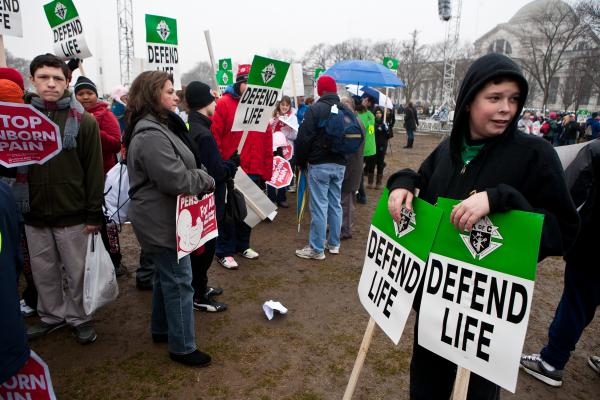
WASHINGTON — Each January in the four decades since the Roe v. Wade decision legalized abortion in 1973, Nellie Gray marshaled tens of thousands of anti-abortion demonstrators for the March for Life rally.
Now, after Gray’s death in August at age 88, a woman less than half her age will take up the cause to lead marchers from the National Mall to the Supreme Court on Jan. 25 to protest the 40th anniversary of Roe v. Wade.
“On one hand, it’s a very somber time for me every year,” said Jeanne Monahan, the new president of the March for Life Education and Defense Fund. “I’m always a little saddened. And on the other hand, there is a youthful sort of energy and enthusiasm that’s there.”
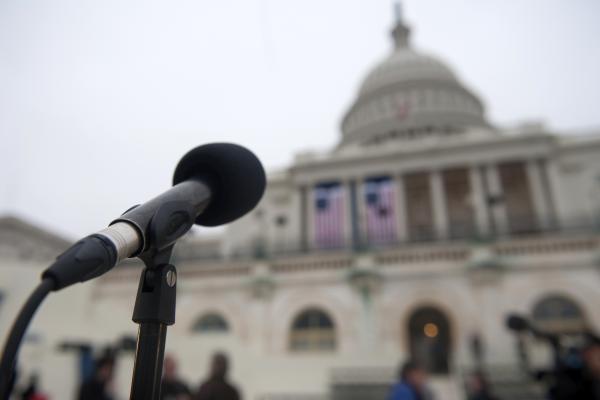
President Obama will publicly take the oath of office on two Bibles once owned by his political heroes, Abraham Lincoln and the Rev. Martin Luther King Jr. One Bible was well read, but cited cautiously, the other granted scriptural sanction to the civil rights movement.
When Obama lifts his hands from the Bibles and turns to deliver his second inaugural address on Monday (Jan. 21), his own approach to Scripture will come into view. Characteristically, it sits somewhere between the former president and famous preacher.
His faith forged in the black church, Obama draws deeply on its blending of biblical narratives with contemporary issues such as racism and poverty. But like Lincoln, Obama also acknowledges that Americans sometimes invoke the same Bible to argue past each other, and that Scripture itself counsels against sanctimony.
Obama articulated this view most clearly in a 2006 speech, saying that secularists shouldn’t bar believers from the public square, but neither should people of faith expect America to be one vast amen corner.
“He understands that you can appeal to people on religious grounds,” said Jeffrey Siker, a theology professor at Loyola Marymount University in California who has studied Obama’s speeches. ”But you also have to be able to translate your case into arguments that people of different faiths, or no faith, can grasp.”