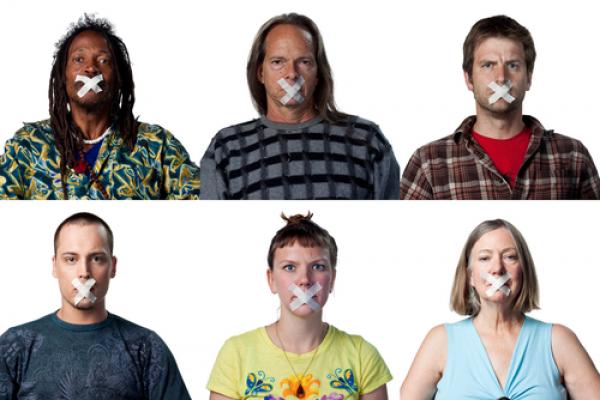
Of all the ugliness in Election 2012, nothing is more disturbing than attempts to prevent people from voting. Voter suppression strikes at the very heart of American democracy.
The flood of money into this year's campaigns has been bad enough, as wealth has sought to do what wealth usually seeks to do: gain control and preference.
The shouting of lies – not just shading the truth, but outright lies – has cheapened the liars and insulted the public.
Demagogic attacks grounded in religion, phony patriotism and race have undermined public trust in all politicians. It will take years to dig out from under the rot of such scorched-earth tactics.
But denying the basic right of citizenship to millions of voters is an offense we should all be protesting. For if the powerful can deny the vote to their opponents – especially the poor and people of color – they can deny the vote to anyone.
Massachusetts' Supreme Judicial Court has agreed to hear the appeal of a non-religious family that's challenging the mandatory daily recitation of the Pledge of Allegiance in their children’s classrooms.
The family, who are secular humanists, claim that the phrase “under God” in the pledge is a violation of the state’s constitutional ban on religious discrimination.
In June, a lower court ruled against the family, saying the required recitation of the pledge was not discriminatory because it did not uphold one religion over another. The family appealed, and will now gain a hearing from the state’s highest court.
The battle to remove “under God” from the pledge has been a long and, so far, unsuccessful one within atheist circles. California atheist Michael Newdow unsuccessfully argued for its removal before the U.S. Supreme Court in 2004.
This time, the suit seeks protection under a state constitution’s equal protection measure, not under the U.S. Constitution’s guarantee of the separation of church and state.
“There is very little case law that precedes this,” said Bill Burgess, director of the American Humanist Association’s Appignani Humanist Legal Center, which is representing the plaintiffs. “The court will be making new law when it issues its decision.”
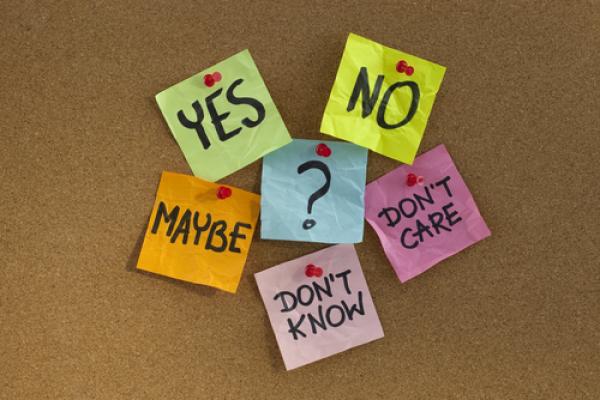
Pollsters and politicians hunting for the rare and elusive undecided voter might want to train their sights on the pulpit.
A whopping 22 percent of Protestant pastors haven’t settled on a presidential candidate, according to a survey released earlier this month by LifeWay Research. By comparison, just 4 percent of all likely voters remain undecided, according to Gallup.
The undecided pastor trend doesn’t appear to be a one-time fluke. A similar survey conducted in October 2008 also found that 22 percent of pastors hadn’t chosen between Obama and then-GOP nominee Sen. John McCain.
The survey of 1,000 Protestant pastors was conducted Sept. 26-Oct. 3 by LifeWay Research, a division of LifeWay Christian Resources, which was founded by the Southern Baptist Convention.
Pursued by politicians, mocked by "Saturday Night Live" and barely tolerated by partisans, undecided voters get a bum rap. But there are good reasons for pastors to remain ambivalent until Election Day, experts said.
Lord, we pray for all of those affected by Superstorm Sandy. Please give comfort to the families of those injured or killed. Guard those first responders who continue to enter dangerous situations to offer aid to others. And give strength to all affected as they work to rebuild. Amen.
For I am convinced that neither death, nor life, nor angels, nor rulers, nor things present, nor things to come, nor powers, nor height, nor depth, nor anything else in all creation, will be able to separate us from the love of God in Christ Jesus our Lord. - Romans 8:38-39 + Sign up to receive our social justice verse of the day via e-mail

How do we find a job? How do we find work? Maybe we shouldn't worry so much...LEAN into what feeds you.
Get out beyond the castle walls. The Kingdom of God is not a castle. It's a kingdom.
Sometimes it is our friends who remind us there is this kingdom and there is this Christ...
And a lot for "The Nones" to chew on here, too.
See the latest Busted Stuff video inside...

Kurt Volker, U.S. ambassador to NATO from July 2008 to May 2009, wrote in the Washington Post on the risks associated with the increasing U.S. reliance on drones as its “principal and permanent component in fighting global terrorism.” According to Volker, these risks are moral, the consequences, the U.S. monopoly on drone warfare will not last, and our national identity. He proposes that we need a standard for the use of drones and suggests
“A more useful standard comes from our country’s basic approach to warfare. For a conventional military engagement, we would take into account the costs and risks of: sending a force to carry out the strike; generating public support; seeking congressional authorization; attracting allies to the cause; the regional effects of military action; and the duration and end of the mission, not just the beginning.”

Reuters reports on a rare drone strike in northern Yemen, near the Saudi border.
“At least four men suspected of being al Qaeda members were killed in what a local official said was a U.S. drone strike on Islamist militants in northern Yemen on Sunday.
“It was a rare attack on al Qaeda-linked targets in northern Yemen, an area dominated by Shi'ite Muslim Houthi rebels battling Yemeni government forces for control of the rugged mountainous region.
“The official said that a drone attacked two houses in the Abu Jabara area in Saada Province, killing four people.”

TONY CAMPOLO: Shane, I have a question to ask that may make you squirm a little bit. From hearing you talk and reading your books, you often seem to suggest that Christians not participate in the political process, and that political activism is somewhat futile. Have I understood your position correctly?
SHANE CLAIBORNE: The question for me is not are we political, but how are we political? We need to be politically engaged, but peculiar in how we engage. Jesus and the early Christians had a marvelous political imagination. They turned all the presumptions and ideas of power and blessing upside down.
The early Christians felt a deep collision with the empire in which they lived, and with politics as usual. They carelessly crossed party lines and built subversive friendships. And we should do that too. To be nonpartisan doesn’t mean we’re nonpolitical. We should refuse to get sucked into political camps and insist on pulling the best out of all of them. That’s what Jesus did—challenge the worst of each camp and pull out the best of each. That’s why we see Essenes, Zealots, Herodians, Pharisees, and Sadducees all following Jesus and even joining his movement. But they had to become new creations. They had to let go of some things. Jesus challenged the tax-collecting system of Rome and the sword of the Zealots.
So to answer the question, I engage with local politics because it affects people I love. And I engage in national politics because it affects people I love.
Governments can do lots of things, but there are a lot of things they cannot do. A government can pass good laws, but no law can change a human heart. Only God can do that. A government can provide good housing, but folks can have a house without having a home. We can keep people breathing with good health care, but they still may not really be alive. The work of community, love, reconciliation, restoration is the work we cannot leave up to politicians. This is the work we are all called to do. We can’t wait on politicians to change the world. We can’t wait on governments to legislate love. And we don’t let policies define how we treat people; how we treat people shapes our policies.
TONY CAMPOLO: So you are not calling for noninvolvement in politics. Instead, you are warning Christians not to put their trust totally in political powers. You are calling them to exercise an ongoing involvement with the political process, to constantly speak truth to power in those places where power seems to be asserting itself in ways that are contrary to the will of God.