The first Christmas after my daughter was born, I got a two-year membership to 24 Hour Fitness as a gift. Included in the membership was one personal training session.
My trainer bristled with annoyance at my “fad diet” when I told him we were going Paleo for three months. Then he showed me to the elliptical machine and told me that he lost weight by drinking sugar-free Kool-Aid all day and ordering off of the light menu at Taco Bell.
Obviously, our philosophies weren’t in line. But I was still able to get some cardio, weights, and an occasional spin class in at the gym. No hard feelings. But staying motivated and committed to working out while staying home with a toddler has been hard.
That might be because I haven’t tried CrossFit.
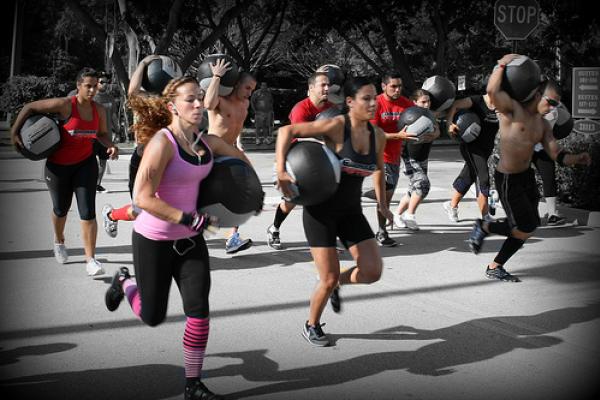
I think CrossFit is like secular church. It offers more than weight loss or fitness. It speaks to our innate desires for community, purpose, and transformation.

VATICAN CITY — Amid all of the prognosticating about who the cardinals could choose as the next pope in the conclave that starts here on Tuesday, one reliable thread has emerged: the desire to elect a pontiff who can be a pastor to the world as well as a taskmaster to the Roman Curia.
Finding such a combination in a single man, of course, may prove difficult if not impossible, which adds to the almost unprecedented level of uncertainty surrounding this papal election.
So if anything is possible, some say it might be better to reverse the prevailing wisdom — look for a pope who will talk tough to Catholics (and the world) while shepherding the Curia with a firm hand in order to better police the wayward.
The prospect might appall progressives and others who were happy to see the end of Pope Benedict XVI’s papacy, but it has enough appeal to conservatives that they are trying to make the case.
One reason for their sense of urgency is that Cardinal Joseph Ratzinger turned out to be more of a papal pussycat as Benedict XVI than the watchdog of orthodoxy that he had been for decades while serving under John Paul II.
Is now the time for a pope who could be more of a Ratzinger than a Benedict?
Muslim and civil rights organizations say a New York Police Department program to secretly monitor Islamic communities has created so much fear and suspicion among Muslims that many find it impossible to lead normal lives.
A new 56-page report, “Mapping Muslims: NYPD Spying and its Impact on American Muslims,” details how the NYPD’s covert surveillance caused Muslims to refrain from activism and change their appearance so as not to appear too Muslim, and sowed suspicion among community members.
As a result, the Monday report asserts, trust between Muslims and police has broken down. The program, in which NYPD policemen secretly visited mosques, Muslim-owned businesses, and student and civic associations beyond New York’s five boroughs, was established in 2001 but uncovered by The Associated Press in 2011.
A spokesperson for the NYPD did not respond to a request for comment.
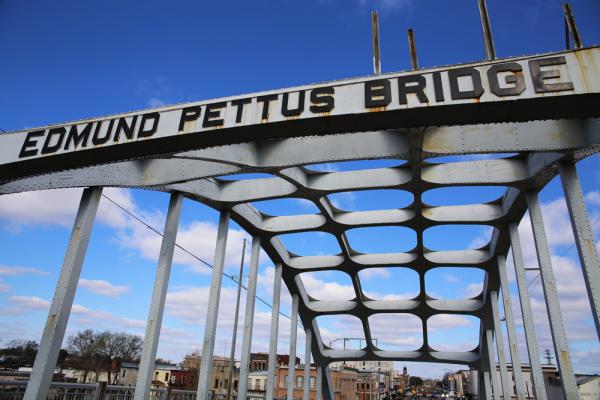
On March 7, 1965, 600 people began a march toward Montgomery, Ala., from Brown Chapel AME in Selma. The group, let by civil rights activists like now-Congressman John Lewis and Rev. Hosea Williams, were stopped by state troopers on horseback. When the marchers refused to back away — standing their ground on the Edmund Pettus Bridge — the troopers attacked, beating, trampling, and tear gassing the participants.
Today, that bridge made famous on Bloody Sunday, was declared at National Historic Landmark, along with 12 other sites, by U.S. Secretary of the Interior Ken Salazar.

Sen. Rand Paul’s 13-hour filibuster last week against the administration’s drone policy brought a long-simmering debate to a full public boil. Although some have criticized him for “grandstanding,” the Kentucky Republican did all of us a favor. Issues and questions that had been raised primarily by progressive bloggers and peace groups are now in full public view and debate in the mainstream media.
The New York Times carried front page stories both days this weekend. On Saturday, it highlighted the growing opposition to drones from across the political spectrum, writing that Sen. Paul’s filibuster had hit a “bipartisan nerve,” and:
“… animated a surprisingly diverse swath of political interests that includes mainstream civil liberties groups, Republican and Democratic lawmakers, conservative research groups, liberal activists and right-wing conspiracy theorists.”
Last Friday was International Women’s Day. It was a day of celebrating how far we’ve come, but also a reminder of how far we need to go.
I’m reminded of an experience I had with a member of my youth group a few years ago. We were volunteering for a social service project. A member of the group happened to be named Eve and we thought it was fun to play up the joke. I’d start greeting people, “Hi! I’m Adam,” and then Eve would chime in, “and I’m Eve!”
We always received the strangest looks, which, of course, is why we did it. But this time it was different. A man at the service project actually said,
“Oh. So you’re the one to blame.”
Eve was able to laugh it off and respond with grace, but I was pissed. I instinctively scowled at the man. It was a deep blow to me because, once again, religion was being used to put women down. But this time it was personal. Religion was being used to put down a member of my youth group.
Of course, religion hasn’t always been good to women. Or, maybe it would be better to say that religious men have used religion as a weapon to make women feel inferior. Whenever we blame someone else it’s a sign of our own weakness and insecurities. We don’t have the courage to deal with our own inner turmoil so we blame someone else. This is classic scapegoating and we men have been scapegoating women in this way since the beginning of human history. It’s pathetic. International Women’s Day is a reminder to me that women and men need to work together to end the religious bigotry against women.
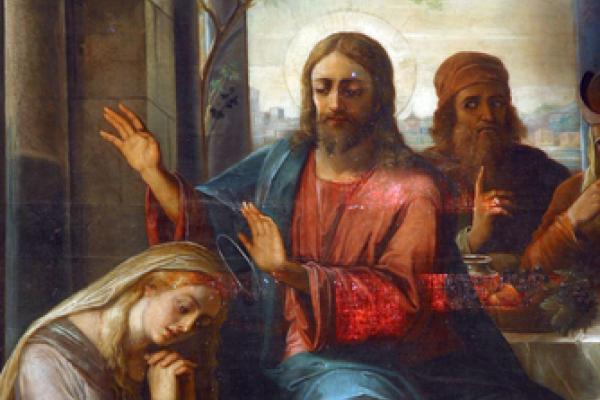
My model for this is Jesus, my favorite feminist. [1]
So, in the spirit of International Women’s Day, I offer you the top 4 ways Jesus included women as full members of his posse.

The first reported drone strike in nearly a month is said to have happened Sunday morning in the North Waziristan tribal region of Pakistan. According to The New York Times:
“Two people suspected of being militants were killed Sunday morning in the volatile North Waziristan tribal region by what Pakistani and Taliban officials said was a drone strike. … Two Pakistani officials, one in Peshawar and another in the tribal belt, said that missiles fired from a drone operated by the C.I.A. hit the two people in the village of Degan, about 20 miles from Miram Shah, the main town in North Waziristan.”
The Long War Journal added:
“The CIA-operated, remotely piloted Predators or the more deadly Reapers fired two missiles at a pair of "militants" as they were riding horses in the village of Degan in the Datta Khel area of North Waziristan. The two militants and their horses are reported to have been killed.”