
They are moms and dads, authors and activists, a former police officer and a former single mom. They’re black and white and Hispanic. One’s a Roman Catholic archbishop, another an evangelical minister. Many have large families — including gay members.
They are among the leading opponents of gay marriage, or as they prefer to be called, defenders of traditional marriage. And they’re trying to stop an increasingly popular movement as it approaches two dates with history this week at the Supreme Court.
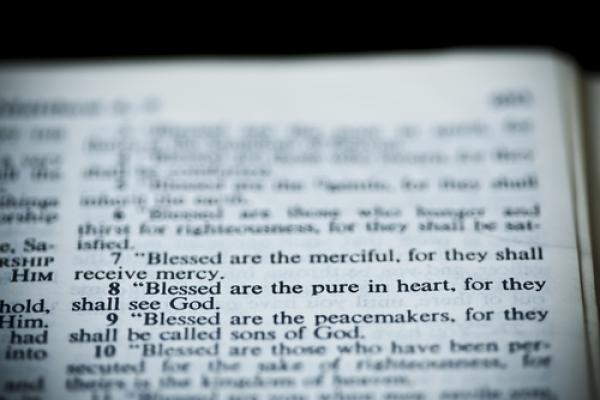
“Blessed are the peacemakers, for they will be called children of God.
“Blessed are those who are persecuted for righteousness’ sake, for theirs is the kingdom of heaven.
“Blessed are you when people revile you and persecute you and utter all kinds of evil against you falsely on my account. Rejoice and be glad, for your reward is great in heaven, for in the same way they persecuted the prophets who were before you.”
Social Justice Reflection:
Jesus was a peacemaking, blessed child of God, but he also was an “other.” Reviled and persecuted, he was the paperless son of displaced immigrant parents. The prophetic iconoclast. That guy who hung out with those people, the type most modern leaders would not associate with, except for a photo opportunity at a Thanksgiving Day soup kitchen. Let us remember on Sunday when we celebrate his resurrection, that Jesus was crucified because he was an outsider whose way of doing things scared and angered the powers-that-be.
We have become a nation that loves to “other” people. We point out their differences as reasons they cannot be trusted, as evidence that they take too much from the rest of us or threaten our well-being. We have lengthy, bitter debates about allegiance and legitimacy, and we reject those who do not meet our standards. We know who belongs, and the others need to clear out and leave us alone with our worldly possessions, our rules, and our way of doing things.

While the drone debate continues to grow, the administration is moving to expand their use. According to the Washington Post, the U.S. Air Force began flying surveillance drones from a base in Niger late last month.
“Since taking office in 2009, President Obama has relied heavily on drones for operations, both declared and covert, in Afghanistan, Iraq, Pakistan, Yemen, Libya and Somalia. U.S. drones also fly from allied bases in Turkey, Italy, Saudi Arabia, Qatar, the United Arab Emirates and the Philippines.
“Now, they are becoming a fixture in Africa. The U.S. military has built a major drone hub in Djibouti, on the Horn of Africa, and flies unarmed Reaper drones from Ethiopia. Until recently, it conducted reconnaissance flights over East Africa from the island nation of the Seychelles.
“The Predator drones in Niger, a landlocked and dirt-poor country, give the Pentagon a strategic foothold in West Africa.”
At this point, the primary objective from the new base is the fight against an Islamic insurgency in Mali, intelligence information from the drones is shared with French and African troops involved.
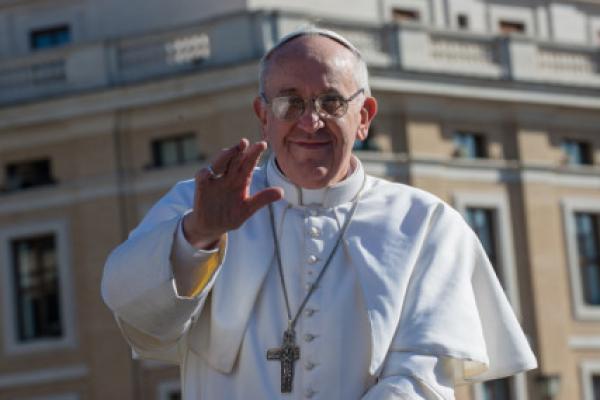
Since the moment of his election on March 13, Pope Francis has been warmly embraced by his own flock and even the media and the wider public in a way his bookish predecessor, Benedict XVI, was not.
Such an effusive welcome is especially good news for Catholic leaders who spent years fending off criticism of Vatican dysfunction under Benedict and a cloud of scandal and crisis at home. And the hot start for Francis is also crucial in building up a reservoir of good will that will be needed when the new pope refuses to bend on unpopular teachings or commits a gaffe of his own. Polls show that anywhere from 73 percent to 88 percent of American Catholics say they are happy with the selection of Francis, as opposed to about 60 percent who were happy with the choice of Benedict — and many of those are extremely pleased with the new pope.
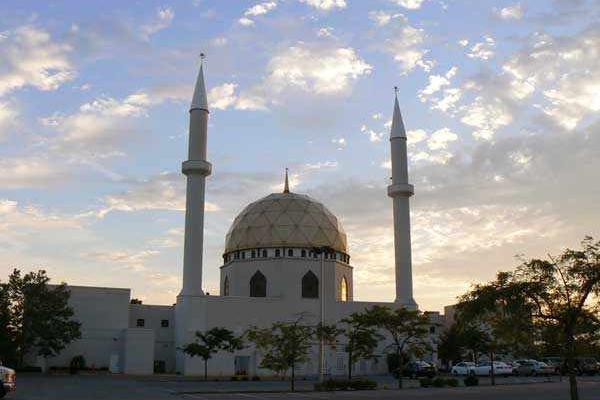
A federal judge on Thursday denied an Indiana man’s request to withdraw his guilty plea in an arson blaze last September at a Toledo-area mosque.
The judge confirmed a sentencing date of April 16 for Linn, who was charged with intentionally defacing, damaging, and destroying religious property; using a fire to commit a felony; and using and carrying a firearm to commit a crime of violence. Judge Jack Zouhary of U.S. District Court in Toledo said Randolph Linn, 52, of St. Joe, Ind., was fully competent on Dec. 19 when he pleaded guilty to federal charges related to the Sept. 30 fire at the Islamic Center of Greater Toledo.
Linn, who did not testify at the hearing, had filed a motion seeking to withdraw his guilty plea, saying he had signed the plea under duress and that he “did not have the opportunity to discuss defenses, tactics, strategies, or the nature and effect of my guilty plea and sentencing.”

We're anticipating.
We're jubilant!
“Hosanna in the highest! Blessed is he who comes in the name of the Lord!”
So, we dance and we sing.
But just before this moment in the story there's this surprising passage. The Gospel of Luke reads, "As they were listening to this, he went to tell a parable, because he was near Jerusalem, and because they assumed that the kingdom of God was to appear immediately."
"Immediately." Well, at least they knew their own minds. This is the trouble about knowing our own minds. It's not the same thing as having a thesis with a well constructed argument. And it's not the same thing as being right.

As a seminary graduate and a Masters of Social Work student, I have a passion for social justice and working to improve the wellbeing and health of vulnerable populations. After seminary, during my time as a youth leader, we often turned to Matthew 25:31-46, the familiar passage about “the least of these,” and discussed God’s emphasis on justice and serving the marginalized in our societies.
My time as a social work student, particularly through my current class on international social work, has expanded my concept of the “least of these.” We have learned about some of the most vulnerable populations around the world – child soldiers in Uganda and Colombia, young girls trafficked into the sex trade in Cambodia, HIV/AIDS patients from Haiti, migrants left to die in the desert while trying to cross the Mexican-U.S. border, and the list continues. These concepts were not completely unknown to me and would likely not be new to you either. This past week, however, we studied a different topic, one that has not drawn as much media attention – global mental health.