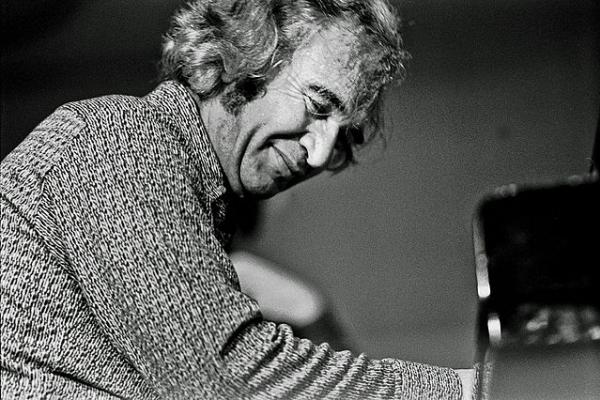
"I approached the composition as a prayer," jazz pianist and composer Dave Brubeck said of his "To Hope! A Celebration," a contemporary setting for the Roman Catholic Mass, "concentrating upon the phrases, trying to probe beneath the surface, hoping to translate into music the powerful words which have grown through the centuries."
Probing beneath the surface marked all of Brubeck’s music, from the revolutionary 1959 polyrhythmic album "Time Out," to his oratorio, "A Light in the Wilderness," and his setting of Thomas Aquinas’ hymn, "Pange Lingua."
Brubeck died on Wednesday of heart failure, a day before his 92nd birthday.
Brubeck is best known in the secular jazz world for his startling compositions using different time signatures, such as 5/4 time in the classic "Take Five," or the mixture of 9/8 time and the more traditional 4/4 rhythm of "Blue Rondo a la Turk." Both pieces are on the "Time Out" album, the first jazz album to sell 1 million copies and still one of the best-selling.
Religious faith, however, was never far from Brubeck’s creative mind.
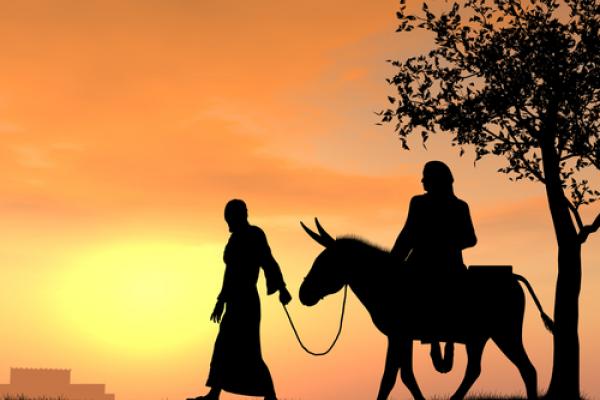
Advent suggests so many mysteries of God's patience. One rarely commented case is God as Father and embryo. It is extra Biblical so imagination can only begin to tell the bizarre tale. Gabriel's annunciation and appearance to Joseph begins the period of waiting and soul searching, but a remarkable gap exists in the Advent story. Luke 1:56 makes this cursory remark as though it would suffice:
Mary stayed with Elizabeth for about three months and then returned home.
Presumably the second trimester of Mary's pregnancy is treated with a passing reference. If we simply take the divine conception of Jesus at face value, there was a moment in human history where God existed as Father in the heavens and embryo in Mary's uterus. Paradox of paradoxes. The Creator in utero.
Up-and coming-/singer-songwriter Noah Gundersen stopped by the Sojourners office to talk with our Brandon Hook about music, his new album Family, God, and creativity.
The Seattle-based folk artist was recently featured on Spotify’s Emerge app, which pits rising artists against each other based on play frequency, and is currently on a U.S. tour.
Special thanks to Noah for stopping by and being so open with us!
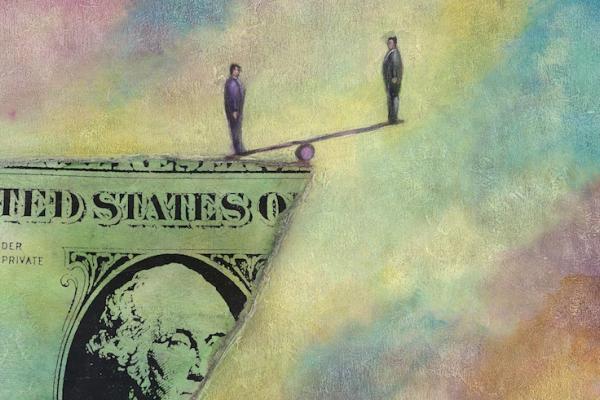
The discussion we are having about “the fiscal cliff” is really a debate about our fiscal soul. What kind of nation do we want to be? We do need a path to fiscal sustainability, but will it include all of us — especially the most vulnerable? It’s a foundational moral choice for the country, and one with dramatic domestic and deadly global implications. It is the most important principle for the faith community in this debate.
I had a recent conversation with an influential senator on these fiscal issues. I said to him, “You and I know the dozen or so senators, from both sides of the aisle, who could sit at your conference table here and find a path to fiscal sustainability, right?”
“Yes,” he said, “we could likely name the senators who would be able to do that.” I added, “And they could protect the principle and the policies that defend the poor and vulnerable, couldn’t they?”
“Yes,” he said, “We could do that too.” “But,” I asked, “Wouldn’t then all the special interests come into this room to each protect their own expenditures; and the end result would be poor people being compromised, right?”
The senator looked us in the eyes and said, “That is exactly what will likely happen.”
It will happen unless we have bipartisan agreement, at least by some on both political sides, to protect the poor and vulnerable in these fiscal decisions — over the next several weeks leading up to Christmas and the New Year, and then for the longer process ahead in 2013.
But for that to be viable, the arithmetic must work.