"There are times when you have to speak out against injustice and cruelity. But if you speak--and this is what Ghandi said--in order to punish or wound, you will do more harm than good. The Dalai Lama said that to condemn injustice with hatred in your voice will make the injustice worse. A lot of fundamentalist spirituality is rooted in fear, and when we attack, they become more extreme. So it does no good to attack visciously. The thing to do is not rise to the bait." - Karen Armstrong from an interview in The Believer June 2012 + Sign up to receive our quote of the day via e-mail

I was watching this recent video where Tim Keller (along with Don Carson and John Piper) addresses why The Gospel Coalition is explicitly complementarian (a nice way to say that they don't believe in gender equality). Why do they see this as something that a group that is supposed to be focused on the Gospel would need to stress?
Keller begins by saying that he does not think the issue of gender roles are directly part of the Gospel, and acknowledges that bringing it up in the context of answering a person's questions of what it would mean to be a Christian could "certainly muddy the waters."
So why the focus then? He says it has to do with how we read Scripture.

In Roald Dahl's classic children's book James and the Giant Peach, 7-year-old orphan James Henry Trotter escapes his two rotten, abusive aunts by crawling into a giant peach. The peach rolls, floats, and flies him to a new life of wonder and love.
I'm reading this book aloud for the first time, and my listeners are spellbound by the story, especially the part where the very small old man opens the bag filled with magical crocodile tongues that will help a barren, broken peach tree grow fruit as big as a house.
"There's more power and magic in those things in there than in all the rest of the world put together," says the man.
There is.

In the recent past there was a small group of children gathered in the village of Tucville, located near Georgetown, Guyana. After a few hours of games on the street, the curious crew wandered away from adult supervision and explored a nearby abandoned sewage facility. The children enjoyed their playful investigation, but as they walked a narrow path near the edge of a raw sewage container, a 5-year old girl named Briana Dover accidentally slipped, fell, and quickly sank to the bottom.
As to be expected, Briana’s friends immediately screamed and ran for help, but as neighbors and witnesses rushed to the site, they all stood in shock. Although some considered diving into the tank, no one stepped forward. The container was too large, the smell of rotten feces too disgusting, and the actions required far too dangerous. With each passing moment Briana held to the brink of life at the bottom of the sewage reservoir, moving closer to death with each tick of the clock.
In the meantime, a middle-aged Rastafarian named Ordock Reid heard the commotion. After initially thinking it was a worker dispute, he eventually examined the situation, and as he approached the tank, he was greeted with loud screams and anguished faces. When he was told about Briana’s predicament, he acted immediately. Ordock Reid – a total stranger – took off his clothes, tied-up his dreadlocks, fastened a rope to his waist (handed the other end to an onlooker), and submerged himself through the muck and filth in an attempt to rescue Briana Dover.
“What do you want to be when you grow-up?” is the pressure filled question that people begin asking as soon as they feel young people are old enough to answer.
From there it only gets worse. It’s a question I hated answering. Adults and media filled my mind with careers that would make me financially secure and, in their minds, happy. So these careers filled my answers: doctor, lawyer, and pharmacist. I would be something important, and life after college would be financially easy.
I babysat often through high school and remember a mom asking the dreaded questio
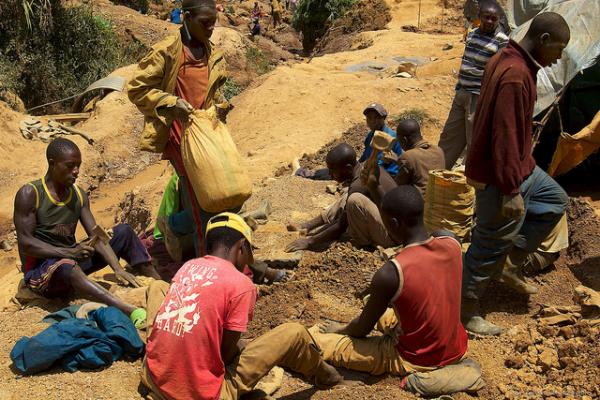
Overall, the conflict minerals provision will have a positive effect on promoting peace and stability in Congo — but a slow one. The rule gives major companies a two-year window to implement the regulations,despite the fact that the slow release of the rule has already caused aninherent one-year delay.
Given today’s intense political climate, particularly regarding corporate responsibility and regulation standards, the release of this rule took over a year, making Wednesday’s vote a truly long-awaited and important day. The rule is a win for both American consumers and those seeking peace in Congo. However, it also appears to have been weakened to placate the U.S. Chamber of Commerce and the National Association of Manufacturers, who have both threatened lawsuits on behalf of big-business lobbies.
According to the SEC, both provisions drew in some of the most intense public pressure, accumulating hundreds of phone calls to their offices and thousands of petition signatures for the release of strong rules. Many of activists who understand their unique connection to the conflict in eastern Congo through consumer electronics products, have joined organizations like the Enough Project and faith communities, in raising their concern as consumers to pressure electronic companies and governments to clean up the supply chain of conflict minerals. It’s been a journey of advocating with Congolese civil society for a clean supply chain that benefits rather than destroys communities in eastern Congo.
Amid a rash of recent attacks that are being investigated as hate crimes, a coalition of more than 150 organizations is calling on the Senate Judiciary Committee to conduct hearings next month with the aim of revamping hate crime legislation.
Led by the Sikh Coalition, the group of civil rights and religious organizations issued a letter on August 21 urging committee chairman Sen. Patrick Leahy, D-Vt., and ranking member Sen. Chuck Grassley, R-Iowa, to look into hate crimes and hate groups in the United States.
The letter noted that the shooter that killed six at a Wisconsin Sikh temple, or gurudwara, in August had ties to hate groups. It also cited 10 Islamic institutions in seven states that have been vandalized, shot at, or burned in the past month.

The Lance Armstrong news is still fresh on people’s minds, but based on the news and Internet chatter I’ve seen, this is being met with a more somber response than, say, Barry Bonds or Mack Mcgwire. In the case of the latter two athletes (along with many others), it seems that the public has revelled in some degree of Schadenfreude as they witness someone being pulled from their high pedestal, back down to dwell among us common folk.
Yes, we have a strange bloodlust for tearing down those we’ve chosen previously to build up as icons or role models, and Armstrong’s grave-dancers surely will come out of the shadows in time, but is there something different about him? Do we have more of a reason to mourn his precipitous decline, as opposed to others who have preceded him?