
U.S. drones continue to hammer Yemen today. Reuters reports an attack this morning
A U.S. drone strike killed six suspected Islamist militants in eastern Yemen on Wednesday, a security official said, the latest sign of a Washington-backed campaign against al Qaeda-linked fighters in the impoverished country. The drone fired eight missiles at a house where fighters were thought to be hiding in the Wadi al-Ain area of Hadramout province, a witness told Reuters. Eight people managed to escape, the witness added.
Meanwhile, the attack on Sunday that killed 14 civilians is now being investigated as coming from a drone. Initially, the strike was said to have come from Yemeni planes, although the Yemen Post and Al Jazeera reported sources saying it was a drone. On Monday, CNN quoted “three security officials” calling it a U.S. drone. Today, AFP reports
Yemeni authorities have sent tribal representatives to investigate civilian deaths in an apparent US drone strike targeting an Al-Qaeda commander, one of them told AFP on Tuesday. Three women and a child were among 14 people killed in Sunday's strike near the town of Radaa, 130 kilometres (80 miles) southeast of Sanaa, targeting Al-Qaeda's Abdelrauf al-Dahab who escaped unharmed, local officials said.

The Bureau of Investigative Journalism has released its monthly report on covert actions in Pakistan, Yemen, and Somalia.
Pakistan: August sees the highest number of CIA strikes in Pakistan since October 2011. A number of senior militants are killed along with at least two named civilians.
July 2012 actions
Total CIA strikes in August: 7
Total killed in strikes in August: 29-65, of whom at least 2 were reportedly civilians
For the Bureau’s full Pakistan databases click here.
Yemen: At least 26 people are killed in five confirmed US drone strikes in Yemen. This is still less than the May peak. Civilian casualties are confirmed for the first time since May.
August 2012 actions
Confirmed US drone strikes: 5
Further reported/possible US strike events: 1
Total reported killed in US operations: 26-33
Civilians reported killed in US strikes: 2
Click here for the full Yemen data.
Somalia: For the fourth month no US military actions are reported in Somalia.

A court in Cologne, Germany, recently ruled that circumcising young boys represents grievous "bodily harm." The court found that the child’s "fundamental right to bodily integrity" was more important than the parents’ rights. According to the court, religious freedom "would not be unduly impaired" because the child could later decide whether to have the circumcision.
In response to the ruling, some Jews and Muslims who practice circumcision for religious reasons have protested vehemently. Subsequently, German politicians pledged to pass a law to protect ritual circumcision of young boys. Israeli Chief Rabbi Yona Metzger even traveled to Berlin to defend Jewish circumcisions, and a complaint against a Bavarian rabbi for performing circumcisions drew the anger of the Anti-Defamation League. The legal and cultural dilemma inherent in the issue makes prompt resolution unlikely.
Most of Germany (and the world) does not circumcise. It is instinctively viewed as harmful. Here's why...
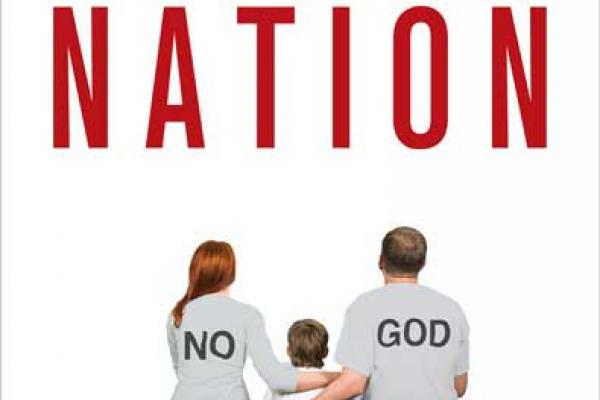
[Editor's Note: David Niose is president of the American Humanist Association and vice president of the Secular Coalition for America, a group that lobbies on behalf of nontheist and secular Americans. In his new book, “Nonbeliever Nation: The Rise of Secular Americans,” he charts the development and growth of the religious right and what he sees as the increasingly organized response from Americans who are committed to the separation of church and state. Some answers have been edited for length and clarity.]
Q: You write about the 1912 presidential election as one in which all four candidates were sympathetic to evolution, science and religious skepticism. Today, a presidential candidate favors evolution at his or her peril. What’s changed?
A: What has changed is the environment of politics, particularly the level of political discourse. Thanks to the rise of the religious right, many candidates today actually emphasize their anti-intellectualism as a selling point to voters. Conservative Christians have always been part of the voter pool, of course, but only in recent decades have they been organizing and flexing their muscle as a voting bloc. Many candidates get mileage by pandering to conservative religion, by openly rejecting science and emphasizing their biblical literalist views.
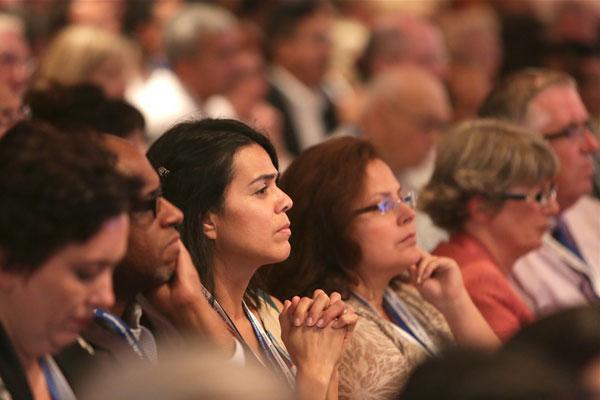
Two U.S. regional groups of the Seventh-day Adventist Church have recently approved the ordination of women pastors, moving faster than the worldwide church’s study of the issue.
The Pacific Union Conference, which includes California and four other Western states, voted 79 percent to 21 percent at a special session on Aug. 19 to “approve ordinations to the gospel ministry without regard to gender.” Weeks earlier, the Maryland-based Columbia Union Conference, which includes eight Mid-Atlantic states, adopted a similar change in its policy, with 80 percent in favor.
World leaders of the church – who appealed for unity before the votes were cast – said they were disappointed with the conferences’ actions. They said the Columbia Union’s July 29 action was “not in harmony” with the general policy of the church, and said the Pacific Union would “preempt the collective decisions of the world church regarding ordination.’’
Leaders of the Maryland-based Seventh-day Adventist Church, which is best known for observing the Sabbath on Saturday instead of Sunday, are in the midst of studying the “theology of ordination” for possible consideration at their 2015 General Conference Session.
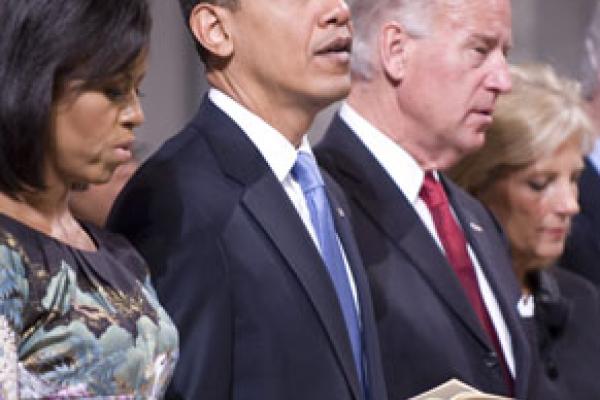
There aren't any white Protestants on the presidential ballot this year — a first in American history.
Instead, the race features two Catholic candidates for vice president, and a Mormon Republican and African-American mainline Protestant for president.
Perhaps lucky for all of them, voters care more about issues such as social justice or gay marriage than they do about denominational brands.
That's particularly true for Republican Mitt Romney and running mate Paul Ryan, who hope to woo evangelical voters that share their values rather than their theology.
It's a situation that probably would have baffled famous evangelicals such as the late Rev. Jerry Falwell, who used the issue of abortion in the 1970s and 1980s to turn evangelicals into a powerhouse voting bloc among Republicans.
"If you had told Jerry Falwell back in 1980 that by 2012 that there would not be a white Protestant on the ticket — he would have died right there," said Shaun Casey, professor of Christian ethics at Wesley Theological Seminary in Washington.

Hey, is this good news, or what?
Give up organic heirloom tomatoes at $4.99/pound!
Stop paying $5.99 up for a gallon of organic milk!
Buy cheaper ground beef than the organic grass-fed stuff at $7.99+/pound!
Slow down, folks. Read the articles, not just the attention-grabbing headlines. What the scientists discovered was basically this: Take two identical, ripe, juicy, fresh peaches, one of which was grown organically and one of which was not. Analyze the nutritional profile of each. You will find that one peach has just about the same vitamins as the other.
OK, and I'll bet they're pretty much the same color, too. And they probably weigh the same. And if dropped from a tall building, they most likely will go splat at about the same time.
Don't make me stop this beat. I'll do it. I'll pull this beat right over...


Someone asked me recently what I thought of something “as a member of the Christian Left.” My insides tightened and screeched into a ball. It was as if Freddy Krueger had run his sharpened fingernails across the black board in history class. Christian Left? Left of what? When did I sign that membership card?
Maybe it’s the title of my last book, Left, Right and Christ: Evangelical Faith in Politics, which was co-written with a Tea-Partier who is also an evangelical Christian. The book does frame me as the one on the left, but if you read my chapters you’ll see that is not my mind or my heart.
In times like these, when politicians are sweating to sway voters to their side, or frame their opponents as the polar opposite—the enemy—it is tempting to begin to define ourselves and each other through the frame of politics. We place each other in convenient little political boxes—boxes not made by scripture or the church, but by politicians and the media.