When and how one may draw general conclusions from particular evidence is a frequently debated question. One example is museums – do historical museums exist to preserve the evidence and artifacts of a particular experience, or should they attempt to draw generalized lessons from that experience? A thoughtful piece by Edward Rothstein in the New York Times examines how Holocaust museums in Israel are being retooled to educate on what are seen as the “universal lessons.”
Rothstein takes issue, arguing that this
“leaves Holocaust museums intellectually orphaned. What “lessons” are we supposed to take away? The impulse has been to generalize, to say that a Holocaust museum can’t be “just” about the murder of Jews during World War II.
“Why? Is there a problem, say, with an American slavery museum being “just” about American slavery? Why should Holocaust museums deal with notions of tolerance or racism in general, or even genocide in general? Why do we think that the proper lesson comes from generalizing rather than comprehending the particular? The moment we generalize, we strip away details: we lose information and create equivalences that may be fallacious.”
I’m inclined to agree. Some events in history deserve to be remembered and pondered in their own right, not simply as things from which to draw general lessons.
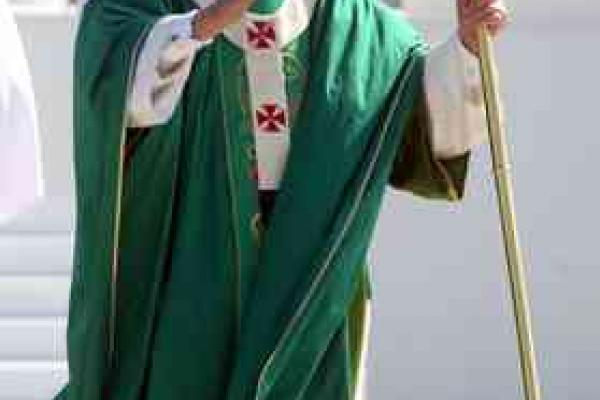
The Vatican confirmed on Wednesday that Pope Benedict XVI's visit to Lebanon will go ahead as planned, despite growing tension in the region after the killing of the U.S. ambassador to Libya by a mob enraged by an anti-Islam film.
The Vatican's chief spokesman, the Rev. Federico Lombardi, said the Vatican was closely monitoring developments in the region but there were no signs of specific security concerns for Benedict's trip so far.
Benedict is scheduled to leave Friday for a three-day visit to Lebanon despite rising instability spilling over from a deadly civil war in neighboring Syr
Editor's Note: The following is the statement by Secretary of State Hillary Clinton following the tragic events in Libya Tuesday evening.
Yesterday, our U.S. diplomatic post in Benghazi, Libya was attacked. Heavily armed militants assaulted the compound and set fire to our buildings. American and Libyan security personnel battled the attackers together. Four Americans were killed. They included Sean Smith, a Foreign Service information management officer, and our Ambassador to Libya Chris Stevens. We are still making next of kin notifications for the other two individuals.
This is an attack that should shock the conscience of people of all faiths around the world. We condemn in the strongest terms this senseless act of violence, and we send our prayers to the families, friends, and colleagues of those we’ve lost.
I just arrived in Tennessee for a little sabbatical in the hills where I grew up. As I settled into my old childhood room again for a week or so of rest, I noticed a pile of newspaper articles my mom placed by the toilet. She's gotten into the habit of putting clippings of articles there that she thinks I'll enjoy reading while having my special time in the bathroom.
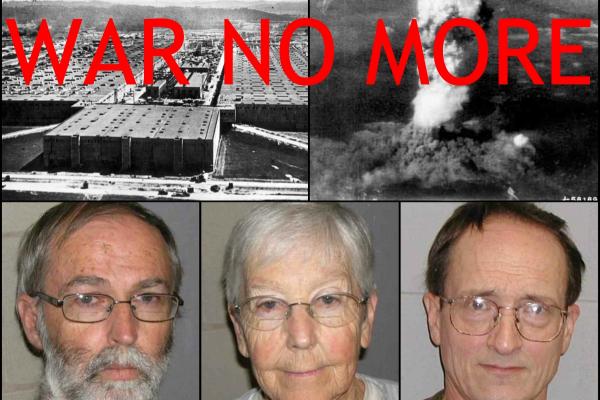
One of the articles was an extraordinary front-page story in the Knoxville News Sentinel about three peace activists who shut down the Y-12 nuclear plant last month in Oak Ridge for more than weeks.
In the predawn hours of July 28, three unarmed peace activists entered the Y-12 nuclear plant and, over a matter of hours, made their unprecedented way through the layers of security to the very heart of the facility, where they performed a prayerful service, hung "crime-scene" tape and poured human blood as a symbol of the violence of nuclear weapons. One of the intruders was an 82-year-old nun who is now an international celebrity. It's a contemporary story of David and Goliath, the shepherd boy who took on a giant with nothing but a slingshot.
The article makes a spectacle of how these three folks, whose average age was 67, managed to mosey into one of the most highly secure and potentially deadly facilities in the world. But they chose the spot for a reason.
The Oak Ridge Y-12 plant was responsible for the explosives of the Hiroshima bomb. It has been called "the Fort Knox of Uranium." The Y-12 plant is the nation's primary supplier of bomb-grade uranium, and has played a role in the manufacture of every nuclear weapon in the U.S. arsenal, which now flaunts the capacity of more than 50,000 Hiroshima-size bombs.

As the number of drone attacks on Pakistan and Yemen continue to increase, protests against them are growing.
On Sunday, some 40 people gathered to protest near the New York Air National Guard headquarters at Hancock Field in DeWitt, N.Y. The Syracuse Post-Standard reported
“The group Upstate Coalition to Ground the Drone and End the Wars chose Sunday for its event because the 174th Fighter Wing at Hancock was changing its name to 174th Attack Wing, which reflects the change in mission at the base from flying fighter aircraft to MQ-9 remotely piloted aircraft.”
On Monday, two activists were convicted in federal court for trespassing at Whiteman Air Force Base in Missouri while protesting the use of drones. The Associated Press reported
“Retired minister Ron Faust of suburban Kansas City and Brian Terrell, a member of the Catholic Worker Movement from Maloy, Iowa, were among a group of 40 protesters who demonstrated at the air base in mid-April. They were arrested after entering a restricted area without permission.”
…
“We were there not to commit a crime, but to prevent one,” Terrell said, describing seeing in person a 9-year-old girl in an Afghani refugee camp missing an arm from what he said was a wayward drone strike. … Faust, a 69-year-old retired Disciples of Christ minister, compared drone strikes to ‘premeditated murder’ that cheapen the value of human life by allowing shooters to be as detached from their targets as video game players.”

Christian leaders asked, and the presidential nominees answered. The poverty rate in America is still at a staggering 15 percent and 46.2 million Americans remain in poverty — what is your plan to address the problem?
The Circle of Protection, composed of Christian leaders from across the religious spectrum, released President Barack Obama's and GOP nominee Mitt Romney's video responses today at the National Press Club in Washington, D.C.
(VIDEOS from Obama and Romney after the jump.)
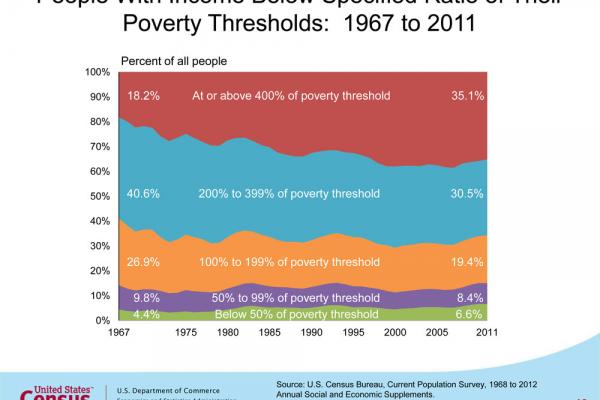
The U.S. Census Bureau released its 2011 poverty report this morning, reporting that 46.2 million people were living in poverty, amounting to 15 percent of the population. Neither was significantly different than 2010. All major demographic categories – white, African-American, Hispanic, Asian – were also essentially the same as last year.
The number of children and the elderly in poverty remained the same.

More than two dozen Christian conservatives are trying to put theological debates about presidential candidate Mitt Romney's Mormonism to rest by focusing on the policies outlined in the GOP's new national platform.
In a letter delivered Sept. 7 to Romney the leaders acknowledged that some conservatives have “tempered their enthusiasm for sound governing principles by their concern over differences in a candidate’s theological doctrine.”
But, the leaders said, "it is time to remind ourselves that civil government is not about a particular theology but rather about public policy."
Signatories of the letter include the two sons of the late Jerry Falwell, leading Catholic anti-abortion activist Rev. Frank Pavone, and GOP strategist Ralph Reed. Polls repeatedly show that, while most social conservatives favor Romney, nearly a quarter still express discomfort with his Mormon faith.
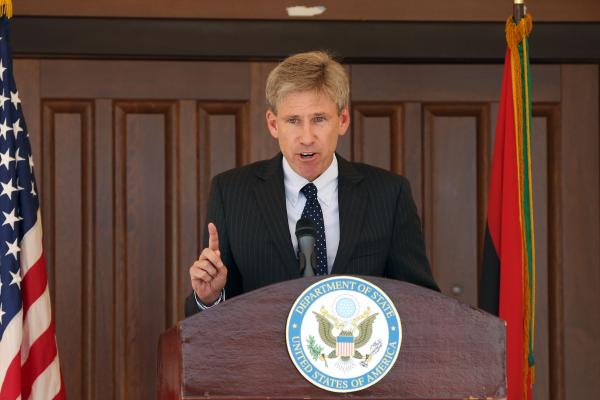
According to Reuters, the U.S. Ambassador to Libya, Christopher Stevens, and three other embassy staff were killed outside a consular building as it was rushed by a mob angered about a U.S. online film insulting the Prophet Mohammad.
"The Libyan official said the ambassador, Christopher Stevens, was being driven from the consulate building to a safer location when gunmen opened fire.
'The American ambassador and three staff members were killed when gunmen fired rockets at them,' the official in Benghazi told Reuters."

My children don't remember.
I mean, the younger children in my church don't remember. It was eleven years ago. The oldest of them was six when the towers were destroyed and we went to war. I'm wondering how I talk to them about it. I wonder how I tell them the story without subjecting them to the trauma so many people experienced that day.
So, no video footage. No point in giving the kids nightmares. I'm just going to talk about how many kinds of religions there are in the United States. No longer simply a liberal posture, it's an issue of national security, no? If we want to be at peace with our neighbors locally and globally, we need to understand them. We need to have something to work with, some kind of conecpt of how they live.