At 28, I resigned from my dream job, packed up my life and made the 24-hour drive from Gilbert, Ariz., to Nashville, Tenn.
I had wanted to work for a big Catholic ministry since high school when I went to a youth conference and saw speakers giving passionate sermons about how God changed their lives and could change mine too. I would catch these speakers after their talks to ask them how I could be a better Catholic, even though I was gay. I knew there were no gay people on stage at these conferences, but I chose to see that as an opening. I was going to get on that stage and share directly to gay teens how God had changed my life.
It was my art that got me to that big Catholic ministry. I was hired as a graphic designer, creating for the very conferences that inspired me as a teen. I was excited to be in the room but, behind the scenes, the speakers and executives said things they couldn’t say on stage. Things like: “Ugh, every time I speak, gay kids are always the ones with questions after. I have no idea what to tell them.”
The COVID-19 pandemic and the Black Lives Matter movement brought the ideological differences between me and that ministry to the forefront, and it became clear that I would never really be my full self so long as I was there. I knew I had to leave, not just the job, but the version of myself I had dreamed of becoming since high school. I didn’t have much of a plan when I arrived in Nashville, but it felt like a fresh start—a chance to be more than a “gay Catholic.”
In 1974, Dolly Rebecca Parton knew that she was meant to be more than Porter Wagoner's “girl singer.” She had been with him for seven years, and together they had become one of the most successful country duos of the era.
For Dolly, the job was her big break. The Porter Wagoner Show was the number one syndicated television show in America and, with Porter’s help, Dolly moved from a small, independent label to the big-time, RCA Records, and fulfilled a lifelong dream of joining the Grand Ole Opry.
But Dolly’s relationship with Porter was tumultuous. Dolly described Porter’s temperament as “aggressive” and said he would even try to frighten her. “Porter was a very controlling person, but that had served him well. That’s how he became a star.” But Dolly started fighting back against his aggression. Their contentious ups and downs even bled over into their songwriting. On the studio recording of “Run That by Me One More Time,” Porter tells Dolly to shut her mouth. “I don’t have to,” Dolly spits back. “You ain’t my boss.” It played as light-hearted banter, but Dolly would later write that it came from a real place: “It was healthier and smarter than the way things really were.”
In retrospect, Dolly’s departure from The Porter Wagoner Show was inevitable. She was a clear standout on the program, receiving her first Grammy nomination in 1970. She knew it was time to move on to a solo career, but Porter insisted on making it ugly, guilt-tripping her and picking fights as she started to plan her exit.
His desperation shows up in the last song they ever wrote together, “Please Don’t Stop Loving Me.” Dolly chooses to see the best in Porter, singing, “You bring me the sunshine when none is in sight. / And when I’m in darkness, you bring me the light.” Porter pleads, “I would be useless if you ever leave. So please, oh please, don’t stop loving me.” Ironically, the song would be their first and only No.1 hit as creative partners.
Life rarely gives us a clean break. The threads we tie with other people can take years to untangle. I wish I could say that I left the version of me that needed validation behind in Arizona. But the patterns of performing and masking were threads that ran deep through me. My first gay relationship was with a man whose standards were just as rigorous and impossible to meet as the religious community I had just come from. The relationship didn’t last long, and I was heartbroken when it ended. I begged him to stay even though he hated the part of me that still held some faith in God. Not good at being Catholic or being a boyfriend, I felt lost in Nashville.
Knowing Porter was not listening to her, Dolly turned to the one way she knew to get through to him: songwriting. Tearfully thinking of all they had been through and done for each other, she wrote of her “bittersweet memories” of their relationship. The next morning, Dolly walked into Porter’s office and sang to him “I Will Always Love You.”
"If I should stay / I would only be in your way / So I’ll go, but I know / I’ll think of you each step of the way.”
Through tears, Porter agreed it was the best song she had ever written and gave Dolly his blessing to go, as long as he could produce the song. She agreed and headed home to Brentwood with her husband, Carl. It rained the whole car ride home, prompting her to think that “It’s been a long dark night." As they arrived in Brentwood, the clouds parted and the sun came out. “I felt like God had spoken to me,” Dolly later shared. “I had a good talk with myself, and I was free.”
By the time they pulled into the driveway, Dolly had written “Light of a Clear Blue Morning” in her head.
“Oh, I’ve been like a captured eagle. / You know, an eagle’s born to fly. / Now that I have won my freedom, / Like an eagle, I am eager for the sky.”
I don’t know if we would have gotten the Dolly Parton we love and remember today without the courage of Dolly Rebecca Parton, who knew there were bigger things in store. Her music and songwriting would define the genre. Her fingerprints can be seen on generations of artists’ work. But unlike Porter Wagoner, when Dolly got the success she dreamed of, she didn’t let it turn her into a controlling person; she gave it away. Dolly has gifted more than 300,000,000 books to children, free of charge, through her Imagination Library, Dollywood transformed the rural community she came from, and her early investment in COVID-19 research was instrumental in the creation of the Moderna vaccine. Her generosity knew no bounds.
And yet, whenever I hear “Jolene” or “9 to 5,” what I’ll remember of Dolly Parton is that she went through life being unapologetically herself and making it less scary for all of us to do the same.
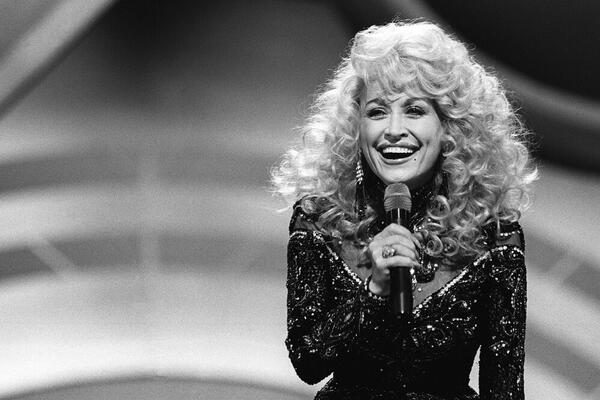
If you’ve been to Nashville before, you know it's practically a shrine to Dolly Parton. There are murals of her on every other street: her sparkly smile, her voluminous blond hair, and her signature symbol, the butterfly. Maybe it was through osmosis that the spirit of Dolly inspired me to tattoo a butterfly above my knee. Her symbol became my reminder that I had come through hard things and that transformation takes time.
2026-08-26T192922Z_312492562_MT1USDAYNETTNP91466077007_FRTPIP_4_USA-TODAY-NETWORK.JPG
I don’t know if Dolly saw everything her life could be the night she wrote “I Will Always Love You.” But I do know it must have been hard to leave. Saying goodbye to Porter meant saying goodbye to herself. Dolly had to leave the version of herself who knew how to be Porter’s “girl singer” to become so much more. By the time she died at age 80 earlier this week, she'd become a legend.
There’s a particular grief when you realize you’ve outgrown a space; even if that space is uncomfortable, at least it’s familiar. There’s a million reasons we stay in churches, relationships, and jobs that do not serve us, that cannot see our greatness outside of our functionality. My hope is that we can be kind, like Dolly was kind, to the parts of ourselves that did stay, that held on a little longer. And when it’s time to leave, to have the courage to say goodbye.
My hope is that we can be kind, like Dolly was kind, to the parts of ourselves that did stay, that held on a little longer.
Did this article have an impact on you? Tell us how! Whether you’re moved to take action, have a question, or want to share a comment (good or bad), we value your feedback!