Andy Mineo and Wordsplayed Are Having the Most Fun in Christian Hip-Hop

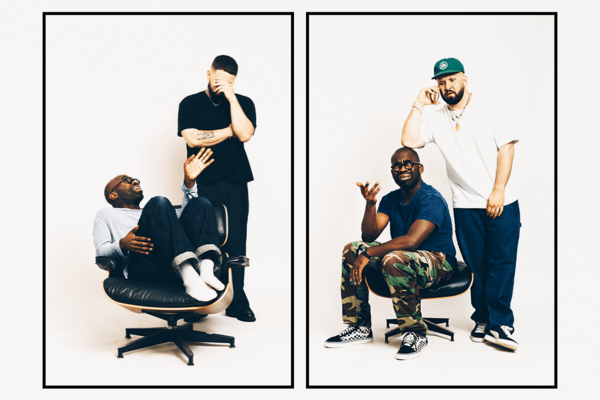
Andy Mineo and John “Wordsplayed” Itiola. Courtesy Miner League/Matthew Warren

Where do you think Ye keeps his Dove Award?

Oh, you forgot Ye, formerly known as Kanye West, has a Dove Award—the Christian music industry award—alongside other illustrious winners like Kirk Franklin, Michael W. Smith, and Amy Grant? Fear not, the rap duo of Andy Mineo and John “Wordsplayed” Itiola are here with witty one-liners to remind you.

As long-time staples in Christian hip-hop, each has left a distinctive mark on the misfit subgenre.

Mineo spends a ruthless amount of time honing his craft, and it shows. He has helped lead CHH past cheap musical imitations of “secular hip-hop,” and past cheap lyrical imitations of Reformed sermons. Over trap beats, Latin drums, or the occasional electric guitar, he’s written the fullness of his life—from doubting God and deconstructing to his relationships with his parents.

Wordsplayed has consistently infused CHH with some much-needed levity. He toes the line with witty lyricism, mocking everything from the music industry to Creflo Dollar, internet pornography, and himself—all with a wink. Through lo-fi beats, infomercials for his Patreon, and stand-up comedy sets, he’s given every too-serious fan of CHH the type of laughter that provokes introspection.

Their first album together, Andy Mineo and Wordsplayed Present: Magic and Bird, leaned on basketball metaphors to create bombastic songs that fit in an ESPN sizzle reel as well as they do at youth group. Nine years later, the two bring an energetic sequel album. Magic & Bird 2: What a Rush! returns to the touchpoints of hip-hop, faith, comedy, nostalgia, and sports, this time with pro-wrestling motifs.

If that seems like a lot of ground to cover in one interview, it is. But Mineo and Wordsplayed are used to the fast pace. In our conversation, the two explain their perspective on Christian hip-hop as an industry, collaborating across their differences, “hoochie mamas,” love for interior design, and so much more.

(And if you’re curious, Mineo is a four-time Dove Award winner. Wordsplayed is still waiting on his first. In his own words, “Yeezy won a Dove Award before Wordsplayed.”)

This interview has been edited for length and clarity.

Mitchell Atencio, Sojourners: What makes “Christian hip-hop” Christian?

Andy Mineo: Jeez. Oh man. I guess if you just say “Jesus” enough, we believe you. I have no idea, I’m gonna be honest with you. Here’s the thing, people can be Christians [laughs] things can’t be. There’s no real metric to measure this. This is some of the reason why it’s always been a weird title. What makes a rock band? Guitars. What makes a Christian band? Talking about Jesus, I guess.

Wordsplayed: It’s probably economics at the end of the day. You get to categorize something, so you know what resources to funnel toward it and what market to aim it at. It’s labeled so people can understand what bucket to sort it in.

And subject matter. But Jay Electronica or Freeway aren’t “Muslim hip-hop” despite being outspoken Muslims. Sufjan Stevens has been able to dodge the contemporary Christian artist label for years despite the fact that he’s outspoken.

Andy Mineo: You just can’t say the F-word, and they’ll keep you in the bubble.

You’ve talked about working through perfectionism in your art. How does collaborating with John impact that?

Andy Mineo: When we collaborate, it really unlocks something for both of us. It’s a flow state. A lot of fun, not a lot of overthinking. There are two energies in the room. If you get stuck on a lyric or something, there’s someone to pull you out of the rut.

Collaborating with John is my favorite way to make art right now. It puts more fun into the creative process. The creative process for me has been so stress-ridden. You sit in a cave for hours tweaking a snare. The actual creative process is rather laborious to get it to where you want it to be. But when we’re doing Magic & Bird, it’s an outlet for both of us to have fun. I need that every few years to reinfuse my excitement and create and find inspiration.

Wordsplayed: Creating in a vacuum, I tend to “play it as it lies.” What you conjure, what comes out, it’s the best because it’s the most organic. As it was recorded, so it shall be. With Andy’s experience, him doing this since he was well in his teens, he’ll be like, “No, there’s more.” Which is kind of a curse, because to his point, you’ll be in the studio for days on end. But his experience has taught me that extra 10% of effort will make a song 90% better.

Andy Mineo: John will record it once and be done with it and never talk to me about it again. I’ll record it 58 times to try and find the perfect take. I go down to about 10 takes, he goes up to about 10 takes. He’s there longer than he wants to be, I’m there less than I want to be, but we’re still getting it done faster and higher quality.

For this album, Magic & Bird 2: What a Rush! you moved from a basketball motif to a wrestling motif. When did you know that was the direction you wanted to go?

Wordsplayed: We were spending time together with the intention of starting another album, and it coincided with Andy buying a VCR and a bunch of tapes for his studio—a tactile medium to play with while working. We were watching VHS of The Sopranos, Adam Sandler movies, and these old WWF programs—WrestleMania, “Stone Cold” Steve Austin at SummerSlam—it became a really pleasant distraction while we were trying to figure out what the next album would sound like.

We organically landed on the album sounding like what we were enjoying. We scrapped a lot of really great ideas and turned the rudder toward where we landed.

Andy Mineo: Pro wrestling is our blueprint for entertaining people. It’s in your face, similar to hip-hop: boisterous, attitude, crazy outfits, smack-talking. And we grew up watching it. The first Magic & Bird was a duo project based around basketball—another thing we love—so we decided to try wrestling this time. We thought it could be more absurd, more funny, more crazy.

John, as a comedian, how do you toe the line? As someone more comfortable with “record it once and be done with it,” how do you consider whether a joke conveys what you want it to or if it will land right with your audience?

Wordsplayed: There’s plenty of times where I’m like, OK, you gotta reel that back in. I joke that the new comedy club or writers’ room is the group chat. The group chat is where you can let jokes fly and let it die there. It’s the “if this leaks, Lord help me!”

I heard Big Jay Oakerson say this is the tension of creativity and the cost of the title of comic. [When performing], you’ll say something or do something—and you have to say it or do it to realize that it was too far or offended someone—and now your job as a comedian is to apologize and be better next time. It’s that simple. The good comics are the ones who can say, “OK, you got me. I’m sorry. I will do my job better or craftier next time.”

As someone who has followed this genre for a while, I’m curious about the transition that Christian hip-hop has gone through in becoming a literal industry. Andy, you own your label Miner League, but on the last few albums you’ve also talked about your frustrations with “labels,” generally speaking. On this album you joke—in the wrestler motif—that you want to “put labels through tables.” Why?

Andy Mineo: For the most part, in my time with Reach Records, they were a great home for me. I signed that contract in my early 20s, and I asked a buddy who I was hanging out with if he knew any lawyers. I had no relationships in the music industry, no connections, no understanding about contracts and how all that stuff works. And that’s the story of most artists.

Over time, once you start to have leverage and some success, you start going, “How does this all work again?” Because now it matters. When you’re first signing, you’re just happy anyone believes in you and will pay to put out your record. Understanding the business side over the years became a frustration.

260715-MB Embed.png

Andy Mineo and John “Wordsplayed” Itiola. Courtesy Miner League/Matthew Warren

Any time faith and business intersect, it creates a strange thing as well. You would expect that when Christianity and business intersect, you’d be getting the highest form of moral behavior. Because you’re “brothers and sisters in Christ,” you think this is family. A lot of times it’s not family, it’s just business; even though a lot of people operate under the guise that it’s more than business.

I’ve been saying this for a long time, and I almost want to not talk about it. Because every single time I try to discuss it, it only makes it worse and people misunderstand it more. There’s no use opening your mouth, because people hear what they want to hear. But when you monetize Christianity, there’s a weirdness that comes with that.

“Every single time I try to discuss it, it only makes it worse and people misunderstand it more ... But when you monetize Christianity, there’s a weirdness that comes with that.”—Andy Mineo

I don’t mean to ask you to relitigate things that people have been debating on Rapzilla forums for 20 years.

Andy Mineo: What I’m doing now is I’m launching a business. And we are Christians, but we are not marketing ourselves as “Christian artists.” Hopefully, I’ll be able to do business in a way that I think is fair and good and clear and honest and as forthright as possible.

For me, it’s about ethical business. Clarity on cost, deliverables, communication. Not looking for any “it’s for the kingdom” favors, which is where a lot of frustrations happen. Transparency in profit margins.

Let me give you a perfect example: I was just able to get a publishing admin deal with Sony Music, which is one of the big three publishers. Because I was able to get that from the leverage of selling millions of records, I was able to get my artists—John and a producer I work with—in on the same deal. Normally, you “build in” your fee on top of that before you pass it to them. Say it’s 20%, I charge them 25% and take 5% as the middleman.

For me, why would I do that to them? I understand from a business perspective—you built the relationship, you built the leverage, that’s why. But no, I’m gonna pass right along exactly what [Sony] gives without carving out any for myself. There’s a point where we have enough. The question about greed starts to come in.

How do you think about having a fanbase of people who have aged with you and your music? A lot of the kids in the youth groups you performed for are now parents themselves. Does it change how you think about what you write or what your music should be about?

Wordsplayed: Yes and no. Magic & Bird, for lack of better words, is a party. And pretty much everyone’s invited. Because of those touchpoints of comedy, faith, hip-hop, nostalgia, you might lose a few people that are only there for one of those things, but for the most part our base is awesome, and we’ve been able to retain a good amount of those people. I think the music is actually good enough to drown out any of my fears that people have aged out of it.

“Magic & Bird, for lack of better words, is a party. And pretty much everyone’s invited.”—Wordsplayed

Andy Mineo: Subject matter for me has changed, and it always has. Magic & Bird is where I have fun and goof off, and in my [solo] music I take a serious tone and look inward and get a little more vulnerable. And those vulnerabilities have been age-appropriate.

When I turned 30, I wrote I: The Arrow. I was talking about losing faith and things like that—my 21-year-old fan, whose idealism is through the roof, is like, “I don’t like this album. What is this?” Then they hit me up six years later like, “Oh my god, I understand it. Thank you.” I’m always just trying to write from an honest place of where I am.

This is a question I could ask basically any of the Christian rappers I grew up listening to, but you’re the one in front of me. There’s a lot of lyrics talking about women as temptations or seducers—I’ve come to call them “women in my DMs” bars. I’m genuinely curious: Does that really happen? Are there that many women really trying to seduce you?

Andy Mineo: There have been many occasions where butt cheeks are in my DMs directly. This does happen. When “Coming In Hot” was blowing up, there were OnlyFans models, people doing soft porn or full porn, even some porn stars—and unfortunately I knew who they were [laughs]—who used my music, tagged me, made sure I saw it, that type of thing.

There’s also the “on the come up” OnlyFans models who send it to me, “Hey, I really love your song,” and it’s just butt cheeks, you know, [twerking] to the record. And when I didn’t respond, they unsend the message. Like, they’re fishing for an interaction with this rapper, whatever they think they can get from me. That’s happened for a decade.

I’m guessing you heard that in a lyric or something?

Well, more than one! As a kid growing up, these Christian rappers I listen to are talking like there’s going to be women tempting me all the time. I worry about the expectations those lyrics create for the young people who listen to your music. I wonder both whether it really happens, but also why Christian rappers write about it so much.

Andy Mineo: I don’t know if I’ve ever said the “watch out, girls are gonna be in your DMs.” I was speaking from my personal perspective of what’s happened to me. And secondly, I want to talk about it in a way that, I think, is dope and God-honoring.

The one I can think of the most is “Not Gon’ Do,” where I rap “Slide into my DM with those nudes / I wrote back, ‘My wife got those, too / And I’ma take hers if I had to choose.’” In hip-hop and misogynistic hip-hop culture, what’s amplified more than anything is how many women you can sleep with, how awesome you are if girls are in love with you. To me, I think it’s funny to recognize that and then ultimately say “I’d rather choose my wife, because I’m not a maniac.”

As a hip-hop artist, you’re always trying to share your truth in a fly way. I know plenty of artists—Christian artists—who do not pass on those opportunities.

Women, obviously, get painted as “Jezebels.” There are all kinds of silly, toxic ideas about women that get thrown around in Christian spaces—that they’re the problem or temptations or whatever.

The lyric I was thinking of was from “Death of Me.” You said, “Bad girls coming at me looking good / showing off they body, that’s a booby trap.”

Andy Mineo: It’s funny. It’s very corny. That’s a 24-year-old who doesn’t understand anything about life. I was in the conservative, evangelical, reformed space at that time, where guys wouldn’t get into elevators with women.

Where I was at that time in my life, I see how I thought that was a witty bar, but there’s a lot of stuff I did then that I think was corny or cringe or I wouldn’t say now. And I’m sure, in 10 years, I’ll look back at now and say there’s stuff that’s cringe too. Thinking about that bar, that’s a kid whose frontal lobe wasn’t fully developed yet.

Are these sorts of conversations about how men portray women happening in Christian hip-hop?

Wordsplayed: I can speak for our creative process here. There are active conversations we have where we say or write something or tell a story, and we have to pause and be like, “this just feels like punching down.” We operate so far from that, but—

Andy Mineo: We had to replace a lyric! On the “TURBO” record, it’s got this Miami “booty bass” sound. Uncle Luke was a big influence for that beat. Uncle Luke is the pinnacle of misogynistic music.

The lyric, “Let me talk to your supervisor,” was originally, “these drums for the hoochie mamas.” When we were going over all the lyrics at the end of the process—should we punch it up, make it better or funnier, remove it—that was one line we replaced.

In the studio, we just thought that “these drums for the hoochie mamas” was funny, because it’s this big drum, booty bass song, but John was like, “I don’t want to call anyone a ‘hoochie mama.’” We replaced that. So, we do have some of those guardrails.

I would never say I do this perfectly, but I think both of us are open to being corrected and challenged.

Let’s end on a lighter question. John, your brother Josh is a really talented designer who I feel has impacted my own sense of architecture and interior design. Is the art you each make too disparate to interact? Does Josh impact the performance of Wordsplayed and so on?

Wordsplayed: My brother Josh is the next artist we’re signing to Miner League. I’m saying that on the record now.

Josh was roommates with Andy for years, and 95% of what informs me as an artist is music my brother put me on to. He’s just as versed as us, if not more, in hip-hop, street fashion. We talk about this stuff all the time. He stays current on all our music too. He hit me up about the homage to Cam’ron on the “RICE PUDDING AT L'AMI JEAN” record. And I have an affinity for design and architecture and art.

Andy Mineo: Josh is a tastemaker for sure. Sometimes you run into people who are so on a different plane in their thinking and in their influences, and you don’t really understand them until years later.

Josh was really into furniture before I was. It’s funny, actually, Gaetano Pesce, the designer of one of the chairs I love, was introduced to me by Josh. Josh put me on to a documentary about seating, about the history of really cool chairs. Now that’s a funny trope people have about me, that I’m always talking about chairs in my music. And some of that came through Josh.