2025 was a banner year for movies nestled at the intersection of faith and justice. Many of those films that Sojourners authors covered, from Sinners to One Battle After Another to KPop Demon Hunters, will continue to be in the cultural conversation this year, especially with the Academy Awards looming.
Below is a list of films that Sojourners can’t wait to watch this year. It is by no means exhaustive; as excited as I am for The Mummy and Supergirl, for instance, I won’t know if those blockbusters have a faith angle until they hit the screen. You never know, Supergirl’s terrier Krypto might turn out to be a caped Christian pacifist. What follows, then, isn’t a catalogue of certainties, but a watchlist shaped by hope, curiosity, and the expectation that questions of faith and justice will keep finding their way onto the big screen—sometimes from the most unexpected places.
A watchlist shaped by hope, curiosity, and the expectation that questions of faith and justice will keep finding their way onto the big screen—sometimes from the most unexpected places.
All dates are subject to change.
The Bride!
From its 1930s Chicago setting to the playful exclamation point at the end of its title, director Maggie Gyllenhaal’s take on Frankenstein looks to be vastly different from the adaptation we got last year, and for good measure. Sojourners contributor JR. Forasteros wrote about how Guillermo del Toro’s film “forces us to confront the responsibility we [as humans] take on when we become creators.” Gyllenhaal’s film, which was inspired by James Whale’s 1935 book, The Bride of Frankenstein, seems to potentially double down on this idea, exploring what might happen when our creations also take on the maddening and heavy responsibility of bringing something new into the world.
Ambling into theaters March 6th.
Project Hail Mary
The first of two “Mary”-titled projects this year, Spider-Man: Across the Spider-Verse writers and producers Phil Lord and Christopher Miller direct an adaptation of Andy Weir’s book of the same name. It focuses on a schoolteacher, Dr. Ryland Grace (Ryan Gosling), who is sent on an interstellar mission to find a solution for a catastrophic event on Earth. Space has always been a frontier ripe for exploring theological questions, particularly around humanity’s smallness in the vastness of the cosmos. Project Hail Mary will ruminate on these themes and more.
Flying into theaters March 20th.
Mother Mary
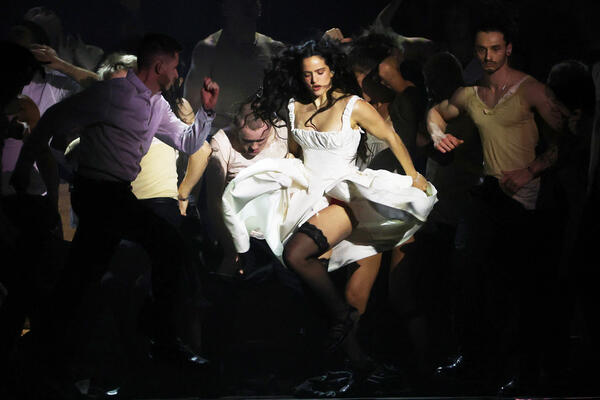
In my book, David Lowery’s The Green Knight is one of the defining films of 2021. I wrote how it “cleverly embodies the disquietude” that we often feel when faced with uncomfortable truths. With Mother Mary, Lowery trades the grimy foliage and nude giants (you’ll have to watch the movie) for a contemporary tale focusing on the psychosexual affair between pop singer Mary (Anne Hathaway) and her estranged friend and costume designer, Sam Anselm (Michaela Coel), while the former is in the throes of mounting a comeback. Lowery’s work isn’t afraid to deconstruct familiar iconography (and often explores the spiritual anguish we feel from wearing one too many masks), and I’m curious about how Mother Mary might both skewer the “famous artist crashes out” genre while also offering new, intriguing wrinkles to it.
Dancing into theaters on April 24th.
I Love Boosters
Whatever you might have assumed about Boots Riley’s 2018 film Sorry to Bother You, nothing could have prepared you for all it packed into its two-hour run time: “elements of magical realism, a worker enslavement scheme lifted straight from Alejandro Jodorowsky’s The Holy Mountain, and an insane third-act twist that takes a hard turn into Get Out territory,” as described by writer Abby Olcese. Riley’s latest, I Love Boosters, tracks a crew of shoplifters whose schemes converge on a notoriously hard-edged fashion insider. Billed as a “sci-fi comedy,” you can expect Riley to tackle similar themes as his previous works, which include, as Olcese writes, “code-switching, poverty, cultural complacency, a news cycle powered by soundbites,” but as for how the final product will iron out? That’s anyone’s zany guess.
Stealing away into theaters on May 22nd.
Disclosure Day
“A new Steven Spielberg film” already intrigues me at a baseline level, but there’s a spiritual component to the director’s first project in four years that adds more intrigue. Plot details are sparse, but it seems to explore the fallout of humanity learning—all at once and without warning—that aliens exist. Actress Elizabeth Marvel plays a nun, and at the end of the film’s trailer, she chillingly utters, “Why would He make such a vast universe yet save it only for us?” To be blessed with an original science fiction film from one of our great auteurs that explores how the faith community would grapple with the reality of extraterrestrial life? To quote The Bear’s Ayo Edebiri: “I’m seated. The theater employees are scared and asking me to leave because it’s ‘not June yet,’ but I’m simply too seated.”
Arriving in theaters June 12th.
The Odyssey
Sojourners published no less than three pieces on Christopher Nolan’s 2023 film Oppenheimer; it was that rich in material. Nolan’s films have always been full-throttle, four-quadrant blockbuster experiences, but thoughtfulness has never been sacrificed at the altar of spectacle. I have a hypothesis that all of his films are about war in some way, and it’s exciting to see him explore timeless ideas on the cyclical nature of violence against the backdrop of one of humanity’s major literary epics.
Sailing into theaters July 17th.
The Social Reckoning
2010’s’ The Social Network was a prophetic film; the architects of our present digital hellscape are indeed as entitled and power- hungry as Jesse Eisenberg portrayed Facebook co-founder Mark Zuckerberg. The writer of that film, Aaron Sorkin, directs a companion piece entitled The Social Reckoning, which will explore the 2021 Facebook leak by whistleblower Frances Haugen, whose revelations, among other indictments, revealed that Facebook “harms children, sows division and undermines democracy in pursuit of breakneck growth and ‘astronomical profits.’” I’m curious to see Sorkin revisit this world and hopeful that he might offer a vision for holding the keepers of the algorithm in check.
Logging onto theaters on October 9th.
Godzilla Minus Zero
Senior associate news editor Mitchell Atencio and I have been watching the Godzilla movies together—22 films and counting. Each time we watch people face some version of that colossal, bipedal reptilian monster (and other members of Godzilla’s rogues gallery), we are reminded of humanity's resilience in the face of devastation, and also, the ways hubris—more often than monsters—is the root of evil. Those musings all coalesced in Takashi Yamazaki’s Godzilla Minus One, which Atencio wrote was “a sharp and intimate look at the moral injury that follows war, and a reminder that community is the way through.” I’m curious as to whether the film’s sequel will continue to build on this idea. At the end of Minus One, our protagonists reunited after defeating the titular kaiju. The dead never stay that way for long in Godzilla films, especially when they possess atomic breath. I’m hoping that Kōichi Shikishima (Ryunosuke Kamiki), Noriko Ōishi (Minami Hamabe), and Akiko (Sae Nagatani) will learn that, as Atencio writes, they can’t “defeat death and violence with more death, but with a communal will to live and resist.”
Roaring into theaters on November 6th.
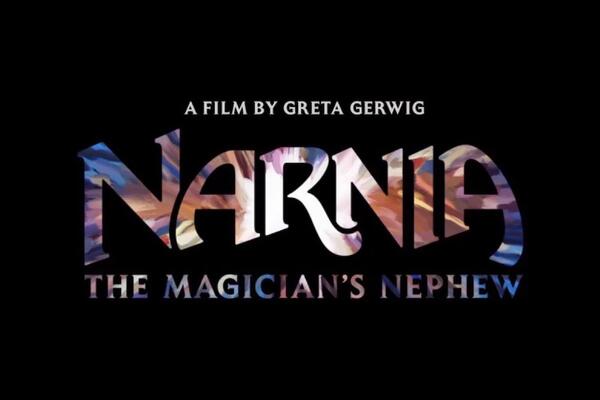
Narnia: The Magician’s Nephew
Writer Olivia Bardo cleverly noted how Barbie was Gerwig’s Genesis story, writing that “The Bible is a lot like Barbieland. Both are full of complicated, often misunderstood women. … [both] push us to question: What does it mean to be a woman?” Where could Gerwig go after directing a smash hit like Barbie? Perhaps unsurprisingly, back to another Genesis story, this one being an adaptation of C.S. Lewis’ first book (chronologically speaking) in his The Chronicles of Narnia series, The Magician’s Nephew. Gerwig’s films all share a sense of wonder. She populates her films with characters who find their biases beautifully disrupted by the new worlds—literal or fictional—that they step into. Gerwig i’s one of the few directors I trust to thoughtfully explore the faith questions at the heart of Lewis’s books.
Transporting into theaters on November 26th.
Dune: Part Three
Writing about Dune: Part Two, authors Ezra Craker and Michael Woolf both explored the dangers of charismatic leaders and anyone who is quick to claim themselves as a messiah. If Dune: Part Two focused on Paul’s wrestling with whether he should embrace his messianic status, Dune: Part Three—should it follow the Dune: Messiah source material—will see him fully embrace his title as conqueror and lord. Maniacal leaders, the intersection of religious zeal and political power, false prophets … the articles write themselves sometimes.
Sandworming into theaters on December 18th.
It Ends
Thanks to festival screenings, I’m happy I’ve already been able to see what may end up being the best film of 2026. From first-time director Alexander Ullom, It Ends feels like one of the first for Gen Z by Gen Z films that directly speaks to the lethargy and despondency of having to come of age in a world on fire. It focuses on a group of recent college graduates who hope to enjoy one final hangout together, but when they hit the road for a trip, they find that the road they’re driving on has no end. It’s a clever way to explore the unique horror of entering adulthood. As we get older, our options narrow, and it can seem like the life we live is an endless road. It Ends finds its horrors not in cheap jump scares but in the existential terror of only having our own voice and insecurities to listen to. Is it possible to reverse course or is our path always predestined?
Scheduled for 2026 but with an unspecified release date.
The Death of Robin Hood
Director Michael Sarnoski surprised me with his take on A Quiet Place: Day One, which depicted how community can anchor us amid devastation, all in the skin of a sci-fi blockbuster. His latest, The Death of Robin Hood, sees Hugh Jackman as the titular character who grapples with his past after a life of crime and murder. After a grave injury, Robin finds himself in the care of a mysterious woman (Jodie Comer) who offers him an opportunity to confess his sins and reckon with the harm he's caused. The prospect of exploring questions around penance, forgiveness, and guilt within a story we all thought we knew is an intriguing one. Sarnoski has always found a way to anchor his set pieces in the mishegoss of human drama, so The Death of Robin Hood looks to be equal parts thrilling and thoughtful.
Scheduled for 2026 but with an unspecified release date.
Harmonia
Cults always make for spiritually fascinating mysteries, dramas, and thrillers, but the woman-centric focus of director and writer Guy Nattiv’s Harmonia is what’s most intriguing. Nattiv, who shared that the film is inspired by his own grandmother’s time spent in a cult, focuses the film on a woman, Rita (Carrie Coon), who is entranced by the Harmonia commune’s cult leader (Lily James). Rita’s daughters try to convince their mother to come home, even while they themselves are drawn into the commune’s spell. I have no doubt that Harmonia will provide a provocative meditation on how community can be helpful and hurtful on the road to healing.
Scheduled for 2026 but with an unspecified release date.

Zachary Lee is a former online editorial assistant at Sojourners and part of the inaugural Sojourners Journalism Cohort. You can find him on Letterboxd @zlee729.
Did this article have an impact on you? Tell us how! Whether you’re moved to take action, have a question, or want to share a comment (good or bad), we value your feedback!