Most Nations Want a Nuclear-Free World

The U.S. should join them and sign the new treaty.

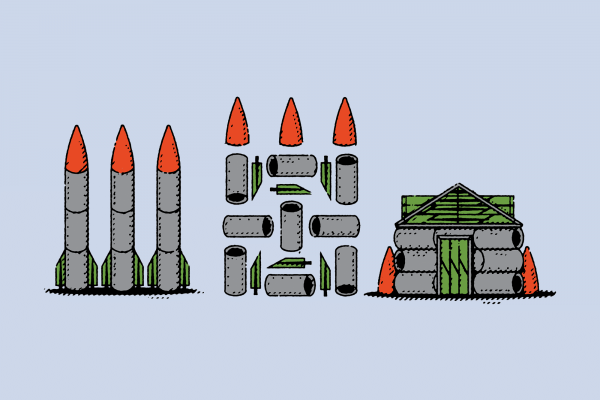
Illustration of nuclear weapons being deconstructed and rebuilt into a house.
Illustration by Michael George Haddad

THE TREATY ON the Prohibition of Nuclear Weapons, the first global ban on nuclear weapons, entered into force on Jan. 22. It is a bright spot in a bleak international landscape.

Negotiated by about two-thirds of the world’s nations, the treaty represents a remarkable step toward the complete elimination of nuclear weapons. Civil society, including faith communities, played a significant role in establishing the treaty and now can work to advance its reach—including persuading the United States to join. The Holy See, one of the first states to ratify the treaty, described it as “one more blow on the anvil toward the fulfilment of the prophecy of Isaiah: ‘They shall beat their swords into ploughshares and their spears into pruning hooks.’”

The treaty bans all countries from developing, testing, producing, manufacturing, transferring, possessing, stockpiling, threatening to use, or allowing nuclear weapons to be stationed on their territory. It also prohibits countries from assisting, encouraging, or inducing anyone to engage in any of these activities and requires signers to take certain proactive measures to implement the accord.

Nuclear-free security strategies are now the norm around the world, not the exception. However, 39 countries, including the U.S., still explicitly base their military strategies on the potential use of nuclear weapons. Nuclear-armed states have not yet joined the process, but the treaty outlines a pathway for them to do so: They can join and immediately remove nuclear weapons from operational status and submit a time-bound plan for destroying the weapons, or they can destroy their nuclear weapons through a verified process of dismantlement and then join the treaty. In effect, the treaty delegitimizes these weapons of mass destruction around the world.

The positive obligations of treaty signers can impact the U.S. and other nonsignatory states. For example, all treaty signers must urge nonsigners to join, and state parties must assist individuals impacted by nuclear weapons and testing as well as provide environmental remediation in affected areas under their jurisdiction. Past weapons prohibitions, such as the bans on land mines and cluster munitions, led to changes in policies in nonsignatory countries, including companies ceasing production of banned weapons, divesting financial institutions from weapons manufacturers, instituting policies against use and transfer, and providing international assistance.

Civil society, and particularly the faith community, continues to have a significant role in advancing the norms against nuclear weapons. Members of the Christian Plowshares movement, which began in 1980, participate in nonviolent direct actions at U.S. nuclear facilities to protest the immorality of these weapons. From Los Alamos National Laboratory in New Mexico to Honeywell Aerospace in Plymouth, Minn., to the Trident submarine base at King’s Bay, Ga., U.S. citizens have made it clear that they want their government to play no part in these deadly weapons.

On Jan. 22, U.S. faith communities held actions and teach-ins to take that same message to laboratories developing nuclear weapons, universities assisting with nuclear weapons research and development, nuclear weapons bases, and companies producing parts for nuclear weapons. Civil society must continue to pressure institutions to extricate themselves from these weapons of mass murder and align with international law.

In countries where the national government has not yet supported the treaty, majority public opinion, elected representatives, and local governments often do support it. In the U.S., members of Congress from at least seven states have endorsed legislation to support the treaty. Americans should continue to work with members of Congress and local governments to adopt resolutions urging the U.S. to join the treaty.

In Nagasaki, in 2019, Pope Francis said, “We must never grow weary of working to support the principal international legal instruments of nuclear disarmament and nonproliferation, including the Treaty on the Prohibition of Nuclear Weapons.” Persuading the U.S. to join the treaty and abolish nuclear weapons will not be easy. But for international peace and the future of humanity, it is necessary.

This appears in the May 2021 issue of Sojourners