Ruth
WE ARE LIVING in shouty times. The pandemic has raised the decibels of public debate, as we bellow and bark at each other across social media. And while we initially may have imagined that the coronavirus would bring us together—and in some ways it has—in many ways our civic life has only become more fractured and fragile. The murder of George Floyd last year unleashed a well of public grief and a wave of protests that revealed a widening political divide in the U.S., as did the Jan. 6 riot at the U.S. Capitol. And now vitriol over vaccines from an anti-science contingent threatens the hope of achieving herd immunity.
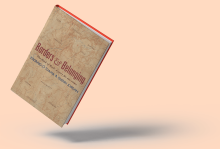
Perhaps, amid all this noise and tumult, the quiet biblical Book of Ruth has something powerful and profound to say, some reassuring balm and redemptive truth to offer our polarized world. Indeed, in the skilled hands of gifted poet Pádraig Ó Tuama and the late theologian Glenn Jordan, it is made new for our times. In Borders and Belonging, these two Irish men orbit the ancient narrative of a Moabite woman and her Jewish family, asking how “this apparently simple book situates itself at the very places where the tectonic plates of conflicted communities threaten to crack and split apart whole nations and societies.” With an eye to how Brexit-related tensions in Ireland threaten to reignite old conflicts and destroy a delicate peace, and as white nationalism gives rise to horrors in the U.S., Ó Tuama and Jordan explore the Book of Ruth’s extraordinary capacity to move us toward a different way of being in relation to one another, suggesting that “it offers us a way towards the healing of our fractures and the building of new and healthy relationships in the aftermath of trauma.”

As an immigrant woman and a Christian, I’ve loved the book of Ruth ever since I realized Ruth was an immigrant, welcomed into the family of God. And I’ve often been surprised by the interpretations of the Biblical story, in which Boaz is the hero and no one else has any agency. I find this odd because, as I read Ruth, what I see is that Boaz did nothing more heroic than exactly what was required by God’s law: He welcomed an immigrant from a neighboring community.
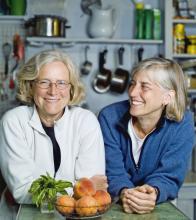
Recognizing the incredible gap (between those with health insurance and those without it) in the health care system in their area, nurse practitioners Mary Wysochansky and Anna Stinchcum decided to do something to address the problem. These two women founded and opened the Sumter Faith Clinic in Americus, Ga. The clinic serves the uninsured and the underinsured in Sumter County, Ga. Funded purely by donations and staffed by volunteers, Sumter Faith Clinic provides healthcare for those in need that tends to the body, soul, and mind. Their desire to make justice happen was possible because these two women decided to join their efforts and work for a better future.
In 2014, the U.N. Women launched a campaign to revisit and reengage with the Beijing Declaration and Platform for Action on gender equality. The slogan of the campaign is “Empowering Women, Empowering Humanity, Picture It!” The platform identified 12 areas for attention in working for the rights of women and girls: Poverty, Education, Health, Violence, Armed Conflicts, Economy, Power/Decision-Making, Institutional Mechanisms for Advancement, Human Rights, Media, the Environment, and the “Girl-child.” At the original 1995 Beijing conference, 189 countries committed to this platform for achieving gender equality and female empowerment. Beijing +20 (twenty years after the Beijing Declaration) reminds us that, while advancements in gender equality and the empowerment of women have been made, there is still much work to do.

Christian men - males who are caught up in the ancient, raw, and radical Jesus movement, this is to you:
It's high time we say something, do something - good Christian men, stand up. Women are being raped and sexually abused across the world, and we continue to theologically shrug our shoulders. It's just the way it is, we say.
Whether we want to admit it or not, we turn a blind eye to the ways in which our holy scriptures have sanctioned this throughout history.
Hollywood isn't real life, but when real life (mine and the lives of the actors) and Hollywood converge it is great fodder for thinking and conversation. Peter and I can't stop talking about a recent date night movie, Up in the Air, starring Vera Farmiga and George Clooney.
At church on a recent Sunday we were encouraged to find ways to see the world differently this week. Change our routine and change our perspective to help us get out of the rut of going through life without actually seeing the world. To that end we were asked to draw a slip of paper out of a basket on which was written some sort of paradigm destabilizer.
Another amazing grassroots effort in the Middle East is Combatants for Peace, a group of former Palestinian fighters and Israeli soldiers who have united to reject violence and tell their stories to each other as a way of finding peace.