psychology
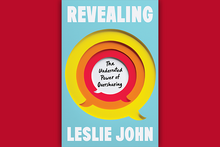
WE OFTEN WEIGH the cost of speaking up, considering the potential pitfalls of revealing our real thoughts or feelings when we think doing so carries risk. But do we consider carefully enough the cost of staying silent? And do we factor in the potential benefits of revealing our true selves?
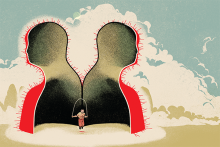
IN 2017, SYLVESTER JACKSON joined a forgiveness therapy group simply to get out of his cell in a maximum-security prison—he might not have participated otherwise.
This happenstance involvement profoundly impacted the course of his life. Now living in Milwaukee, Wis., he leads community members whose lives have been impacted by the criminal justice system through the same course.

SEEING THE RISE of right-wing populism globally, several months ago I began to lead scenario-planning and writing about what might happen if Donald Trump won. I played out strategies for how folks might meaningfully respond. Yet when he won, I still found myself deep in shock and sadness. In the days after, I reached out to my community to try to assess and get my feet back underneath me.
Being grounded is difficult when the future is unknown and filled with anxiety. Trump has signaled the kind of president he will be: vengeful, uncontrolled, and unburdened by past norms and current laws. If you’re like me, you’re already tired. The prospect of more drama is daunting.
As a nonviolence trainer working with social movements across the globe, I am blessed to have worked with colleagues living under autocratic regimes to develop resilient activist groups.
My colleagues keep reminding me that good psychology is good social change. For us to be of any use in a Trump world, we must pay attention to our inner states, so we don’t perpetuate the autocrat’s goals of fear, isolation, exhaustion, and constant disorientation. As someone raised by a liberation theologian, I’m reminded of how we lean hard on community and faith in tough times.
In that spirit, I offer some ways to ground ourselves for the times ahead.

IN 2011, I took a course at my Christian college about the personality type system known as the Enneagram.
The Enneagram is a system built around nine personality types, with each type providing a unique perspective on how we navigate our relationships, emotions, and the world around us. The Enneagram draws on both spirituality and psychology, which distinguishes it from many other personality indicators.
A primary question that emerged for me from that college class: Does the inner work that the Enneagram encourages manifest itself in the outer world through justice work, or is the Enneagram primarily a tool meant to encourage people to focus on individual healing, career, and spirituality?
Throughout history, questions about how and why each human has a unique set of behaviors, motivations, emotions, and cognitions have preoccupied philosophers, psychologists, sociologists, religious thinkers, and Buzzfeed quiz creators alike. Indeed, in the 21st century, “know thyself” is less of a thought-provoking ancient Greek aphorism and more of a cultural imperative lauded by the self-help industrial complex and career coaches. We are assured that by unlocking our “true selves,” we will ultimately be unlocking our true potential, which will drastically improve our fortunes.
But the Enneagram was never meant to simply measure our potential or provide a definitive answer to the question of human personality. This is contrary to some of the most popular personality indicators such as Myers-Briggs or CliftonStrengths (formerly StrengthsFinder), which became popular because they promised to help employers tap into human potential and productivity. The Enneagram originated as a tool for contemplation but has come to emphasize how self-growth and inner work prepare us for the outer work of building community.
daniels.enneagram.inline1.jpg

In their book The Enneagram: A Christian Perspective, Catholic priest Richard Rohr and Lutheran minister Andreas Ebert point to a 4th-century Christian Desert Father, Evagrius Ponticus, as the first to use, loosely, the nine-pointed symbol to highlight vices that he believed interrupted one’s inner peace and relationship with God. But it wasn’t until the 1970s that Chilean psychiatrist Claudio Naranjo, inspired by a theory originated by Bolivian philosopher Oscar Ichazo, used modern psychology to develop a theory of nine distinct personalities — or “enneatypes” — that highlighted the vices, virtues, and core motivations of each type.
The Enneagram is sometimes treated as just another personality test that can help us purchase the things that “match” our personalities, find romance, or unlock our “true potential” so we can make more money — part of our culture’s obsessive focus on self-improvement. But at its best, the Enneagram not only emphasizes making peace with yourself and a higher power, it also offers tools for learning how to be in community and build a more just society.
To help me sort through my questions, I interviewed three Enneagram experts: Chichi Agorom, an associate faculty member with The Narrative Enneagram and author of The Enneagram for Black Liberation; Jessica Denise Dickson, a life empowerment coach and Enneagram guide who uses the Enneagram in anti-racist workshops; and Abi Robins, a queer, trans Enneagram teacher, coach, and author of The Conscious Enneagram. Their responses have been edited for length and clarity. — Josiah R. Daniels

An independent report commissioned by the American Psychological Association (APA) has found that the association secretly colluded with the Department of Defense and the CIA to weaken the APA’s ethical guidelines and allow psychologists to take part in government torture programs under the Bush administration post-9/11.

Our culture's shift around its relationship to shame and guilt can be traced to the broad influence that psychology has had on Western culture over the past century. That is, the reason we have become so sensitized to guilt and shame today in our culture comes from the practical insights of psychologists: As they worked to help people face their hurtful and dysfunctional behaviors, psychotherapists observed that their attempts to help were often met with resistance. Early on Freud referred to this phenomenon as "denial," but regardless of the terminology we use, this is a dynamic therapists have recognized over and over and again because it is, quite simply, one of the most basic elements of human psychology: When we feel threatened we get defensive.
As a result of this dynamic, psychotherapists have found that people actually have struggles on two simultaneous fronts: One struggle is with their negative behavior patterns that hurt themselves and others. The other struggle is the feelings of shame and self-hatred that often accompany these. In fact, the two are frequently intertwined in a destructive spiral where feelings of shame lead to doing things to dull that emotional pain, which then lead to more feelings of shame, and round and round it goes.

This week on the Homebrewed CultureCast, we welcomed Stephen Simpson, one of the heads of Psychology at Fuller Theological Seminary, to the show to discuss the intersection of faith and psychology. Specifically, we wanted to try and figure out with him where the thin line between religious fanaticism and pathological mental illness was. Hey, there it is!!!

Biblical literalism, and the corresponding idea of the inerrancy of scripture, has been bumping up against the sciences for a long time.
Way back in the Renaissance, the church insisted that the Bible taught that the sun revolved around the earth, and charged Galileo with heresy for claiming otherwise. Today, the debate between the Bible and natural science continues, most notably in the evolution/creation debate.
While discussions of religion and science usually revolve around conflicts with natural science, I'd like to propose that the place we really should be placing our attention is the relationship between faith and the social sciences.
As our understanding of all science grows, it becomes harder and harder to maintain the position of biblical literalism without seeming absurd.
Maybe we haven't all heard the thunder clap yet, but the lightning bolt struck a while ago. We are going to have to adjust our reading of the Bible to coincide with a modern scientific understanding of the universe. In broad strokes, that shift has already happened.

Like many others, I was shocked to hear this morning about the mass killing in an Aurora, Colo., movie theater at the hands of (according to law enforcement authorities) suspect James Eagan Holmes — a 24-year-old California native and neurosciences graduate student at the Univeristy of Colorado in Denver.
Having recently moved from Colorado to Oregon, the Aurora shootings tapped into old feelings as I recalled the Columbine High School killings in 1999. My wife, Amy, was a youth minister at the time, and one of the girls who had previously been a part of her group had helped the Columbine killers buy their guns.
Then there was the attack at New Life Church in Colorado Springs. And now this.
It got me thinking about what all of the killers have in common, and for that matter, what they seem to have in common with many of the mass murderers at the focus of such tragic stories.