Higher Education
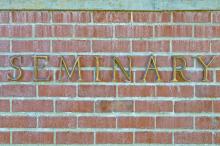
Paul said, "the foolishness of the cross" not "the stable middle-class lifestyle," if you want my opinion on seminary education, the changing economy, and baptismal identity in general. We bear a responsibility to care for one another as Christians (and beyond) that we have abdicated to the persnickety "marketplace." It's time to talk about holy poverty again, I think.
I can hear my free church friends and colleagues now, "But we don't take a vow of poverty!" It's true. We don't. We remember this historical movement away from the monasteries and the cathedrals, the parish system and the state church. This is an issue of ecclesiology, no question. What I wonder, however, is if in our attempts to not fall into the traps of the past, we simply have settled on the marketplace as our model for ecclesiology. I assume we have.
My degree is a "professional degree," yet within its conceptual framework the notion that I am "professed" is easily lost. I am not called to earn, but to labor, to serve. My work is "worth" nothing. Instead, it is a response to a vocation that in many ways we all share. The wealth of the community affords me the opportunity to respond to that shared call in a particular way. I am not your employee. I am your pastor. I am poor. Any wealth I may posses comes directly from the pockets of others.

News bulletin to Michael Gerson's firstborn son, my firstborn granddaughter, and the maybe 3 million other kids starting college this year: Your parents will be OK!
Gerson, a Washington Post columnist, wrote a touching op-ed piece Monday about his son's departure. He's not alone — the article, "Saying goodbye to my child, the youngster," is all over Facebook. Assuming there are still teenagers who use Facebook, no doubt many of them have read it too.
Some of those college-bound teens may be concerned for their parents' sanity. Kids, it's OK to relax. Your parents are probably normal.
The Huffington Post reports on the drastic rise in the number of people with advanced degrees who are also reliant on government welfare:
The number of Ph.D. recipients on food stamps and other forms of welfare more than tripled between 2007 and 2010 to 33,655, according to an Urban Institute analysis cited by the Chronicle of Higher Education. The number of master's degree holders on food stamps and other forms of welfare nearly tripled during that same time period to 293,029, according to the same analysis.
Learn more here

Christianity in America is in danger. As former Senator Rick Santorum recently pointed out, young people are leaving the church in droves.
In the mid-1980s, evangelical 20-somethings outnumbered those with no religious affiliation — the so-called “nones” — by a ratio of more than 2 to 1. By 2008, those proportions were almost flipped, with young “nones” outnumbering evangelicals by more than 1.5 to 1.
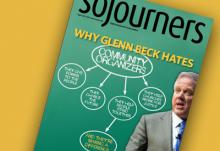
An entire generation, my generation, is leaving the church. What’s the cause? Santorum blames higher education, telling Glenn Beck last week that "62 percent of kids who go into college with a faith commitment leave without it."
The “war on religion” has become a frequent bogeyman among Christian and political leaders. But the reason church leaders have failed to stem the tide of a generation heading for the exit door is that they keep looking for an outside enemy to blame when the biggest problems are inside the church.
The years young adults spend in college aren’t causing them to leave their faith; those college years are exposing the problems with the faith they grew up with.
The exodus has little to do with liberal college professors, which insurance plans should cover contraception, where mosques are being built, or whether or not the Ten Commandments are hanging in courtrooms, even if many religious leaders act as if these are the greatest Christian “battles” of our lifetime.
Trinity University found the future of education -- hiding in its own neighborhood.