
Across Europe, governments and local communities are searching for ways to counter extremism after a wave of largely homegrown terrorist attacks.The question is all the more important for France, the target of three terror strikes in two years, and Western Europe’s biggest exporter of extremist fighters.Yet while countries such as Britain, Denmark and Germany have long been involved in deradicalization efforts, France is a relative newcomer to such programs. Some believe the country’s fiercely secular mindset and conflicted relationship with Islam pose additional obstacles.

Popular films like American Sniper reduce places like Iraq to dusty war zones, devoid of any culture or history. Fears and anxiety manifest themselves in Islamophobic actions such as burning mosques or even attacking people physically.
At the heart of such fear is ignorance. A December 2015 poll found that a majority of Americans (52 percent) do not understand Islam. In this same poll, 36 percent also said that they wanted to know more about the religion. Interestingly, those under 30 years were 46 percent more likely to have a favorable view of Islam.

“You don’t think I care about this country?” asks Dre, an African American character played by Anthony Anderson, on the television show black-ish, in the Jan. 11 episode “Lemons.”
“I love this country, even though at times it doesn’t love me back.”
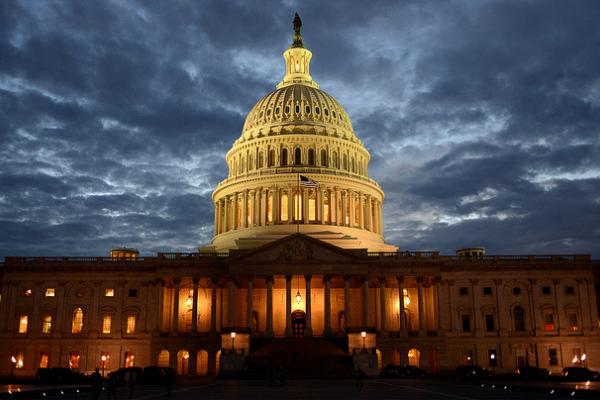
The U.S. Senate voted 51 to 48 in the early hours of Jan. 12 to begin the process of repealing major portions of the Affordable Care Act, also known as Obamacare. The vote went on for seven hours, as Senate Democrats attempted to build on growing unease among House and Senate Republicans over repealing major provisions of the ACA without a repeal in place. Ultimately, only Sen. Rand Paul (R-Ky.) joined the Democrats in voting against, and the resolution was approved.
Last night’s hours-long late night vote is known as a “vote-a-rama,” a long series of back-to-back votes in the Senate. Though atypical, it’s become a more common practice for major votes in the Senate.

The backlash to gospel singer Kim Burrell’s homophobic rant was swift: canceled national television appearances and the termination of her local public radio show.
But to those of us in religious communities, it’s important to note that, even as the controversy over Burrell’s statement recedes from the national spotlight, the issue of what goes on in the vast majority of American churches remains a festering wound.

If the High Court ultimately rules that women can read Torah in the women’s section of the Western Wall, ultra-Orthodox lawmakers in the Israeli Parliament may try to pass legislation to criminalize the practice, not only at the traditional wall but also at Robinson’s Arch.

At least 16 Jewish community centers received bomb threats on Jan. 9, in an apparent attempt to rattle American Jews, who have seen a spike in anti-Semitism incidents in the past year.
The threats — some by live callers, some by robocall — were made to JCCs in Florida, Maryland, New Jersey, Tennessee, South Carolina, and at least four other states.

On Jan. 11 the Senate confirmation hearing for former Exxon Mobil CEO Rex Tillerson, for the office of Secretary of State, began, reports NPR. In his hearing Tillerson admitted to the Senate Foreign Relations Committee that he has yet to discuss with President-Elect Trump U.S. foreign policy as it regards to Russia.
He also made a statement that seemed in partial opposition to the use of sanctions against Russia and other countries, stating that they “are going to harm American businesses.” However, he relented to the idea that sanctions have the ability to be a “powerful and important tool.”

He referred to himself as “the greatest job producer that God ever created.”

The outgoing president encouraged Americans to listen better and try harder, to realize that “science and reason matter,” to assume the best of others. That’s important in a time, he said, when it’s “become safer to retreat into our own bubbles, whether in our neighborhoods or college campuses or places of worship or our social media feeds, surrounded by people who look like us and share the same political outlook and never challenge our assumptions.”