
The Psychological Toll Of War (OPINION); Mike Huckabee: 2012 GOP Candidates Must Stop Trying To 'Shred Each Other'; Obama And Cameron Must Strike A Balance Over Afghanistan Withdrawal; Syria Laying Landmines Along Border: Human Rights Watch; Have We Gone From A Mancession To A Shecovery? Not Quite. The Spectacular Triumph Of Working Women Around The World; The Reproduction Of Privilege; Obama Warns Opponents Against 'Using Religion As A Bludgeon In Politics'; Can Progressives Ride The Occupy Train To Congress?; Defining The Occupy Movement: It's Not Just About The Money (OPINION); Where Have You Gone, Mister Rogers?
Two things to consider:
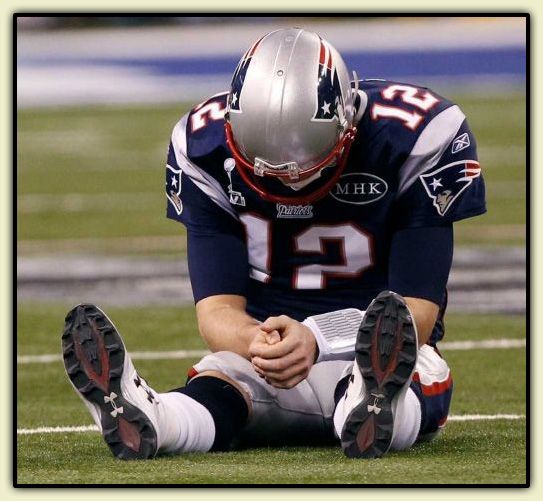
1) On Sunday, the NFL announced that it had increased the salary cap for athletes by $225,000. Last year, players could make $120.375 million dollars per year; this year they can make $120.6 million.
2) The income requirements for an American family of four to be above the poverty limit is $23,050 – a figure nearly one tenth the amount of the .2 percent increase awarded to athletes.

There has been a lot of talk lately — both in the public sphere and most definitely here at the Sojo offices—about young people leaving the church.
I would argue that--while some of my fellow millenials are jumping ship on Christiainity--many are not so much leaving the big-C “Church,” (see my post on the definition of the word), as they are leaving established churches. The surveys show a migration from a particular denomination to “no religion.” To me, that doesn’t say atheist/agnostic; it just says that this generation of Christians doesn’t want to be labeled.
If you look at the numbers, millenials are quitting the church, not quitting Jesus. Unaffiliated does not necessarily mean unChristian.
My generation doesn’t want the “Southern Baptist,” “Wisconsin Evangelical Lutheran Synod,” “Roman Catholic” affiliations thrust upon us. Not only do we disagree with some of the tenants of said denominations, but each title carries all sorts of baggage left at our feet.
We’ve seen post after post listing possible catalysts to twenty-somethings turning away from the religion of our fathers in droves. Presidential hopeful Rick Santorum blames college. The reasons listed here on God’s Politics, in books and by church leaders themselves each probably factor in to some degree.
But I do want to dismiss some of them.
"Mainly it seems the media is just annoyed that it took this guy to get people to listen...'I mean, we're handsome, we're on TV. Why won't Rhianna retweet our stories on Kony?'"
God of love, we pray for the citizens of Afghanistan today. Comfort those who mourn the loss of loved ones and give peace of mind to those angered by senseless violence. Lord, we need your help as the struggle to which you call us is not against flesh and blood. Forgive us of our violent ways and lead us in the way of peace and love. Amen.
"Meanwhile the disciples were urging [Jesus], ‘Rabbi, eat something.’ But he said to them, ‘I have food to eat that you do not know about.’" - John 4:31-32
"That you need God more than anything, you know at all times in your heart. But don’t you know also that God needs you — in the fullness of [God's] eternity, you?" - Martin Buber
If you were walking down the street and a stranger approached you and punched you in the face what would you want to do in that moment? Sure, this is an odd hypothetical situation, but really, answer the question.
Few would say, “I would want to give that person a hug.” Depending on the size of the attacker most would either fight back or run away. But let’s suppose you fought back, and even vanquished your assailant, pummeling him repeatedly for his dastardly deeds. What then?
Would he, through being beaten, come to understand his wrong in hitting you? No, he might start plotting his revenge, or his friends would think about getting you back for what you did. If they did, then you would have friends that would want to get them back. So it goes with the endless spiral of violence.
We have been fooled into believing that violence is a respectable solution for problems in our world. What we fail to see is the many problems that violence brings with it, beginning with more violence. Violence also brings hurt, fear, anger, a desire for revenge, death and enmity.

Tony Perkins, President of the Family Research Council, appeared on Martin Bashir last week to condemn Rush Limbaugh’s words against Georgetown Law Student, Sandra Fluke.
Bashir asked:
"Mr. Perkins, I’ve found this whole controversy extremely disturbing and it seems almost impossible to find a Republican who unequivocally without conditions condemns what’s been said. Now you are a family man, you’re a committed Christian you play an important role in conservative politics will you for the benefit of our broadcast clearly and categorically denounce what Rush Limbaugh said? "
Perkins response:
"I disagree that because there is a double standard that somehow defends what was said. I do think there is a double standard but that doesn’t defend attacking an individual.
"I think we need to engage in civic -- or civil discussion. I don’t think there’s any room in this process for calling people derogatory names. I think what Rush Limbaugh did by calling this young woman, regardless of her political views, regardless of what she was advocating for, calling her derogatory names. I disagree with her position. I think what she said was off base, what she was advocating for was off base, but I think Rush Limbaugh was wrong in calling her what he did."
Good for him. As Bashir pointed out at the beginning of his program, many conservatives are often hesitant to criticize someone like Limbaugh for fear of on air retribution. Speaking out could cause lost support and donations.

The news spread through the city of Suleimaniya so quickly. Within an hour, Kurdish news outlets let the locals know that something bad had happened. From there, it moved even more quickly across the ocean.
By the evening of March 1, I was shocked to read it in my Manitoba prairie city’s newspaper: “Iraqi student kills American teacher in Christian school murder-suicide.“
Along with the bare facts, the questions and rumours arose. Why had the 18-year-old Kurdish boy carried a handgun to class in a Christian school in Suleimaniya and shot his teacher to death?
Was it the result of religious disagreement?
Was there some other kind of conflict between the two of them?
How could a handgun have entered the classroom?
Some our Kurdish partners called a meeting to see if some sort of action should take place. None of us had known either the teacher or the boy. Reports said that this type of shooting was not so unusual, that it happens in the United States all the time. But violence like this had never happened in a school in Kurdish Northern Iraq. Kurds were reeling and asking themselves what is it about their country that allows people to settle differences with a gun in a classroom?