The more church you attend, the more likely you are to vote Republican. That's one of the findings from Gallup’s comprehensive study on U.S. states and their religious commitments (or lack thereof). And the data they account seems consistent with our current political climate.
According to Gallup’s “state of the states,” 40 percent of Americans are “very religious,” meaning they attend a service almost every week and believe religion is important to daily life. On the flip side, 32 percent are “nonreligious,” they don’t attend services regularly and don’t believe religion is important to daily life. The remaining 28 percent are “moderately religious,” they may believe religion is important but do not attend services themselves, or they may attend services but think it unimportant to daily life.

It's ripped from the headlines: A young person is killed, but the police seem to be casting aspersions on the victim. It outrages us when it happens in Florida, and it should outrage us just as much when it happens further south.
It was not one person but five who were found murdered on March 15 in the town of San Isidro, Cauca, Colombia. They had been bound hand and foot and shot in the head. As in the case of Trayvon Martin, race was a factor: the victims were ethnically indigenous.
As I saw for myself when I visited Cauca last year, indigenous people in Colombia are (along with other historically marginalized groups) often stuck between a rock and a hard place —attacked or driven from their homes by both guerrilla insurgents and right-wing paramilitaries, both of which want to control territory and each of which accuses neutral parties of supporting the other side.
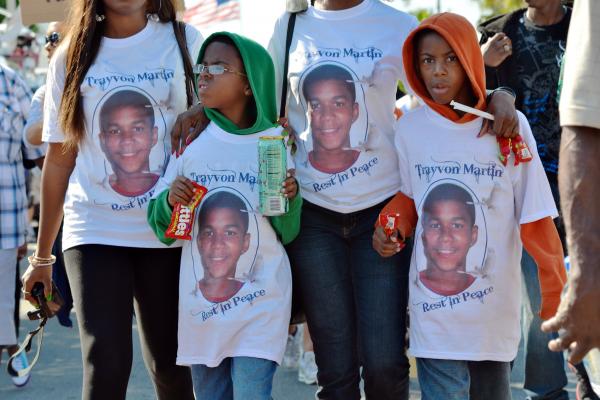
I don't want to say too much. I don't want to over-explain. I know that leaves lots of room for misinterpretation. I just want to ask you to wrestle with a few questions.
I was asked last week what my greatest fear as a father of a black boy is in light of the Trayvon Martin murder. My greatest fear for my children is the cautious regret I see on the many faces that can’t help but leave open the possibility there may be some justification for this tragedy. Rest assured George Zimmerman and his supporters will exploit this deep-seated immutable suspicion, just like Susan Smith did so many years ago.

I’ve written a lot about what it really means to be the Church. And by “Church,” I mean the Church—not Baptist, Lutheran, Catholic—Jesus’ Church. The communion of believers, and all that.
“The glory that you have given me I have given to them, that they may be one even as we are one,I in them and you in me, that they may become perfectly one, so that the world may know that you sent me and loved them even as you loved me.” – John 17:22-23
Jesus wants his followers to be “perfectly one” so that the world may know Him.
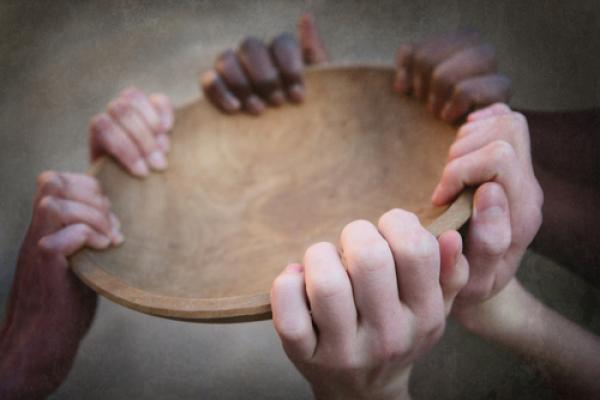
While I believe in the principle of church-state separation, there are times when it is taken too far. Today’s example is a food pantry in Seymour, IN.
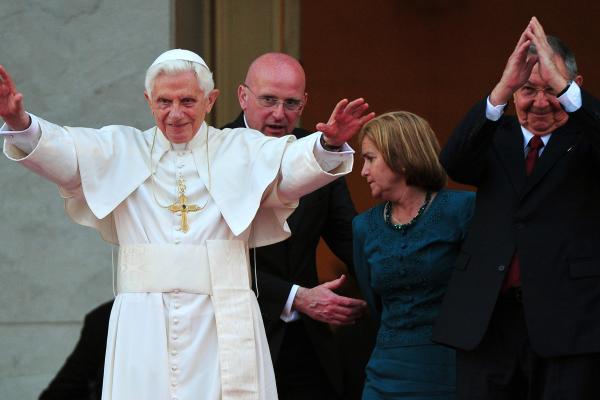
Pope Benedict XVI’s 3-day visit to Cuba began Monday, when President Raul Castro greeted the pontiff at the airport of Santiago de Cuba. The arrival was fairly quiet, but the evening Mass in Santiago’s plaza was attended by an estimated 200,000 Cubans. The pope's long-awaited visit attracted news coverage from around the world, mostly focusing in the pope’s message.
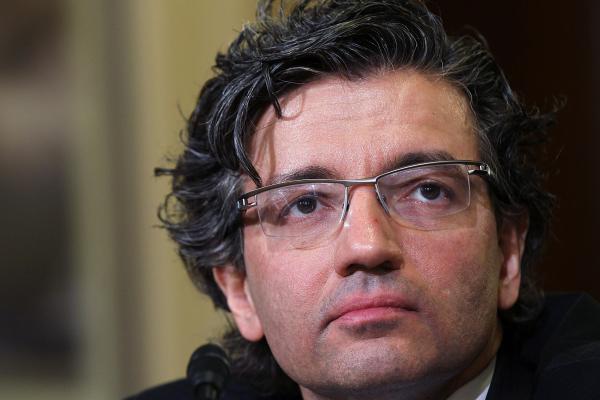
One of two new members of the U.S. Commission on International Religious Freedom has Muslim civil rights groups crying foul.
Zuhdi Jasser, who lauded a controversial New York City police surveillance program that targeted Muslims and helped lead the opposition to an Islamic cultural center near Ground Zero, has been appointed to the commission, which advises the president, Congress and State Department on religious rights abuses internationally.
"It would have been better to appoint someone who has some measure of credibility with Muslim Americans," said Ibrahim Hooper, spokesman for the Council on American-Islamic Relations.
"He has long been viewed by American Muslims and the colleagues in the civil liberties community as a mere sock puppet for Islam haters and an enabler of Islamophobia."
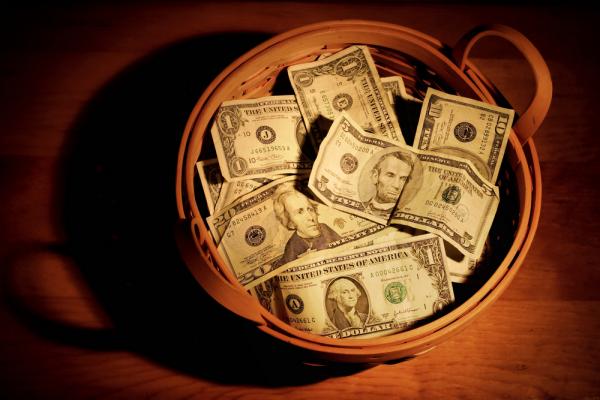
The recession and a sluggish recovery have made for a lighter collection plate in recent years, but a new study shows that giving to U.S. congregations bounced back in 2011 as the economy improved.
According to the fourth annual "State of the Plate" survey released on Tuesday, 51 percent of churches last year saw an increase in giving, up from 43 percent in 2010 and 36 percent in 2009.
The national survey, sponsored by MAXIMUM Generosity, Christianity Today and the Evangelical Council for Financial Accountability (ECFA), asked more than 1,360 congregations of different sizes to report on their donations and budgets.
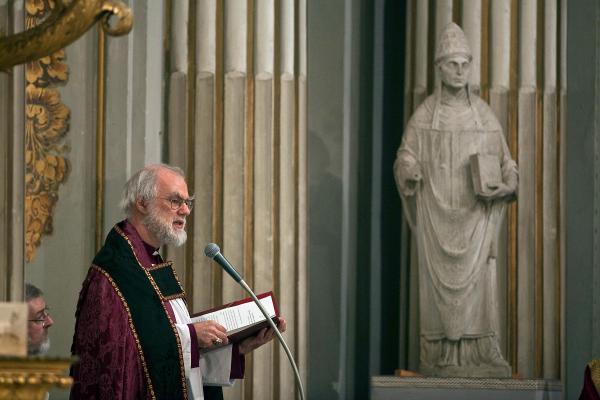
A proposed "Covenant" aimed at ensuring unity across the worldwide Anglican Communion appears to have failed, leaving the world's third-largest Christian body facing an uncertain and likely fragmented future.
The covenant, born of an idea in 2004 to try to set boundaries in belief and practice for the Communion's 40 members churches, appears dead after a majority of dioceses within the Church of England voted to reject it.
With results still being counted, supporters of the Covenant effectively lost their battle within the Church of England when the Diocese of Lincoln cast the 23rd vote against it last week.
"The covenant is either buried or disabled," said Simon Barrow, co-director of the independent British think tank Ekklesia, in the aftermath of the decision.