
The recent cover article in The Atlantic called “Is Facebook Making Us Lonely?” (Stephen Marche) is worth sharing. It’s about a growing trend of social isolation and loneliness in our culture, despite innumerable social media connections we use to counteract that problem.
As good as the article itself is, the title is misleading, I think. Though I agree with each of the points made about the epidemic levels of loneliness we’re experiencing, I would argue that sites like Facebook, Pinterest and Twitter are byproducts of this isolation, rather than the cause of the loneliness.
When they become problematic is when we rely on them to be a surrogate for real, face-to-face relationship. I consider that akin to sitting on your couch and taking stimulants to lose weight, rather than changing your exercise and diet habits. Sure, you may get some results, but at what greater cost?
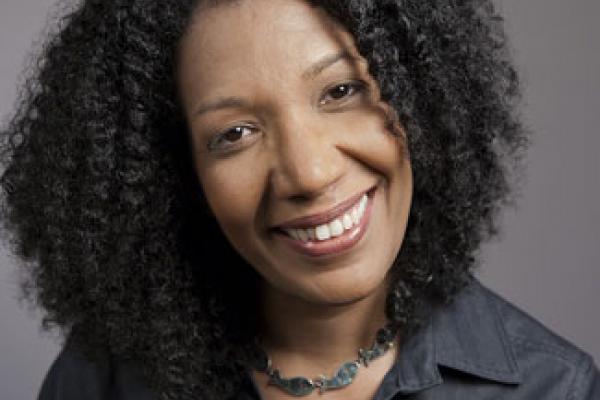
Editor’s note: The following written testimony was submitted by Lisa Sharon Harper, on behalf of Sojourners, to be included in today’s U.S. Senate Committee on the Judiciary Subcommittee on the Constitution, Civil Rights, and Human Rights Hearing on “Ending Racial Profiling in America.”
As a Christian organization, Sojourners is compelled to consider the pattern and institution of racial profiling practices abhorrent and a direct threat to the maintenance and cultivation of the inherent dignity of every human being living and working within the boundaries of the United States. We believe every human being is made in the image of God and therefore equally worthy of protection of human and civil rights under the law. Racial profiling not only threatens the psychological and emotional well-being of targeted communities. As demonstrated above, the practice can lead to death.

When I was in my early 20’s, a Bible teacher by the name of Dianne Kannady posed a rhetorical question that continues to haunt me to this day: “If Jesus was your only source of information about what Christianity should look like, how would you live your life?”
That question has gotten me into a lot of trouble over the years.
Consider the three things that instantly come to mind.
1. Jesus preached nonviolence.
2. Jesus was a faith healer.
3. Jesus challenged the religious fundamentalists of his day.

I've been navel gazing again and wondering how we come to know ourselves. I wonder what that right balance is between our inner-barometer of self-knowing and that external one that people reflect back to us. "Ubuntu," (I am because of who we are) or all the various "I am..." statements: "I think therefore I am" (Descartes) or "I am what I am and that's all that I am" (Popeye)...What statements might we add to this list? Bishop Desmond Tutu expands the notion of Ubuntu thusly:
One of the sayings in our country is Ubuntu – the essence of being human. Ubuntu speaks particularly about the fact that you can't exist as a human being in isolation. It speaks about our interconnectedness. You can't be human all by yourself, and when you have this quality – Ubuntu – you are known for your generosity. We think of ourselves far too frequently as just individuals, separated from one another, whereas you are connected and what you do affects the whole World. When you do well, it spreads out; it is for the whole of humanity.
I'm trying to wrap my mind about how we construct the self. Judith Butler, Catherine Bell (ritualization) and others inhabit my mind lately. Ritual, tradition, story, identity... the list goes on and on ...

Surprise nominee Dr. Jim Yong Kim has today been chosen as the next President of the World Bank, The Washington Post reports.
Currently serving as President of Dartmouth College, Dr. Kim was nominated to the position by President Barack Obama last month. His selection as the President’s nominee was seen as a surprising one, as the Post reports:
Kim’s selection marks a break from previous World Bank leaders who were typically political, legal or economic figures [while] Kim, 52, [is] a physician and pioneer in treating HIV/AIDS and tuberculosis in the developing world.
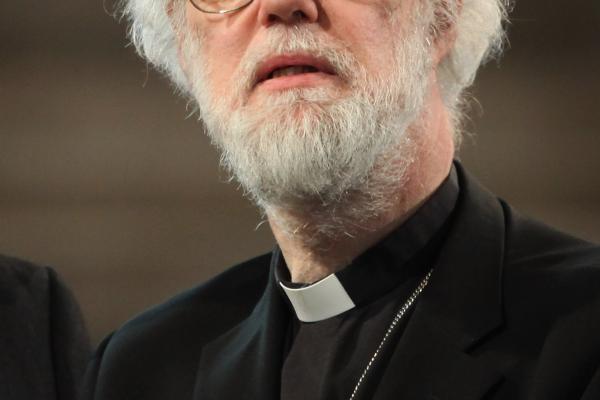
Archbishop of Canterbury Rowan Williams, the leader of the Church of England and the worldwide Anglican Communion, recently announced that he would step down by year's end. A few days later, the Church of England rejected a Williams-backed unity plan for global Anglicanism, a church fractured by issues of gender and sexual identity. The timing of the resignation and the defeat are probably not coincidental. These events signal Anglicans' institutional failure.
But why should anyone, other than Anglicans and their Episcopal cousins in the U.S., care? The Anglican fight over gay clergy is usually framed as a left and right conflict, part of the larger saga of political division. But this narrative obscures a more significant tension in Western societies: the increasing gap between spirituality and religion, and the failure of traditional religious institutions to learn from the divide.

By age 35, Congressman Tim Ryan had been one of Ohio’s youngest state senators, served two terms in the U.S. Congress and hobnobbed with presidents and prime ministers.
But a different story, full of unmet ambitions and caustic self-criticism, coursed through Ryan's mind, carrying him away from even the most important moments.
“I was so caught up in my story that I missed my life,” the Ohio Democrat writes in his new book, “A Mindful Nation: How a Simple Practice Can Help Us Reduce Stress, Improve Performance, and Recapture the American Spirit.”
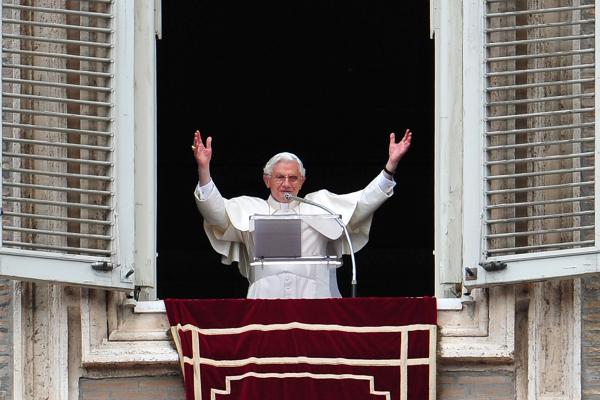
Pope Benedict XVI turned 85 on Monday (April 16) amid renewed speculation about his declining health and possible resignation.
The German-born pope has appeared tired and fatigued in recent months and admitted at a morning Mass to being in “the final leg of the path of my life." But on Sunday, he signaled his resolve to carry on with his duties as leader of the world's 1.2 billion Catholics, asking the faithful to pray that he have the “strength” to “fulfill his mission.”
This week will mark a double milestone for Benedict, with Thursday being the seventh anniversary of his election as pope.
Today is a holiday in the District of Columbia, although primarily observed only by the D.C. government, and likely unknown to the rest of the country. But it’s a commemoration worth noting.
One-hundred and fifty years ago, April 16, 1862, President Abraham Lincoln signed the District of Columbia Emancipation Act, freeing more than 3,000 slaves within its borders. It predated the more famous Emancipation Proclamation, which came nearly 10 months later on January 1, 1863.
Yet, while legal slavery is long gone, economic disparities are vast and growing. The income gap is one of the widest in the country, with a white per capita income more than triple that of African-Americans. The poverty rate is 20 percent, 30 percent for children,
Politically, all Washingtonians, regardless of race, remain disenfranchised – we have no elected voting representative in Congress, while Congress retains veto power over our budget. That leads to it using us to enact their pet ideas – repealing a variety of legislation duly passed by our City Council and Mayor.
For D.C. residents, today is a day to remember and celebrate the end of slavery, while renewing the struggle for economic justice and full representation as citizens of the United States.
Yesterday was Jackie Robinson Day in major league baseball. Every player on every team wore the number 42 on their uniform in honor of his integrating baseball in 1947. In the 1950s and 60s, players such as Willie Mays, Hank Aaron, Bob Gibson, Ernie Banks, Frank Robinson, and many more followed. All were giants of baseball. All are in the Hall of Fame. All are African American.
This morning, USA Today released research results showing that the percentage of African Americans in baseball is now down to 8 percent, the lowest since Robinson’s day. In 1975, it reached 27 percent; in 1995, it was 19 percent. There are a variety of reasons for the decline: basketball and football appear more glamorous to top athletes, the cost of equipment in baseball is prohibitive for many inner city schools and teams, and there is a lack of college scholarships in baseball. Some also cite the low number of African Americans in leadership positions – out of 30 teams, there are only 2 general managers and 2 managers.
Whatever the reason, baseball is poorer for the absence.